Theme images by kelvinjay. Powered by Blogger.

USA

AFRICA

ASIA

Brazil

Portugal

United Kingdom

Switzerland

Changes in oxygen concentrations in our ocean can disrupt fundamental biological cycles


New research led by scientists at the University of Bristol has shown that the feedback mechanisms that were thought to keep the marine nitrogen cycle relatively stable over geological time can break down when oxygen levels in the ocean decline significantly.

Changes in oxygen concentrations in our ocean can disrupt fundamental biological cycles
On Aug. 11, 2015, a NASA satellite captured this false-color image of a large bloom of cyanobacteria (Nodularia)
swirling in the Baltic Sea. These cyanobacteria fix inorganic atmospheric nitrogen (N2) into a form available to Life,
 a process fundamental for marine ecosystems. In our paper we show that nitrogen fixation becomes even more
important when the state of oxygenation of the ocean declines [Credit: NASA Earth Observatory/USGS]
The nitrogen cycle is essential to all forms of life on Earth - nitrogen is a basic building block of DNA.

The marine nitrogen cycle is strongly controlled by biology and small changes in the marine nitrogen cycle have major implications on life. It is thought that the marine nitrogen cycle has stayed relatively stable over geological time due to a range of different feedback mechanisms.

These feedback mechanisms are called 'the nitrostat'. However, exactly how the global marine nitrogen cycle and the associated feedback mechanisms responded to past severe changes in marine oxygenation is not well understood.


The team used a data-constrained earth system model to show show that under these deoxygenated conditions the ocean can become extremely depleted in nitrogen as the total bioavailable nitrogen inventory collapses relative to phosphorous.

At the same time the ocean transitions from an oxic-nitrate ocean to an anoxic ammonium ocean. The substantive reduction in the ocean bioavailable-N inventory in response to change in marine oxygenation may represent a key biogeochemical vulnerability.

Lead author Dr David Naafs from the University of Bristol's School of Earth Sciences, said: "Our results demonstrate that changing the amount of oxygen in the ocean can have disastrous effects on vital biogeochemical cycles such as the nitrogen cycle, which is essential for all forms of Life."

Co-author Dr Fanny Monteiro, from Bristol's School of Geographical Sciences, added: "Our modelling results are in agreement with the sparsely available proxy data from the geological past."


Co-author Professor Ann Pearson from Harvard University, said: "Our modelling results show the impact of changes in ocean oxygenation on the marine nitrogen cycle for places and time periods for which we do not (yet) have sufficient proxy data."

The strength and state of the marine nitrogen cycle and biological pump in the ocean are highly susceptible to disruptions in the level of oceanic oxygen.

As oxygen levels in the oceans are currently declining and expected to decline significantly more in the coming decades due to anthropogenic activities, the results indicate that the marine nitrogen cycle might be significantly disrupted in the future.

Their findings are published in the journal Proceedings of the National Academy of Sciences.

Source: University of Bristol [November 25, 2019]

Climate change is reshaping communities of ocean organisms


Climate change is reshaping communities of fish and other sea life, according to a pioneering study on how ocean warming is affecting the mix of species.

Climate change is reshaping communities of ocean organisms
This is a black and yellow rockfish (Sebastes chrysomelas) in the Channel Islands National Marine
Sanctuary off Southern California [Credit: Claire Fackler/CINMS, NOAA]
The study, published in the journal Nature Climate Change, covers species that are important for fisheries and that serve as food for fish, such as copepods and other zooplankton.

"The changes we're observing ripple throughout local and global economies all the way to our dinner plates," said co-author Malin Pinsky, an associate professor in the Department of Ecology, Evolution, and Natural Resources in the School of Environmental and Biological Sciences at Rutgers University-New Brunswick.


"We found dramatic evidence that changing temperatures are already reshaping communities of ocean organisms," Pinsky said. "We found that warm-water species are rapidly increasing and cold-water marine species are decreasing as the global temperature rises. Changes like this are often disrupting our fisheries and ocean food chains."

An international team of scientists also found evidence that species in some places can avoid declines by seeking refuge in cooler, deeper water - like plants on land that move to higher elevations to avoid heat, Pinsky said.

The scientists compiled the most comprehensive assessment of how ocean warming is affecting the mix of species in our oceans. They looked at fishes, invertebrates such as crabs and other crustaceans and plankton in the North Atlantic and North Pacific, across two continents and two oceans. They analyzed three million records of thousands of species from 200 ecological communities across the globe from 1985 to 2014.


Regions with stable temperatures (the Northeast Pacific and Gulf of Mexico, for example) show little change in species dominance, while warming areas (the North Atlantic, for example) are experiencing strong shifts toward the dominance of warm-water species, the study says.

Temperature is a fundamental driver for change in marine systems, with restructuring of communities in the most rapidly warming areas. Still, the data "suggest a strong prognosis of resilience to climate change for these communities," the study says.

"We're now trying to understand how the changes we see in the ocean compare with those on land and in freshwater ecosystems," said Pinsky, who is also a sabbatical professor at the German Centre for Integrative Biodiversity Research (iDiv) Halle-Jena-Leipzig.

Source: Rutgers University [November 25, 2019]

New method takes analysis of genetic libraries to next level


Uppsala researchers have developed a new method for investigating dynamic processes in large genetic libraries. By using this method to study cell cycle regulation, they help paint a clearer picture of the elusive control mechanism. The study is published in the journal Nature Methods.

New method takes analysis of genetic libraries to next level
Credit: Bill Oxford/Getty Images
Modern gene technology makes it possible to quickly and inexpensively introduce thousands of different DNA modifications in human cells or bacteria to create genetic libraries. The CRISPR/Cas9 system, a.k.a. 'the gene snipper', can be modified and used to alter the expression of thousands of different proteins. By labelling each modification with a genetic barcode, it is possible to keep track of which cell carries which change.

At the same time, recent developments in optics and image analysis have made it possible to investigate the chemical processes inside the cell with exceedingly high precision. In principle, it is possible to 'film' basic biological processes such as protein expression or cell division at the molecular level inside a living cell.


Now imagine it were possible to combine these advanced optical methods with large-scale genetic engineering. Let us say we are interested in a particular biological process. We could, in theory, identify all the genes involved in this process by observing the biology in a genetic library. Studies that have so far taken several years could be conducted in a single experiment - in theory.

The challenges that have previously prevented scientists from putting theory into practice have primarily been technical. How do you keep track of thousands of different cells so that you can first examine their biology and then read the genetic barcode?

A group of Uppsala researchers rose to the challenge, and now presents the DuMPLING method (Dynamic u-fluidic Microscopy-based Phenotyping of a Library before IN situ Genotyping). This method enables the examination of an entire library of living cells in a single microfluidic chip.

"The method is exceptionally potent and allows us to link genetic information to complex cell behaviour at an entirely new level," says Johan Elf, Professor of Physical Biology, who leads the study.


Among other things, Elf and his team study the bacterial cell cycle. In all cells, including human cells, it is vital that all DNA is copied exactly once before each cell division. If this is not the case, the cell is at risk of losing genetic material or accumulating DNA with equally devastating consequences. Although cell cycle regulation has been studied for decades, it is still unclear how cells achieve the strict control that is required.

"We can develop models that can reproduce the mechanism, but since we don't know all the players yet, it's hard to test if the models are biologically relevant. With this new method, it will be possible to identify the unknown components," says Daniel Camsund, researcher in molecular cell biology at Uppsala University.

The researchers created a genetic library where they decreased the expression of various known cell cycle regulators as well as some unknown genes and then used the DuMPLING method to study how the cell cycle was affected by these modifications. The next step is the game-changer. When all cell cycle data is collected, the nutrient solution in the chip is replaced with a solution that preserves the cells and fixes them in their positions. The genetic barcode can now be read using microscopy and colour-coded pieces of DNA.

"It's fascinating to see how the colour code develops, but fortunately, we're not decoding it manually. We have software that makes the identification," says Jimmy Larsson, researcher in molecular cell biology at Uppsala University

The results are encouraging. From the data, the researchers can identify most of the known regulatory elements, which means that the method works. Since the DuMPLING produces time-resolved data, it is also possible to tell how the cell cycle is affected by the various modifications. In the next phase, the team plans to expand the library to include all genes in the bacterial genome. Hopefully, this will take research one step closer to a complete description of the cell cycle control mechanism.

Source: Uppsala University [November 18, 2019]

Saving 'half Earth' for nature would affect over a billion people


As the extinction crisis escalates, and protest movements grow, some are calling for hugely ambitious conservation targets. Among the most prominent is sparing 50% of the Earth's surface for nature.

Saving 'half Earth' for nature would affect over a billion people
Credit: Kate Ter Haar
'Half Earth' and similar proposals have gained traction with conservationists and policy makers. However, little work has gone into identifying the social and economic implications for people.

Now, researchers have produced the first attempt to assess how many and who would be affected if half the planet was 'saved' in a way that secures the diversity of the world's habitats.

A team of scientists analysed global datasets to determine where conservation status could be added to provide 50% protection to every "ecoregion": large areas of distinct habitats such as Central African mangroves and Baltic mixed forests.

Even avoiding where possible "human footprints" such as cities and farmland, their findings suggest a "conservative" estimate for those directly affected by Half Earth would be over one billion people, primarily in middle-income countries.


Many wealthy and densely populated nations in the Global North would also need to see major expansions of land with conservation status to reach 50% - this could even include parts of London, for example.

The study's authors, led by University of Cambridge researchers, say that while radical action is urgently required for the future of life on Earth, issues of environmental justice and human wellbeing should be at the forefront of the conservation movement.

"People are the cause of the extinction crisis, but they are also the solution," said Dr. Judith Schleicher, who led the new study, published today in the journal Nature Sustainability. "Social issues must play a more prominent role if we want to deliver effective conservation that works for both the biosphere and the people who inhabit it."

Towards the end of next year, the leaders of most of the world's nations will aim to agree global targets for the future of conservation at the Convention on Biological Diversity in Beijing.

"Goals that emerge from the Convention on Biological Diversity could define conservation for a generation," said Schleicher, who conducted the research while at the University of Cambridge's Conservation Research Institute and its Department of Geography.


"We need to be ambitious given the environmental crises. But it is vital that social and economic implications at local levels are considered if the drivers of biodiversity loss are to be tackled. The lives of many people and the existence of diverse species hang in the balance."

The idea of a 'Half Earth' for nature was popularised by famed biologist E.O. Wilson in his 2017 book of the same name. More recently, a 'Global Deal for Nature' - aiming for 30% protection by 2030 and 50% by 2050—has been endorsed by a number of leading environmental organisations. However, these proposals have been ambiguous about "exact forms and location", say Schleicher and colleagues.

Based on their analyses, researchers cautiously estimate that an additional 760 million people would find themselves living in areas with new conservation status: a fourfold increase of the 247 million who currently reside inside protected areas.

The team call for proponents of Half Earth, and all supporters of area-based conservation, to "recognise and take seriously" the human consequences—both negative and positive—of their proposals.

"Living in areas rich in natural habitat can boost mental health and wellbeing. In some cases, protected areas can provide new jobs and income through ecotourism and sustainable production," said Schleicher.


"However, at the other extreme, certain forms of 'fortress' conservation can see people displaced from their ancestral home and denied access to resources they rely on for their survival."

While conservation coverage has been increasing, species numbers continue to plummet—suggesting a "disconnect" between international targets and implementation at local and regional levels, argue the team.

"Conservation needs strong action to protect life on earth, but this must be done in a way that takes account of people and their needs," said co-author Dr. Chris Sandbrook from Cambridge's Department of Geography.

"Failing to consider social issues will lead to conservation policy that is harmful to human wellbeing and less likely to be implemented in the first place."

Conservation is not just a problem for people of the Global South. Recent reports on UK wildlife revealed devastating declines in iconic species. Yet the study reveals that achieving 50% ecoregion coverage could even see parts of central London become protected. "It highlights the absurdity of hitting arbitrary targets," Sandbrook said.

Source: University of Cambridge [November 18, 2019]

Spot the difference: Two identical-looking bird species with very different genes


New research by the Milner Centre for Evolution academics in collaboration with Sun Yat-sen University in Guangzhou (China) shows that Southern and Northern breeding populations of plovers in China are in fact two distinct species: Kentish plover (Charadrius alexandrinus) in the North and white-faced plover (Charadrius dealbatus) in the South.

Spot the difference: Two identical-looking bird species with very different genes
The Kentish Plover (right) and White-faced Plover (left) are look very similar
but are in fact different species [Credit: Jonathan Martinez]
Using state-of-the-art genomics analysis, the team revealed that the Kentish plover and white-faced plover diverged approximately half a million years ago due to cycling sea level changes between the Eastern and Southern China Sea causing intermittent isolation of the two regional populations.

The results show that despite looking very similar, the two plover species have high levels of genetic divergence on their sex chromosomes, (Z chromosome) than on other chromosomes, indicating that sexual selection might play a role to in the evolution of the two species.


Dr Yang Liu, a visiting scholar from Sun Yat-sen University at the Milner Centre for Evolution, led the work. He said: "The initial divergence of the two plovers was probably triggered by the geographical isolation.

"However, other factors, such as ecological specialisations, behavioural divergence, and sexual selection could also contribute to the speciation of the two species.

"In future studies, we wish to understand how these factors operate on plover populations."

Dr Araxi Urrutia, Senior Lecturer from the Milner Centre for Evolution at the University of Bath, said: "Speciation - the process by which new species evolve - is the basis of all biodiversity around us, yet our understanding of how new species arise is still limited.

"By studying recent divergence patterns, where the two species still able to reproduce with each other, we can better understand the conditions on which all species, including our own species, have evolved."


The team have published their findings in two papers. The first paper revealed small to moderate differences between Kentish and white-faced plover in their appearance (morphology), diet and behaviour. The second study produced the first genome of the Kentish plover, one of the few published genomes from shorebirds.

Dr Liu said: "The genomic resources generated by our team will help investigate other important evolutionary questions, such as genetic basis of local adaptation, migration and mating system variation."

Led by Dr Liu, the research team also included Dr Araxi Urrutia, Professor Tamas Szekely and a former NERC funded PhD student Dr Kathryn Maher.

The research is part of a long-term study on the Kentish plover that has been running for over 30 years, led by Professor Szekely.

He said: "Plovers are excellent model systems to understand breeding system evolution.

"These small, drab shorebirds have worldwide distribution, and they are amenable to field studies.

"Using plovers as model organisms, we are currently testing for key hypotheses of several fundamental questions in biology using behavioral, genomic, immunological, and demographic approaches."

Source: University of Bath [November 13, 2019]

Scientists find no evidence for 'insect Armageddon' but there's still cause for concern


Researchers who set out to test the widespread theory that the UK is experiencing an alarming plunge in insect numbers have found no evidence For "insect Armageddon."

Scientists find no evidence for 'insect Armageddon' but there's still cause for concern
The large emerald (Geometra papilionaria). These moths feed on birch trees, which are very sensitive
to dry conditions and drought [Credit: Dr Callum Macgregor]
Instead, the researchers from the University of York found peaks and troughs in moth populations over a period of 50 years. They suggest changing weather patterns and climate change could be an explanation.

The study tracked the amount of moths—which the researchers measured by estimating the combined weight, or "biomass" of all moths in a given area—between 1967 and 2017. The findings reveal there is around twice the combined weight of moths in the present day compared with the 1960s.

While there has been a gradual decline in the amount of moths at a rate of around 10 percent per decade since the early 1980s, this came after a steep increase between the late 1960s and 1982.

Lead author of the study, Dr. Callum Macgregor, from the Department of Biology, said: "Moths are a good indicator of what may also be happening in other insect populations as they are the second most diverse group of insect herbivores, with a full range of species from extreme habitat generalists to extreme specialists.


"Our study does not support the narrative that insects are vanishing en masse before our eyes, because there has been a net increase in biomass over the last 50 years. However, the clear decline we observed since the 1980s is still a cause for concern.

"Moths come in all shapes and sizes, so measuring their combined weight allowed us to analyze changes in their populations that are relevant to their predators and food plants."

Co-author Professor Chris Thomas, from the Department of Biology at the University of York, added: "Biomass is particularly important because it is linked to ecosystem processes, such as the total amount of plant material consumed by insects and food availability for other animals that eat insects.

"Moths provide pollination nocturnally to a wide range of plants, and they provide food for birds, bats and small mammals. Their survival is crucially important to the rest of life on earth."

Better data

The authors investigated the possible reasons behind the fluctuations in insect populations, and why the results of the study might differ from the conclusions of previous research.

Scientists find no evidence for 'insect Armageddon' but there's still cause for concern
Elephant hawk-moth (Deilephila elpenor)has declined by 11% over the last 50 years,
according to Rothamsted Insect Survey data [Credit: Dr Callum Macgregor]
According to the researchers, the use of better and longer-term data may be part of the answer: To put "Insectageddon' to the test, they analyzed data from "perhaps the best insect population database available anywhere in the world"—the Rothamsted Insect Survey's national network of light-traps.

The data allowed them to estimate the weight of moths caught each year at 34 different sites around the UK between 1967 and 2017. Co-author Dr. James Bell from the Rothamsted Insect Survey explained: "Since 1964, the Rothamsted Insect Survey has been at the forefront of the insect declines research, exploiting the longest standardized terrestrial insect time series in the world.

"Even though we have reported on population change in aphids, moths, ladybirds, wasps and general insect biomasses for decades, this study represents a major advance in our understanding."

Driving force

Two of the most commonly suggested causes of "Insectageddon' are agricultural intensification and, for night-flying insects like moths, light pollution. However, the researchers found no evidence that agricultural practices or urban light pollution are the main driving force behind this recent decline.


The researchers categorized the moth trap sites into four land use types: woodland, grassland, arable and urban, and found that land use type (as well as changes over time in land use) had little impact on the pattern of increase and decline.

Dr. Macgregor commented: "If pesticides were causing the problem you would expect to see the biggest decline in arable landscapes; likewise, if it was light pollution, the biggest decline would be in urban environments. We found neither of these to be the case—in fact, the habitats with the biggest decline were woodland and grassland."

Extreme weather events

Changing weather patterns and climate change could be an explanation, the researchers say. Sharp increases in the amount of moths in the late 1970s came soon after one of the hottest, driest years on record. Disturbance from extreme weather events can sometimes cause equally extreme and unpredictable population changes in insects, including both increases and declines.

Scientists find no evidence for 'insect Armageddon' but there's still cause for concern
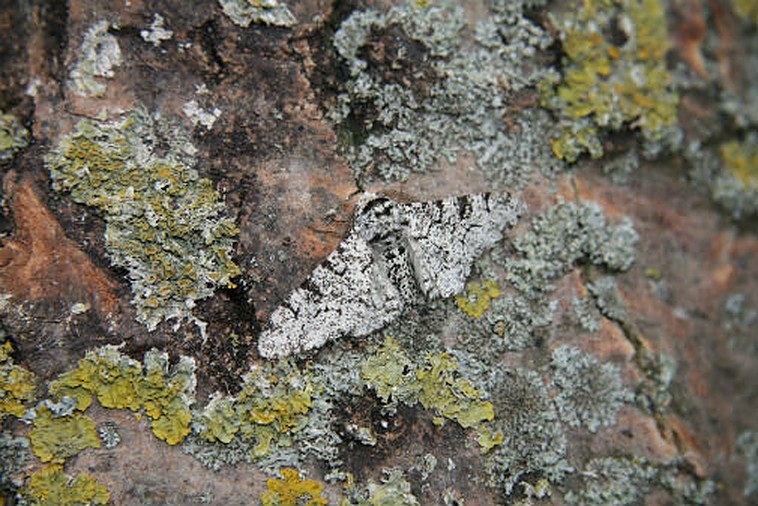
Peppered moth biston betularia has declined by 81% over the last 50 years,
according to Rothamsted Insect Survey data [Credit: Callum Macgregor]
Whether climate is contributing to the more recent decline requires further investigation; rising average annual temperatures and rainfall patterns did not match up with the peaks and troughs in moth populations, but extreme weather events—from deluge and flooding to heatwaves and drought—are often not reflected in average climate records.

The post-1982 decline appears to be real, but the researchers concluded that the reasons for this ecological decline are not as straightforward as is sometimes suggested.

"There is no simple explanation and more research on long-term data sets is required" added Professor Thomas. "We found that short-term studies and infrequent sampling can give erroneous estimates of biomass change. The complexity of insect population change requires more, better and longer-running data if we are to draw robust conclusions, particularly for parts of the world where insect data are limited."

The study is published in Nature Ecology & Evolution.

Author: Shelley Hughes | Source: University of York [November 11, 2019]

Miniature fanged 'deer' rediscovered tiptoeing through Vietnam's coastal forests


Global Wildlife Conservation and partners Southern Institute of Ecology and Leibniz Institute for Zoo and Wildlife Research have rediscovered a species lost to science since 1990 called a silver-backed chevrotain -- a deer-like species that is the size of a rabbit, has a silver sheen, and has been hanging on in a region of Vietnam ravaged by poaching by snares. The silver-backed chevrotain, also called the Vietnamese mouse deer, was last recorded more than 25 years ago and is the first mammal rediscovered on GWC's top 25 most wanted lost species in the Search for Lost Species.

Miniature fanged 'deer' rediscovered tiptoeing through Vietnam's coastal forests
This is a camera trap image in Vietnam [Credit: Southern Institute of Ecology/Global Wildlife Conservation/
Leibniz Institute for Zoo and Wildlife Research/NCNP]
The rediscovery in southern Vietnam was published in the scientific journal Nature Ecology & Evolution and is spurring on efforts to protect the chevrotain and the other mysterious and extraordinary wildlife that shares its home in Vietnam.

"We had no idea what to expect, so I was surprised and overjoyed when we checked the camera traps and saw photographs of a mouse deer with silver flanks," said An Nguyen, associate conservation scientist for GWC and expedition team leader. Nguyen is also field coordinator and PhD student with the Leibniz Institute for Zoo and Wildlife Research. "For so long, this species has seemingly only existed as part of our imagination. Discovering that it is, indeed, still out there, is the first step in ensuring we don't lose it again, and we're moving quickly now to figure out how best to protect it."


The silver-backed chevrotain was described in 1910 from four individuals collected from southern Vietnam. A Russian expedition in 1990 in central Vietnam collected a fifth individual. Scientists know almost nothing about general ecology or conservation status of this species, making it one of the highest mammal conservation priorities in the Greater Annamite mountains, one of GWC's focal wildlands.

After several interviews with local villagers and government forest rangers who reported seeing a gray mouse deer -- the colour distinguishing the silver-backed chevrotain from the more common lesser mouse deer -- the field team set three camera traps for five months in an area of southern Vietnam where locals indicated they may have seen the animal. This resulted in 275 photos of the species. The team then set up another 29 cameras in the same area, this time recording 1,881 photographs of the chevrotain over five months.


"The rediscovery of the silver-backed chevrotain provides a big hope for the conservation of biodiversity, especially threatened species, in Vietnam," said Hoang Minh Duc, head of the Southern Institute of Ecology's Department of Zoology. "This also encourages us, together with relevant and international partners, to devote time and effort to further investigate and conserve Vietnam's biodiversity heritage."

There are 10 known species of chevrotains in the world, primarily from Asia. Despite their common English names, chevrotains are neither mice nor deer, but the world's smallest small ungulates (hoofed mammals). They are shy and solitary, appear to walk on the tips of their hooves and have two tiny fangs. Chevrotains typically weigh less than 5 kg.


The silver-backed chevrotain is one of a number of fascinating species that live in the diverse tropical forests of Southeast Asia, where some species have been discovered only in the last few decades. This includes the antelope-like saola (the Asian "unicorn"), which was only discovered in 1992 and that no biologist has seen in the wild. Animals in this area of the world, however, are victims of a devastating hunting technique -- the use of cheap and homemade wire snares. The level of indiscriminate hunting in the region has led to the widespread "empty forest syndrome" across Vietnam, pushing numerous Annamite species to the brink of extinction.

A team is now setting out to determine how large -- and stable -- this population of silver-backed chevrotains is, assess the wider distribution of the species and explore the threats to its survival. As part of the first-ever comprehensive survey on the species, the team began camera trap surveys in October in two additional areas. They will use all of the information that they gather to develop a conservation action plan that strengthens enforcement and protection of the species across its range, building on the increased enforcement already put in place at the site of rediscovery.

"It is an amazing feat to go from complete lack of knowledge of the wildlife of the Greater Annamites 25 years ago to now having this question mark of the silver-backed chevrotain resolved," said Barney Long, GWC senior director of species conservation. "But the work is only beginning with the rediscovery and initial protection measures that have been put in place -- now we need to identify not just a few individuals on camera traps, but one or two sites with sizable populations so that we can actually protect and restore the species."

Source: Forschungsverbund Berlin [November 11, 2019]

Unless warming is slowed, emperor penguins will be marching towards extinction


Emperor penguins are some of the most striking and charismatic animals on Earth, but a new study from the Woods Hole Oceanographic Institution (WHOI) has found that a warming climate may render them extinct by the end of this century. The study, which was part of an international collaboration between scientists, published in the journal Global Change Biology.

Unless warming is slowed, emperor penguins will be marching towards extinction
The fate of emperor penguins is largely tied to sea ice, making them particulary vulnerable to warming
[Credit: Stephanie Jenouvrier, Woods Hole Oceanographic Institution]
"If global climate keeps warming at the current rate, we expect emperor penguins in Antarctica to experience an 86 percent decline by the year 2100," says Stephanie Jenouvrier, a seabird ecologist at WHOI and lead author on the paper. "At that point, it is very unlikely for them to bounce back."


The fate of the penguins is largely tied to the fate of sea ice, which the animals use as a home base for breeding and molting, she notes. Emperor penguins tend to build their colonies on ice with extremely specific conditions -- it must be locked in to the shoreline of the Antarctic continent, but close enough to open seawater to give the birds access to food for themselves and their young. As climate warms, however, that sea ice will gradually disappear, robbing the birds of their habitat, food sources, and ability to hatch chicks.

Jenouvrier and her team conducted the study by combining two existing computer models. The first, a global climate model created by the National Center for Atmospheric Research (NCAR), offered projections of where and when sea ice would form under different climate scenarios. The second, a model of the penguin population itself, calculated how colonies might react to changes in that ice habitat.


"We've been developing that penguin model for 10 years," says Jenouvrier. "It can give a very detailed account of how sea ice affects the life cycle of emperor penguins, their reproduction, and their mortality. When we feed the results of the NCAR climate model into it, we can start to see how different global temperature targets may affect the emperor penguin population as a whole."


The researchers ran the model on three different scenarios: a future where global temperature increases by only 1.5 degrees Celsius (the goal set out by the Paris climate accord), one where temperatures increase by 2 degrees Celsius, and one where no action is taken to reduce climate change, causing to a temperature increase of 5 to 6 degrees Celsius.

Under the 1.5 degree scenario, the study found that only 5 percent of sea ice would be lost by 2100, causing a 19 percent drop in the number of penguin colonies. If the planet warms by 2 degrees, however, those numbers increase dramatically: the loss of sea ice nearly triples, and more than a third of existing colonies disappear. The 'business as usual' scenario is even more dire, Jenouvrier adds, with an almost complete loss of the colonies ensured.

"Under that scenario, the penguins will effectively be marching towards extinction over the next century," she says.

Source: Woods Hole Oceanographic Institution [November 07, 2019]

The importance of Madagascar's lowland rainforest for lemur conservation


Throughout their evolutionary history, animals in regions with limited lowland habitat have evolved to adapt to higher elevations. Although lemurs--among the most endangered mammals on earth--are flexible and can persist at intermediate and high elevations in the Madagascar's eastern rainforest, a new Mammal Review study shows that the few remaining patches of lowland rainforest host the highest levels of lemur abundance for several species.

The importance of Madagascar's lowland rainforest for lemur conservation
A new study shows that the few remaining patches of lowland rainforest host the highest levels
of lemur abundance for several species [Credit: Marco Campera]
The findings suggest that the rapid human encroachment occurring in Madagascar's coastal areas has disproportionately threatened these primates.


"Very few lowland forests remain in Madagascar, and most of them have been poorly studied compared with areas at mid-elevations," said lead author Marco Campera, PhD, of Oxford Brookes University, in the UK. "Our research group found that the few remaining forests at low elevations host the highest abundance of lemurs,"

"It is crucial to promote research and conservation management in the few remaining patches of lowland rainforests to reconstruct the evolutionary history of the lemurs and to ensure the best possible protection of these unique primates," added senior author Giuseppe Donati, PhD, of Oxford Brookes University, in the UK.

Source: Wiley [November 06, 2019]

Figuring out the total human impacts on biodiversity


How much have humans affected the population of other species on the planet? A new methodology for documenting the cumulative human impacts on biodiversity aims to answer this question.

Figuring out the total human impacts on biodiversity
Gulf grouper [Credit: Alfredo Barroso, Flickr/Sea Around Us]
Dubbed EPOCH -for Evaluation of Population Change- the methodology was developed by a group of scientists from universities in Europe, Asia, and North America. It provides a standardized framework for organizing disperse data on individual species or populations of animals and plants that have been affected by urbanization, pollution, fishing, hunting, over-harvesting, and other anthropogenic activities.

Assessing impact requires contrasting the status of current populations with a reference state or baseline. However, the experts were faced with the challenge that for many species the baseline is not known because they have been impacted for a long time and those impacts have been forgotten. This phenomenon responds to the concept of 'Shifting Baseline Syndrome' developed by the Sea Around Us' principal investigator and University of British Columbia professor Daniel Pauly.


"So we decided to define baseline not as a particular date but as a reference state, that is, the population size expected today in the absence of human actions," said Ana Rodrigues, lead author of the study from the University of Montpellier. "This means that any changes in relation to this baseline reveal the cumulative extent of human impacts."

Rodrigues explained that the flexible definition allows for the baseline to be tailored to each population being studied and to be estimated from historical data, by comparing with an area where a species is still relatively intact, or by relating a less-known to a better-known species.

"For example, for Gulf grouper, we set the baseline in the 1940s, before industrial exploitation kicked off. Back then, it was considered a fish commonly present in the Gulf of California, according to historical records and interviews with old fishers. However, as time passed, data shows that it has been depleted through past overfishing and that in more recent years it is considered rare by new generations," Rodrigues said. "This is an example of a relatively recent temporal baseline but for the bowhead whales in the Barents Sea we went back 400 years, prior to industrial whaling."

Figuring out the total human impacts on biodiversity
Credit: Valentina Ruiz Leotaud
Each assessed species is classified into one of 11 EPOCH categories, based on the extent to which humans have affected their population numbers. Species can have experienced little change, their numbers may have moderately or severely increased or decreased, they may have been extirpated, or they may be newly present in a certain area.

"The advantage of going back in time and establishing these categories is that we can see the whole picture of how much more we have lost over hundreds of years," said Deng Palomares, a co-author of the study and the Sea Around Us project manager at UBC's Institute for the Oceans and Fisheries.


According to Palomares, her own experience setting an as-early-as-possible baseline, as it is done with the Sea Around Us' fisheries data, has already been useful to establish the reality of how much has been lost.

"Now, imagine going back hundreds of years, when explorers describe codfish as being so abundant in the coastal waters off Newfoundland that one could walk on their backs. With this framework, we bring the baseline nearer to a population's 'virgin biomass,' that is, the biomass that was there before humans invented powerful machines to harvest these resources and in the process destroy them."

For Rodrigues, Palomares, and their colleagues, these assessments that show the cumulative level of population change through time should help set realistic targets for the recovery of affected populations. "With the United Nations having just declared 2021-2030 the Decade of Ecosystem Restoration, ensuring future conservation efforts take into account the history of past change is more pertinent than ever," they wrote in their paper.

The paper was published in Philosophical Transactions B.

Author: Valentina Ruiz Leotaud | Source: Sea Around Us [November 05, 2019]

Complex society discovered in birds


Multilevel societies have, until now, only been known to exist among large-brained mammals including humans, other primates, elephants, giraffes, and dolphins. Now, scientists from the Max Planck Institute of Animal Behavior and the University of Konstanz report the existence of a multilevel society in a small-brained bird, the vulturine guineafowl (Acryllium vulturinum). The study, published in Current Biology, suggests that the birds can keep track of social associations with hundreds of other individuals--challenging the notion that large brains are a requirement for complex societies and providing a clue as to how these societies evolved.

Complex society discovered in birds
Vulturine guineafowl move in highly cohesive groups. This cohesion allows them to coordinate their actions
as they move together through the landscape, and therefore maintain stable group membership
 over extensive periods of time [Credit: James Klarevas]
Multilevel societies occur when social units, such as pairs, of animals form groups that have stable membership, and these groups then associate preferentially with specific other groups. Because this requires the animals to keep track of individuals in both their own and other groups, the assumption has long been that multilevel societies should only exist in species with the intelligence to cope with this complexity. While many bird species live in groups, these are either open, lacking long-term stability, or highly territorial, lacking associations with other groups.


Vulturine guineafowl, however, present a striking exception: the researchers observed these birds, that are from an ancient lineage resembling dinosaurs more than birds, behaving highly cohesively without exhibiting the signature intergroup aggression that is common in other group-living birds. And they can manage this despite having a relatively small brain, even relative to other birds. "They seemed to have the right elements to form complex social structures, and yet nothing was known about them," says Danai Papageorgiou, lead author on the paper and a PhD student at the Max Planck Institute of Animal Behavior.

The study, which is the first ever conducted on the species, involved tracking social relationships over the course of multiple seasons in a population of over 400 adult birds in a field site in Kenya. The researchers individually marked all birds in the population, and by observing them they discovered that the population comprised 18 distinct social groups (with 13 to 65 individuals in each). What struck the researchers is that these groups remained stable, despite regularly overlapping with one or more other groups both during the day and at night-time roosts.

Complex society discovered in birds
Groups of vulturine guineafowl can become very large, and when multiple groups come into contact the number of birds
moving together can reach into the hundreds. However, when these 'super-groups' eventually split, they do so back
 into their original stable group units, meaning that individuals are knowledgeable about who is part
 of their group and who is not [Credit: Danai Papageorgiou]
To see if these groups preferentially associated with one another, the researchers attached GPS tags to a sample of individuals in each group. This meant that the position of every single group was recorded continuously each day, which allowed researchers to simultaneously observe how all 18 groups in the population were interacting. The researchers found that groups associated with each other based on preference, rather than random encounters, and also showed that intergroup associations were more likely to take place during specific seasons and around particular physical features in the landscape.


"To our knowledge, this is the first time a social structure like this has been described for birds," says Papageorgiou. "It is remarkable to observe hundreds of birds coming out of a roost and splitting up perfectly into completely stable groups every single day. How do they do that? It's obviously not just about being smart."

Despite being understudied, guineafowl have challenged our understanding of how sociality has evolved. "This discovery raises a lot of questions about the mechanisms underlying complex societies and has opened up exciting possibilities of exploring what is it about this bird that has made them evolve a social system that is in many ways more comparable to a primate than to other birds," says Damien Farine, senior author on the paper and a Principal Investigator at the Max Planck Institute of Animal Behavior and the Centre for the Advanced Study of Collective Behaviour at the University of Konstanz.

But, vulturine guineafowl hold some important clues about how complex societies might have evolved. "Many examples of multilevel societies -- primates, elephants and giraffes -- might have evolved under similar ecological conditions as vulturine guineafowl," says Farine.

Source: Max Planck Society [November 04, 2019]

Carbon bomb: Study says climate impact from loss of intact tropical forests grossly underreported


A new study in the journal Science Advances says that carbon impacts from the loss of intact tropical forests has been grossly underreported.

Carbon bomb: Study says climate impact from loss of intact tropical forests grossly underreported
Road for oil palm plantations in West Kalimantan, Indonesia
[Credit: Rainforest Action Network]
The study calculates new figures relating to intact tropical forest lost between 2000-2013 that show a staggering increase of 626 percent in the long-term net carbon impacts through 2050. The revised total equals two years' worth of all global land-use change emissions.

The authors of the study, from WCS, University of Queensland, University of Oxford, Zoological Society of London, World Resources Institute, University of Maryland, and University of Northern British Columbia, found that direct clearance of intact tropical forests resulted in just 3.2 percent of gross carbon emissions from all deforestation across the pan-tropics. However, when they factored in full carbon accounting, which considers forgone carbon removals (carbon sequestration that would occur annually into the future if cleared or degraded forest had remained intact after year 2000), selective logging, edge effects and declines of carbon-dense tree species due to overhunting of seed-dispersing animals, they discovered that the figure skyrocketed by a factor of more than six times.


Said the study's lead author Sean Maxwell of WCS and the University of Queensland: "Our results revealed that continued destruction of intact tropical forests is a ticking time bomb for carbon emissions. There is an urgent need to safeguard these landscapes because they play an indispensable role in stabilizing the climate."

According to 2013 estimates, 549 million acres of intact tropical forests remain. Only 20 percent of tropical forests can be considered "intact," but those areas store some 40 percent of the above-ground carbon found in all tropical forests.

The authors say that intact forest retention rarely attracts funding from schemes designed to avoid land-use and land cover change emissions in developing nations.

Notably, the Reducing Emissions from Deforestation and Forest Degradation (REDD+) approach enables developing countries to receive financial incentives for enhancing carbon stocks, or avoiding the loss of carbon that would otherwise be emitted due to land-use and land cover change. Among other activities, REDD+ covers support for conservation of forests not under immediate threat, and was formally adopted by parties to the United Nations Framework Convention on Climate Change in 2008 at the 14th Conference of the Parties in Poland. Since then, however, financial support and implementation has predominantly focused on areas with high historical rates of deforestation (i.e. 'deforestation frontiers'). This is widely believed to deliver more immediate and more clearly demonstrable emission reductions than conserving intact forest areas. The latter tend to be treated as negligible sources of emissions as a result of the short timescales and conservative assumptions under which REDD+ operates - assumptions which the present study suggests are causing key opportunities to be missed.


Said WCS's Tom Evans, a co-author of the study: "The relative value of retaining intact tropical forest areas increases if one takes a longer-term view and considers the likely state of the world's forests by mid-century - a milestone date in the Paris Agreement. Agricultural expansion, logging, infrastructure and fires reduced the global extent of intact forests by 7.2 percent between 2000 and 2013 alone, yet the eventual carbon emissions locked in by these losses have not been comprehensively estimated."

The authors go on to say that a comparable analysis is needed for intact forests outside of the tropics such as the boreal forests of Canada and Russia, given that approximately half to two-thirds of carbon removals on earth's intact ecosystems occur outside the tropics. Without this global clean-up service, CO2 from human activities would accumulate in the atmosphere markedly faster than it does at present.

Said co-author James Watson of WCS and the University of Queensland: "Clearly, the climate mitigation potential of retaining intact forests is significant, but without proactive conservation action by national governments, supported by the global community, this potential will continue to dwindle.

At least 35 percent of the intact forests studied are home to, and protected by, Indigenous Peoples. Intact forests also provide exceptional levels of many other environmental services - for example they protect watersheds much better than degraded forests, return moisture to the air that falls in distant regions as rain, and help to keep vast numbers of species safe from extinction. When compared to forests that have been degraded by large-scale human activities, intact forests are more resistant to shocks such as fire and drought and usually less accessible to logging and agriculture conversion, making them one of our best conservation bets in the face of a rapidly changing climate.

Source: Wildlife Conservation Society [October 30, 2019]

Insect decline in Germany more extensive than suspected


Compared to a decade ago, today the number of insect species on many areas has decreased by about one third. This is the result of a survey of an international research team led by scientists from the Technical University of Munich (TUM). The loss of species mainly affects grasslands in the vicinity of intensively farmed land - but also applies to forests and protected areas.

Insect decline in Germany more extensive than suspected
The Small Gold Grasshopper (Chrysochraon dispar) is one of many insect species which have declined
[Credit: Martin Fellendorf/Universitat Ulm]
Various studies have already demonstrated that there are far fewer creatures chirping, buzzing, creeping and fluttering in German meadows today than 25 years ago. "Previous studies, however, either focused exclusively on biomass, i.e. the total weight of all insects, or on individual species or species groups. The fact that a large part of all insect groups is actually affected has not been clear so far," says Dr. Sebastian Seibold, a scientist with the Terrestrial Ecology Research Group at TUM.

In a large-scale biodiversity study, an international research team headed by scientists at TUM surveyed a large number of insect groups in Brandenburg, Thuringia and Baden-Wurttemberg between 2008 and 2017. Now the team has published its analysis in the scientific journal Nature.


Insects affected both in grasslands and forests

The researchers collected more than one million insects at 300 sites. They were able to prove that many of the nearly 2700 investigated species are in decline. In recent years, certain rare species could no longer be found in some of the regions studied. Both in forested areas and grasslands, the scientists counted about one third fewer insect species after 10 years.

"Before our survey it was unclear whether and to what extent forests were affected by the insect decline as well," says Seibold. Since 2008 they measured a decrease of approximately 40 percent in insect biomass in the forests they studied. In grasslands the results were even more alarming: at the end of the study period, the insect biomass decreased to only one third of its former level.

"A decline on that scale over a period of just 10 years came as a complete surprise to us - it is frightening, but fits the picture presented in a growing number of studies," says Wolfgang Weisser, professor of Terrestrial Ecology at TUM and a co-initiator of the cooperative project.

Insect decline in Germany more extensive than suspected
Particularly meadows in the vicinity of intensively used agricultural areas suffer from species loss
[Credit: Dr. Ulrike Garbe/Landesamt fur Umwelt, Brandenburg]


The decisive factor: the immediate surroundings

Every type of forest and grassland site studied by the team was affected: sheep pastures, meadows that are mowed and fertilized three to four times per year, forestry dominated coniferous forests and even unused forests in protected areas. The researchers identified the biggest losses in grasslands surrounded by intensively farmed land, where the most heavily impacted species were those unable to travel far.

In the forested areas, by contrast, the hardest-hit insect groups were those that cover long distances. "To decide whether it is a matter of the more mobile forest-dwelling species having more contact with agriculture, or whether it has something to do with living conditions in the forests, further study will be needed," said the former TUM researcher Dr. Martin Gossner.

Standalone initiatives have little prospect of success

"Current initiatives to address insect losses are overly concerned with the cultivation of individual plots of land and operate independently of one another for the most part," says Dr. Seibold. "To stop the decline, however, our results indicate that more coordination is needed at the regional and national levels."

Source: Technical University Munich [October 30, 2019]

In Southeast Asia, illegal hunting is a more threat to wildlife than forest degradation


For decades habitat loss and degradation were considered the important drivers for defaunation in tropical rainforest ecosystems. A new study carried out by the Leibniz Institute for Zoo and Wildlife Research (Leibniz-IZW) in cooperation with the World Wide Fund for Nature Vietnam (WWF-Vietnam) and the Sabah Forestry Department of the Government of Malaysia suggests that for ground dwelling mammal and bird communities, illegal hunting using indiscriminate snares may be a more immediate threat than forest degradation through selective logging. The researchers conducted a large scale camera-trapping study to compare several forest areas with logging concessions in Malaysian Borneo and protected areas in the Annamites ecoregion of Vietnam and Laos known to be subjected to illegal hunting. The results, published in the journal Communications Biology, show severe defaunation in snared forests compared to logged forests.

In Southeast Asia, illegal hunting is a more threat to wildlife than forest degradation
Removing snares in Vietnam [Credit: Andrew Tilker]
While both habitat degradation and unsustainable hunting have long been known to negatively affect animal communities in tropical rainforests, no study had directly compared how these threats compare in their severity in terms of losses of mammal and bird biodiversity at landscape scales. The result was that both logging and hunting negatively affected ground-dwelling mammal and bird communities, and unsustainable hunting had more severe effects on these communities. Overhunted sites in the Annamite Mountains of Vietnam and Laos had a higher proportion of species extirpated than the degraded sites in Borneo. Even species which persisted in the landscape subjected to illegal hunting had smaller distributions than similar species in the logging concessions.


"We had a unique opportunity to investigate the complex mechanisms of these defaunation drivers and compare their relative severities," says Andrew Tilker, doctoral student at the Leibniz-IZW and Asian Species Officer at Global Wildlife Conservation, one of the lead authors of the paper. "Our rainforest study sites in Malaysian Borneo are degraded through logging but have experienced little hunting, whereas our rainforest study sites in the Annamite Mountains are structurally intact but are subjected to extremely high illegal hunting pressure. Because the two study landscapes generally have similar habitats and faunal communities, it was an opportunity for us to investigate to what extent these defaunation drivers differ in their impact on tropical rainforest faunal communities."

In Southeast Asia, illegal hunting is a more threat to wildlife than forest degradation
Forest degradation through selective logging [Credit: Andrew Tilker]
"These findings are not only interesting from an academic perspective, they also have implications for conservation work", says Dr Jesse F. Abrams, postdoc at the Leibniz-IZW and co-first author. "Our results show that maintaining habitat quality as a means of protecting tropical biodiversity is, by itself, insufficient." The researchers suggest that, whilst both defaunation drivers should be addressed to maintain tropical biodiversity, in some cases it may be more prudent to focus limited conservation resources on addressing overhunting rather than habitat degradation.


Because hunting in the Annamites is primarily accomplished by the setting of indiscriminate wire snares, the findings of the study have implications for other landscapes in Southeast Asia, which currently are facing an ever-increasing snaring "epidemic". In this respect, the levels of defaunation found in the rainforest study sites in the Annamites by the researchers could offer a foreboding glimpse into the future of biodiversity across the wider Southeast Asian biodiversity hotspot. Co-author Ben Rawson, Conservation Director of WWF-Vietnam, says: "Industrial-scale snaring must be addressed if we are to avoid empty rainforests in the region and retain healthy populations of what are now some of the world's rarest species."

The study's findings also have positive implications for conservation. Datuk Mashor Mohd Jaini Director of the Sabah Forestry Department notes, "These results show that logging concessions can be safe havens for mammal and bird communities, particularly if sustainable forest management protocols are applied, following principles of forest certification standards" Dr Andreas Wilting, project leader, agrees. "Incorporating these degraded sites into conservation planning strategies could substantially extend the conservation real estate for the world's tropical regions," he says. "Our study has made it very clear that tropical rainforests must be protected from unsustainable hunting, regardless of whether they are logging concessions or protected areas. We must get ahead of the wave of indiscriminate hunting that is sweeping across Southeast Asia. Only then can we ensure the survival of Southeast Asia's biodiversity heritage".

Source: Forschungsverbund Berlin [October 30, 2019]

Extent of human encroachment into world's protected areas revealed


A study of human activity within thousands of conservation spaces in over 150 countries suggests that - on average across the world - protected areas are not reducing the "anthropogenic pressure" on our most precious natural habitats.

Extent of human encroachment into world's protected areas revealed
Forest transition in Cameroon [Credit: Mokhamad Edliadi/CIFOR]
Protected areas are vital to preserving diverse life on Earth, as well as mitigating climate change by conserving carbon-sequestering vegetation, say Cambridge scientists. They argue that the findings show the effects of chronic underfunding and a lack of involvement of local communities.

"Rapidly establishing new protected areas to meet global targets without providing sufficient investment and resourcing on the ground is unlikely to halt the unfolding extinction crisis," said lead author Dr Jonas Geldmann from the University of Cambridge Conservation Research Institute.

The research, published in Proceedings of the National Academy of Sciences, is by far the largest analysis of its kind to date. Scientists used satellite evidence of "night lights" and agriculture, as well as census and crop yield data, to assess levels of human encroachment in 12,315 protected areas between 1995 and 2010.


The scientists matched every satellite 'pixel' (64 square kilometres) of each protected area to a local pixel of commensurate soil type, elevation, and so on - but without conservation status. This allowed researchers to gauge the effect of protected areas when compared to an "appropriate sample" of unprotected land.

The majority of protected areas in every global region had suffered increases in human pressure. However, across the Northern Hemisphere and Australia, protection had - on average - proved effective at slowing human encroachment when compared with unprotected habitats.

In regions such as South America, Sub-Saharan Africa and South-East Asia, home to the world's richest biodiversity as well as some of its poorest communities, pressure from damaging human activity inside protected areas was "significantly higher" on average than in matched areas across fifteen years of data.

The researchers found a link between increased human encroachment on protected areas and nations with fewer roads and a lower rank on the Human Development Index.


"Our study suggests that protected areas in more remote and wild parts of the tropics have experienced alarming increases in human pressure since 1995," said Geldmann. "These places house a disproportionately high amount of the Earth's biodiversity, and play an irreplaceable role in maintaining our most threatened species."

Previous studies to compare protected and unprotected land have been limited to forests, and shown that protected areas reduce deforestation. The new research confirms that protected areas are more effective in places like the Amazon, but have struggled to safeguard many other habitats such as savannahs.

Rises in human activity were found to be particularly acute in the protected areas of East and Central Africa. In Sub-Saharan grasslands, for example, cropland inside protected areas had increased at almost double the rate seen in matched unprotected land. In African mangroves, pressure from agriculture had increased by around 13% more inside protected areas than outside.

While in the remote grassland habitats of South East Asia, agriculture had increased by 8% more in protected areas compared to similar non-protected areas. Likewise, some forested areas in South America, particularly outside the Amazon, saw agricultural encroachment increase around 10% more in protected areas.


"Our study shows that agriculture is the driving force behind threats to protected areas, particularity in the tropics," said Geldmann. "Our data does not reveal the causes, but we suspect factors that play a major role include rapid population growth, lack of funding, and higher levels of corruption. Additionally, most unprotected land suitable for agriculture is already farmed."

"We think that what we are seeing are the effects of establishing protected areas on paper, but not following through with the right funding, management and community engagement that is needed," Geldmann said.

"Important ambitions to protect 17% of land by the end of this decade, expected to increase to 30% at a pivotal meeting next year in China, will not mean much if not accompanied by enough resources to ensure the preservation of precious habitats."

The research team argue that protected area designation can sometimes undermine the rights of local communities, which in turn can end up encouraging over-exploitation and paving the way for opportunistic "outsiders". Other studies have shown that supporting indigenous people to manage reserves themselves can reduce habitat loss.

Source: University of Cambridge [October 28, 2019]