Theme images by kelvinjay. Powered by Blogger.

USA

AFRICA

ASIA

Brazil

Portugal

United Kingdom

Switzerland

Roman remains found at Mijas on the Costa del Sol


Roman remains almost 2,000 years old have been found in Mijas in new excavations at the Cortijo de Acebedo site on the Costa del Sol.

Roman remains found at Mijas on the Costa del Sol
Mayor of Mijas Josele Gonzalez visiting the site 
[Credit: Mijas Comunicacion BB]
Several rooms that were part of a large building have been uncovered and finds including a 1st century bronze spoon, jewellery, coins and an amphora made.


The mayor of Mijas, Josele Gonzalez, announced the new discovery and said that archaeological work will continue in order to obtain more information on the different rooms found.

It is thought they may have been part of a bath house, with the existence of a cold water pool and latrines already known.

Roman remains found at Mijas on the Costa del Sol
Bronze spoon found at the site [Credit: Mijas Comunicacion BB]


The director of the excavation, Desireé Piñero, has declared that it is possible to discover the context of the building with other rooms, such as other swimming pools, a possible vestibule and a patio, information that she hopes to “obtain in the coming months”.

The Councillor for Historical Heritage, Laura Moreno, has reported that “these excavations have brought to light numerous pieces of different materials and types” and that on these ceramic and metal items “restoration and consolidation work has been carried out for optimum conservation.”

Since 2017, the Department of Historical Heritage of Mijas Town Council has been carrying out archaeological surveys in the town, which uncovered two well preserved pottery kilns at the site.

Author: Dilip Kuner | Source: EuroWeekly News [November 21, 2019]

Research shows people made ropes and baskets during the Paleolithic era


A research team from the University of Valencia and the CSIC has published a study that demonstrates the use of plant fibres during the Final Palaeolithic era in the Santa Maira caves (Castell de Castells, Alicante).

Research shows people made ropes and baskets during the Paleolithic era
Santa Maira cave [Credit: Asociación RUVID]
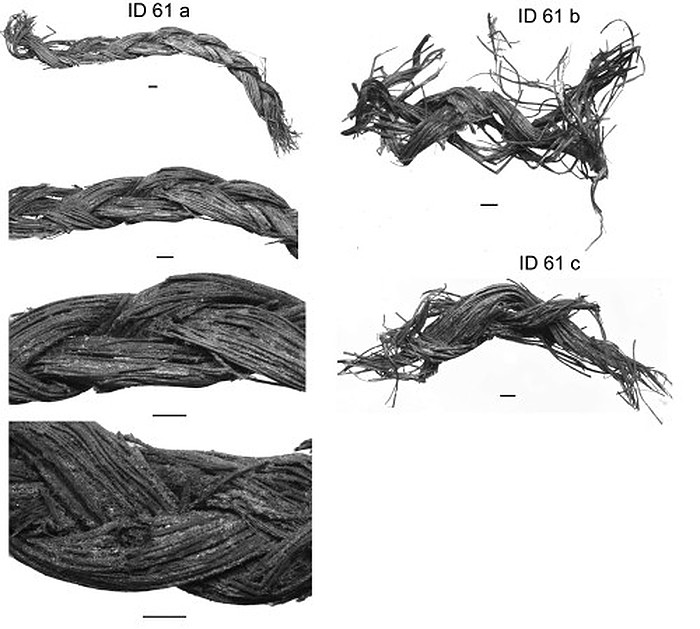
These are fragments of braided rope and basketwork imprints on clay. The rope has provided the oldest direct dating in Europe for an object made of braided fibres: 12,700 years ago. In the same work, the first evidence on the use of containers made from clay-coated baskets has also been revealed.

The work analyses both the species used to obtain braided ropes, their treatment and preparation, as well as their use to manufacture more complex devices such as baskets and containers. These materials have been dated back about 13,000 years. Ethnological data indicate that these materials have been widely used among historical societies, but we are largely unaware of their use in Prehistory.


“It is an important contribution to the knowledge of the use of perishable materials among the hunter-gatherer-fishermen societies of the European Palaeolithic” according to J. Emili Aura, Professor of the Department of Prehistory, Archaeology and Ancient History of the University of Valencia.

The conservation of vegetable fibres of this age requires particular preservation conditions. Also that of clay fragments with baskets imprints, whose exposure to fire has allowed their conservation. These are containers whose age exceeds 5,000 years of the first Neolithic ceramics of the western Mediterranean. The study has been published in the academic journal Vegetation History and Archaeobotany.

Research shows people made ropes and baskets during the Paleolithic era
String fragments analyzed in the study [Credit: U. València]
The analysis of the vegetal fibres has allowed to identify the remains as belonging to a monocotyledonus, probably from the group of grasses and very similar to esparto. Its leaves were braided to make ropes with which a large number of artefacts could be made and with several uses.


The director of the excavation project, J. Emili Aura, points out that the Santa Maira data allow us to begin to correct a great bias. To think that only the materials that are best preserved, such as stone, bone or shell, were the most used is a mistake. These evidences show that other materials and techniques must have a wide use and diverse applications: baskets, backpacks or footwear.

This bias also affects the importance attributed to these techniques during the Palaeolithic. “The same goes for the character of this braiding rope activity and its possible authors. It is known that in historical societies it was a seasonal task developed largely by women.”

The materials analysed indicate the manufacture of various basketry objects using ropes, without ruling out the possible elaboration of fabrics. The fragments of mud with imprints allow us to propose the hypothesis that these are baskets that were covered with mud, which could be used for the preservation of liquids or for cooking. Its discovery opens a good number of questions. Ropes and containers are related to the rest of the techniques and materials found in the site, with the palaeoeconomics of these groups and their settlement systems.

Source: Asociación RUVID [November 18, 2019]

Alpine rock axeheads became social and economic exchange fetishes in the Neolithic


Axeheads made out of Alpine rocks had strong social and economic symbolic meaning in the Neolithic, given their production and use value. Their resistance to friction and breakage, which permitted intense polishing and a re-elaboration of the rocks, gave these artefacts an elevated exchange value, key to the formation of long-distance exchange networks among communities of Western Europe. Communities who had already begun to set the value of exchange of a product according to the time and effort invested in producing them.

Alpine rock axeheads became social and economic exchange fetishes in the Neolithic
Alpine rock axehead found at Harras, Thuringia, from the Michelsberg Culture (c. 4300-2800 BCE)
[Credit: Juraj Liptak, State Office for Heritage Management and Archaeology Saxony-Anhalt]
This is what a study led by a research group at the Universitat Autonoma de Barcelona (UAB) indicates in regards to the mechanical and physical parameters characterising the production, circulation and use of a series of rock types used in the manufacturing of sharp-edged polished artefacts in Europe during the Neolithic (5600-2200 BCE).

The objective of the study was to answer a long debated topic: the criteria by which Alpine rocks formed part of an unprecedented pan-European phenomenon made up of long-distance exchange networks, while others were only used locally. Was the choice based on economic, functional or perhaps subjective criteria? Stone axeheads were crucial to the survival and economic reproduction of societies in the Neolithic. Some of the rocks used travelled over 1000 kilometres from their Alpine regions to northern Europe, Andalusia in southern Spain and the Balkans.


This is the first time a study includes in the specialised bibliography comparative data obtained by testing the resistance to friction and breakage of the rocks. These mechanical parameters have led to the definition of production and use values, which were then correlated with the distances and volumes of the rocks exchanged in order to obtain their exchange value. The results help understand the basic principles underlying the supply and distribution system of stone materials during the Neolithic in Western Europe, as well as its related economic logic.

"The reasons favouring the integration of specific rock types into these long-distance networks depended on a complex pattern of technological and functional criteria. This pattern was not solely based on economic aspects, their use value, but rather on the mechanical capacity to resist successive transformation processes, i.e. their production value, and remain unaltered throughout time", explains Selina Delgado-Raack, researcher at the Department of Prehistory, UAB, and first author of the article.

Supply System and Economic Logic

The study points to the diverging economic conception between the manufacturing of tools using other rocks and Alpine rock axeheads. Neolithic communities selected the most suitable raw materials available from all the resources in their region and knew each of their mechanical and physical characteristics. These tools normally travelled in a radius of 200 kilometres from where they originated and rarely went farther than 400-500 kilometres. Only Alpine rocks travelled further than those regional and economic limits.

Alpine rock axeheads became social and economic exchange fetishes in the Neolithic
Microscopic view of a thin section of an omphacitite, one of the Alpine rock types used for axeheads
 in the Neolithic analysed in this study [Credit: UAB]
"The circulation of these rocks at larger distances did not respond to a functional and cost-efficient logic, in which each agent takes into account the costs of manufacturing and transport when selecting the different rock types, all of them viable in being converted into fully functioning tools", indicates Roberto Risch, also researcher at the Department of Prehistory, UAB, and coordinator of the research.


"It rather obeys the emergence of a very different economic reasoning, based on the ability to transform one material through ever greater amounts of work, something which many centuries later Adam Smith used to define the British economy of the 18th century. In the case of Alpine axeheads, their exceptional exchange value was due to the increase in manufacturing costs, a result of the intense polishing of these stones as they passed from one community to another".

A Primitive Form of Currency?

For the research team, the fact that the Alpine axeheads are categorised as the most commonly crafted and modified artefact in different periods and regions during the Neolithic rules out their role as symbols of power or ceremonial elements. "The economic pattern points towards more of a fetish object used in social and economic interactions among European communities of highly different socio-political productions and orientations", Selina Delgado-Raack states.

The exceptional exchange value reached by some rock types, such as the omphacitites and jadeitites, leads the team to think that they may have been used as a primitive form of currency, although they admit that there is a need for more studies before this topic can be clarified.

The study is published in the Journal of Archaeological Method and Theory.

Source: Autonomous University of Barcelona [November 14, 2019]

The last Neanderthal necklace


Eagle talons are regarded as the first elements used to make jewellery by Neanderthals, a practice which spread around Southern Europe about 120,000 and 40,000 years ago. Now, for the first time, researchers found evidence of the ornamental uses of eagle talons in the Iberian Peninsula. An article published in the cover of the journal Science Advances talks about the findings, which took place in the site of the cave Foradada in Calafell. The article was led by Antonio Rodriguez-Hidalgo, researcher at the Institute of Evolution in Africa (IDEA) and member of the research team in a project of the Prehistoric Studies and Research Seminar (SERP) of the UB.

The last Neanderthal necklace
A falange of imperial eagle with marks of court from Cave Foradada
[Credit: Antonio Rodriguez-Hidalgo]
The interest in these findings lies in the fact that it is the most modern piece of the kind so far regarding the Neanderthal period and the first one found in the Iberian Peninsula. This circumstance widens the temporary and geographical limits that were estimated for this kind of Neanderthal ornaments. This would be "the last necklace made by the Neanderthals", according to Antonio Rodriguez-Hidalgo.

The last Neanderthal necklace
Imperial eagle talons [Credit: Antonio Rodriguez-Hidalgo]
"Neanderthals used eagle talons as symbolic elements, probably as necklace pendants, from the beginnings of the mid Palaeolithic", notes Antonio Rodriguez-Hidalgo. In particular, what researchers found in Cova Foradada are bone remains from Spanish Imperial Eagle (Aquila Adalberti), from more than 39,000 years ago, with some marks that show these were used to take the talons so as to make pendants.


The found remains correspond to the left leg of a big eagle. By the looks of the marks, and analogy regarding remains from different prehistorical sites and ethnographic documentation, researchers determined that the animal was not manipulated for consumption but for symbolic reasons. Eagle talons are the oldest ornamental elements known in Europe, even older than seashells Homo sapiens sapiens perforated in northern Africa.

The last Neanderthal necklace
Experimental butchering of vulture talons to stablish analogies with archaeological cut marks
[Credit: Antonio Rodriguez-Hidalgo]
The findings belong to the chatelperronian culture, typical from the last Neanderthals that lived in Europe, and coincided with the moment when this species got in touch with Homo sapiens sapiens, from Africa -and expanding from the Middle East. Actually, Juan Ignacio Morales, researcher in the program Juan de la Cierva affiliated at SERP and signer of the article, presents this use of eagle talons as ornaments could have been a cultural transmission from the Neanderthals to modern humans, who adopted this practice after reaching Europe.

The last Neanderthal necklace
The site of the cave Foradada (Calafell, Tarragona)
[Credit: Antonio Rodriguez-Hidalgo]
Cova Foradada covers the most meridional chatelperronian culture site in Europe. The discovery involved a change in the map of the territory where the step from Middle Palaeolithic to Upper Palaeolithic took place 40,000 years ago, and where interaction between Neanderthals and Homo sapiens sapiens probably took place.

Existence of a prehistoric settlement in Spanish province of Alava confirmed


A team directed by the CENIEH has used the magnetic survey technique to detect room structures in the area “Los Cascajos”, a spot in Spanish province of Alava where there were already indications of the existence of a Neolithic-Chalcolithic settlement.

Existence of a prehistoric settlement in Spanish province of Alava confirmed
Credit: CENIEH
The magnetic survey carried out, between the end of September and the start of October, in the area “Los Cascajos” (Tobera, Berantevilla), directed by Andoni Tarrino, a geologist at the Centro Nacional de Investigacion sobre la Evolucion Humana (CENIEH), has confirmed the existence of a Neolithic-Chalcolithic settlement in the south of Alava, one of the few settlements of this chronology found to date in the Pais Vasco.


This year’s geophysical survey was undertaken to complete the data obtained in the campaign that started last year. The place is one where there were already hints of a prehistoric settlement because of the materials (flint, ceramics, axes, etc.) collected during surface archaeological surveys conducted during the 1980s. This time, the survey has been completed with the identification of the magnetic anomalies in the ground around the settlement, over a total area of 7.3 hectares.

Existence of a prehistoric settlement in Spanish province of Alava confirmed
Credit: CENIEH
“In the preliminary results, an abundance of linear structures were detected, dozens of them circular, which for the moment we have interpreted as huts of some 10-20 meters in diameter. An endless number of point structures such as wells/pits, etc., and other unknown ones were also recognized”, explains Tarrino.


Probably, this settlement is related to the prehistoric flint mining operations existing in the Sierra de Araico, and specifically with the Pozarrate Quarry, currently undergoing excavation, which lies in Trevino, only 2.15 km away as the crow flies. Its interesting and singular situation opens up the possibility of an archaeological project which contrasts the geophysical data and in addition would allow us to date the settlement.

Existence of a prehistoric settlement in Spanish province of Alava confirmed
Credit: CENIEH
This Project, in which the other participants are the German geophysicist Helmut Becker and the archaeologist Anne-Sophie Flade-Becker and Mikel Aguirre (UNED, Bergara), has been financed by the Departamento de Cultura y Deportes of the Diputacion Foral de Alava, with the support of the CENIEH and the Universidad del Pais Vasco (UPV/EHU).

Source: CENIEH [October 16, 2019]

Study 'cures' oldest case of deafness in human evolution


An international team of researchers including faculty at Binghamton University, State University of New York, has published a new study examining a 430,000-year-old cranium of a human ancestor that was previously described as deaf, representing the oldest case of deafness in human prehistory.

Study 'cures' oldest case of deafness in human evolution
Cranium 4 from the site of the Sima de los Huesos in northern Spain
[Credit: Binghamton University]
"The current finding is significant because we have definitively shown this individual was not deaf. Rather than rely on subjective assessments based on the presence of a pathological condition in the ear canals, we have studied in detail the physiological implications of the pathology and have found it does not affect hearing," said Binghamton University anthropologist Rolf Quam. "This is a classic pathology that has been identified in more recent archaeological skeletons and has long been a source of speculation regarding its effects on the lifeways of past human populations. This is the first time the effects have been studied so precisely."

The study, led by anthropologists and clinicians at the University of Alcala and HM Hospitals in Spain, focuses on Cranium 4 from the site of the Sima de los Huesos in northern Spain. This is one of the most complete crania known from the Middle Pleistocene time period and is considered to be an early ancestor of the Neandertals.


The right and left ear canals in this individual both show the presence of extra bony growths (exostoses, in technical terms) which partially block the ear canal. Similar pathologies have been documented in Neandertals across Europe and the Middle East and have been frequently reported in archaeological skeletons from more recent time periods. Although the precise reason behind the formation of this pathology in living humans is unclear, it has often been associated with repeated exposure to cold water.

The researchers analyzed high resolution computed tomography (CT) scans to create virtual 3D models of the ear structures. Data from measurements taken on the 3D models were then entered into a software program that predicts hearing abilities based on the anatomical measurements of the ear. This model was applied previously to other healthy individuals from the same site, who were shown to have hearing abilities that closely matched those in modern humans.


Relying on this methodology, the researchers hoped to document more precisely the degree of hearing loss exhibited by Cranium 4 individual. Surprisingly, despite this pathology in the ear canals, this individual did not suffer any appreciable differences in hearing compared to the healthy individuals from this same site.

"We were very surprised by the results," said coauthor Manuel Rosa of the Universidad de Alcala "and expected for this individual to have suffered some degree of hearing loss." This represents one of the classic pathological conditions of the human skeleton known to anthropologists for decades, and the academic literature is rife with explanations for why these bony growths appear and what their effects are on the individuals showing them.


"Our study is the first detailed attempt to analyze the clinical implications of this pathology in our fossil human ancestors," said lead researcher Mercedes Conde, "and our results suggest caution in attributing auditory consequences to the presence of these bony growths."

In living humans, hearing loss has clear social consequences since it is associated with delays in language acquisition, increased behavioral problems and psychological stress. Inferring such ephemeral aspects of human social life in ancient fossils is challenging and only rarely possible. The results of this new study suggest that, rather than representing a marginalized individual, the Cranium 4 individual appears to have been fully capable of engaging in the social life and activities of their group.

"This study represents a novel approach to examining a well-known pathological condition, relying on medical imaging technology and virtual 3D models to assess the clinical implications of an ancient disease and to reveal new insights into the lifeways of our ancestors," said Quam.

The researchers have some ear bones (malleus and incus) from Cranium 4's middle ear cavity that they plan to study in the near future.

The findings are published in the Journal of Human Evolution.

Source: Binghamton University [October 15, 2019]

Roman shipwreck loaded with amphorae discovered off coast of Majorca


Incredible footage reveals a Roman shipwreck containing more than 100 perfectly preserved amphorae that underwater archaeologists are painstakingly recovering.

Roman shipwreck loaded with amphorae discovered off coast of Majorca
Preliminary investigations suggest that the wreck dates from the third or fourth century and
was a merchant vessel carrying amphorae between Majorca and the Spanish mainland
[Credit: IBEAM. Instituto Balear de Estudios en Arqueología Marítima]
The wreck — which experts have dated back to around 1,700 years ago — was found off of the coast of Mallorca back in July 2019.

Based on some of the inscriptions on the long, two-handled jars, the archaeologists believe that the amphorae were used to store fish sauce, oil and wine.

However, researchers will not be able to open them to check until they have finished preservation work that will stop the salt in the sea water cracking the jars.


The wreck was found off of the coast of Mallorca's Can Pastilla Beach in July after local resident Felix Alarcón and his wife spotted pottery shards on the seabed.

After investigating, archaeologists found the Roman boat buried in the seabed mere feet from the shore.

In a press conference, archaeologist Sebastian Munar of the Balearic Institute of Maritime Archaeology Studies said that the amphorae were perfectly conserved in the ship's hold. The vessel is around 33 feet (ten metres) long and 16 feet (five metres) wide.


The merchant ship is thought to have been carrying its wares between Mallorca and the Spanish mainland.

Experts think that the Roman vessel sank around 1,700 years ago — although likely not as a result of a storm, given the excellent preservation of its fragile cargo.

With the assistance of the Spanish navy and national police divers, archaeologists have removed the jars, however the wreck itself is to be left on the sea floor.


The amphorae on-board the vessel have been transferred to the Museum of Mallorca, where experts will be analysing and restoring the spectacular artefacts.

'The amphorae are now in swimming pools where they are being desalinated and we think this process will last about four months,' Mallorca council heritage director Kika Coll told CEN.

'This process is important because the salt crystallises and can break the amphorae.'

'The amphorae have spent 1,700 years underwater and we do not want to make mistakes.'

'Once we are able to translate the inscriptions, we will learn more about the merchants, the products they transported and where they came from.'

Author: Ian Randall | Source: Daily Mail [September 27, 2019]

Unveiling of 'Calpeia' – the face of a 7500-year-old Gibraltarian woman


A forensic reconstruction of the head of a Neolithic woman who lived in Gibraltar 7,500 years ago was unveiled by the Minister for Heritage Dr John Cortes yesterday.

Unveiling of 'Calpeia' – the face of a 7500-year-old Gibraltarian woman
Credit: Johnny Bugeja/Gibraltar Chronicle
Named “Calpeia”, a reference to the Rock’s classical name, her remains had been found and excavated, by archaeologists working with the Gibraltar National Museum, from a cave burial near Europa Point in 1996.

Recent advances permitted segments of her DNA to be extracted. A combination of the technology currently available and the skills of Gibraltar National Museum Conservator, Manuel Jaen, had made this in-house project a reality.

Assisting Dr Cortes at the unveiling was Director of the museum Professor Clive Finlayson, Dr Geraldine Finlayson, Stewart Finlayson and Mr Jaen.

Human hair was used in the reconstruction process that took Mr Jaen six months.


Holding a 3D printed version of the skull found in 1996 during an excavation, Professor Finlayson explained the process of how Calpeia came to be.

“She was in a burial and we now know she was a she as she comes from the Neolithic period of around 5,400BC.”

“We were able to extract DNA from the skull so we know a number of things.”

“We know she was a female, we know she had features associated with dark hair, dark eyes and the interesting thing was when we look at her ancestry 10% of her genes were local Mesolithic hunter gathers but 90% of her genes were from Anatolia [modern day Turkey],” he said.

“I am not going to go into the ins and outs of Neanderthals being different species or not, but if the Neanderthal is a different linage and Nana is the first female Neanderthal, I think what you are going to see today is truly a modern human,” he added.

Unveiling of 'Calpeia' – the face of a 7500-year-old Gibraltarian woman
Credit: Johnny Bugeja/Gibraltar Chronicle
Calpeia’s skull had been deformed post-burial so the process of her reconstruction included the reshaping of a scanned copy of the skull, and completing the missing areas.

Dr Cortes described the work that Mr Jaen and the museum carried out as “extraordinary”.

He said: “When I saw what you are about to see a few days ago it was breath-taking, congratulations to Manuel for this incredible piece of work.”

“This young lady, I think she was late 30s early 40s, lived in Gibraltar seven and a half thousand years ago. She was buried in a cave at Europa Point.”


“I am told there was no agriculture in Gibraltar at that time, they were probably fishing living off the sea and living off the land.”

“But she was in Gibraltar, a Gibraltarian, though whether she was born here or travelled here we will never know. But, so many of us born here or who have travelled here consider ourselves Gibraltarian,” he added.

Dr Cortes said he, like Professor Finlayson, would not be drawn on whether Neanderthals are or not the same species as modern humans but stated that Calpeia was not a Neanderthal.

“So you are about to see the face of the first known Gibraltarian of seven and a half thousand years ago,” he said.

“So when you see her try and push your mind back all those years ago when the Rock was very, very different, still our Rock, still our Gibraltar, still lived, played and suffered and had their day to day life in a different way but they were humans just like us with the same emotions.”

Author: Eyleen Gomez | Source: Gibraltar Chronicle [September 13, 2019]