Theme images by kelvinjay. Powered by Blogger.

USA

AFRICA

ASIA

Brazil

Portugal

United Kingdom

Switzerland

Excavations at Agios Sozomenos-Nikolides and Djirpoulos 2019


The 7th excavation season, conducted from the 2nd of September to the 4th October 2019, under the direction of Dr. D. Pilides, Curator of Antiquities, Department of Antiquities (Cyprus), aimed at clarifying the architectural plan of the fortress at Nikolides and investigating further the complex of buildings at Djirpoulos. Excavation at both sites was held intermittently as Nikolides is out of reach on certain days when exercises are held by the National Guard.

Excavations at Agios Sozomenos-Nikolides and Djirpoulos 2019
View of the Nikolides excavation (2017) [Credit: Dept. of Antiquities,
Republic of Cyprus]
Nikolides

This year we focused attention on the access leading to the tower, by extending the excavation area, to investigate whether the staircase of ashlar stones and the platform of ashlars running parallel to it were preserved further to the south. The platform was made of large ashlars of approximately 1×0,5m although they vary in size. The staircase was not preserved any further but it was clear that the steps led to the top of the tower; only some of them are preserved as well as the lower subsrtucture of stones that supported the staircase.


On the east side, the plaster floor, made above bedrock was traced. A channel, running from an east to west direction (downslope) was made in the floor, its sides smoothed and bridged at two points with flat stones. Another two channels were found running parallel to this one on the north and south, unfortunately not very well preserved. These were also bridged over by the plaster floor at some points and may have functioned as drainage channels. On the west side of the area, a cavity, roughly rectangular, with a square ashlar stone (0,42×0,40×0,18m) in the middle was revealed and close to it, on the south, a circular hearth was found lined with clay and heavily burnt.  Two Plain White sherds were found with traces of a reddish substance on the interior.

Excavations at Agios Sozomenos-Nikolides and Djirpoulos 2019
Excavation plan of Agios Sozomenos-Nikolides [Credit: Dept. of Antiquities,
Republic of Cyprus]
As already noted last year, it is clear that the fortress was reconstructed at some point to add the formidable ashlar tower onto the existing circuit wall. The old wall was built of smaller sized zones, placed alternately with flat worked stones, while the new wall added to support the tower was made of large unworked stones, filled in with smaller ones and its faces dressed with ashlars. We tried to investigate how the old wall joined the new part on the east side, as the two were not on the same axis; normally there should have been a joint, possibly at an angle to each other.

Unfortunately, in this exact spot, a large crevice was bulldozed out, causing a serious disturbance that did not allow us to determine this issue. In fact, the damage was so great that the wall was denuded of its structure down to bedrock and a huge collapse of large stones was scattered around it and down the slope.  As in previous excavation seasons on the fortress, there is a total lack of finds and only small fragments of ceramics, mainly from small vessels occur. It is to be noted, however, that a bronze arrowhead was found on the surface after the winter rains, outside the excavated area.


Although the damage to the monument proved to be quite disruptive, the architecture and design of the fort are particularly impressive. It is evident that monumentality was a consideration but not the only factor for its construction, as it was further strengthened and embellished, meaning that defense was clearly another fundamental consideration at the time. In addition, both the plan, construction and additions indicate considerable awareness of military tactics and warfare.

Given the scarcity of other such structures in Cyprus, one wonders first whether it could be the product of local expertise or an adaptation of a foreign prototype and second, but obviously not any less significant,  who was the enemy? These are issues that need to be further investigated both by continued excavation in search for more evidence and, in combination with the results from the recent excavations at the Barsak fortress nearby as well as the settlement remains at Djirpoulos and Ampelia.

Djirpoulos

On the days when the fort on the plateau at Nikolides was inaccessible due to shooting exercises, excavation continued at Djirpoulos. The first aim was to complete the plan of the building on the NW and SE sides and slowly establish in the long run, whether there was a single complex or separate buildings. A new wall (802) parallel to 403 was located on the NW side forming a small room or corridor where a clay lekane, a pithos, a large storage jar and charcoal were found. Further excavation in this area revealed the continuation of wall 403. This wall continues to the NE (401) and turns at 90 degrees (400) to form an interior space. Wall 403 is interrupted by the Medieval irrigation channel which continues from NW to SE, already found in 2016.

Excavations at Agios Sozomenos-Nikolides and Djirpoulos 2019
View of the excavations at the Djirpoulos site [Credit: Dept. of Antiquities,
Republic of Cyprus]
The channel was lined with gypsum and blocked with an upstanding stone on the eastern side. As the gypsum flooring was not preserved intact, further excavation below revealed the remains of the ancient wall, while wall 802 was also affected by the construction of the channel. On the south of the Medieval channel, the floor of plaster  was preserved with a flat stone in situ, possibly used as a grinding surface as well as a sling stone.  On the north side of Wall 802, a clay hearth was located, roughly circular, around which burnt cooking ware, an upturned lekane, pithos fragments and a stone grinder were found as well as ashes and charcoal. Most interestingly, a small copper nodule with silver plating preserved on its surface was also found in the water sieved contents of the soil sample from the hearth.

A long wall (811), most probably the extension of Wall 203, was located, thus joining this year’s excavation to the rest of the building found in 2016. A floor of compact earth was revealed on the north side of Wall 811 with traces of fire. Charcoal, a small piece of slag  and a fragmentary wall bracket indicate perhaps both domestic and workshop activities. This floor  possibly dates to phase 2.  On the south side of Wall 811 large storage jar and pithos sherds with wavy ridges, fragments of cooking jars and basins were noted and on the floor, which was only partially preserved, a flat circular ceramic object, possibly a slow wheel was found.


Walls 803 and 804, parallel to each other, possibly repeat the architectural plan of the building found in 2016 with long narrow rooms or corridors on the NW part of the building. The upper layer, below the thick deposit of greenish clay representing erosion and abandonment, consisted of  compact earth mixed with plaster, possibly the collapse of the roof and/walls. Below, a layer of stones, possibly represents the collapse of the lower part of the walls and on their removal, a floor of plaster was revealed extending towards the stone channel noted in 2016. The plaster floor belongs to the earlier phase of the building as the wall built on top (803) indicates.

Two new walls forming the corner of an interior space (814, 815) possibly also belonging to the older phase were found in the space between 803 and 804. On the south side of these walls, stone grinders, large sherds of pithos, cooking ware fragments and charcoal were retrieved. Some White Slip I sherds and small fragments of Mycenaean vessels were found above the plaster floor.  Close to the stone channel a small irregular cavity in the floor contained ochre, some small animal bones and fragments of White Slip bowls.  On the exterior of wall 804, below the thick greenish erosion deposit, some reddish clay and unfired ceramic fragments confirm the function of the buildings as workshops and domestic installations, as already noted in 2016.

It would be interesting to see whether the new part of the building appearing in the NW actually followed the plan of the older phase,  as was the case in the SE  part of the building and to also see whether we have two similar joining complexes with a similar function.

Source: Dept. of Antiquities, Republic of Cyprus [November 23, 2019]

Ancient Akrotiri-Dreamer’s Bay Project: 2019 results


The Department of Antiquities, Ministry of Transport, Communications and Works has announced the completion of the 2019 underwater archaeological mission at the Akrotiri-Dreamer’s Bay ancient port, in the Limassol District. The survey was directed by staff from the University of Southampton, Centre for Maritime Archaeology, as part of the Ancient Akrotiri Project, an ongoing collaborative research project on the peninsula conducted since 2015 and led by the University of Leicester.

Ancient Akrotiri-Dreamer’s Bay Project: 2019 results
The 2019 season focused on three main tasks: further investigation of the ancient breakwater; completion of the survey
of Dreamer’s Bay, its approaches, and the area offshore of the buildings excavated by the University of Leicester
team on the coast to the west of the bay [Credit: Dept. of Antiquities, Republic of Cyprus]
Between September 8th and 19th 2019, a second season of underwater investigation was conducted at Dreamer’s Bay on the southern shores of the Akrotiri Peninsula, Cyprus. A team of professional diving maritime archaeologists, students of maritime archaeology, divers, surveyors, photographers, and terrestrial archaeologists predominantly from Cyprus and the UK, further investigated the ancient breakwater and the surrounding sea floor in Dreamer’s Bay.


Unlike the previous year that documented the remains of the ancient breakwater submerged some 1-4m beneath the water, the primary focus of the 2019 season was to complete a broader survey of the entire bay and the offshore approaches, and in particular to investigate an area to the east of the breakwater where a large amount of pottery was located in the previous season. The team suspected that this dispersed and concreted concentration of largely homogenous amphorae, was the remains of a shipwreck.

The 2019 season focused on three main tasks: further investigation of the ancient breakwater; completion of the survey of Dreamer’s Bay, its approaches, and the area offshore of the buildings excavated by the University of Leicester team on the coast to the west of the bay; and further analysis of the ceramic concentration to the east of the breakwater in order to determine its nature.

Ancient Akrotiri-Dreamer’s Bay Project: 2019 results
Survey conducted by divers using underwater scooters, enabled wider coverage of the offshore approaches, identified
new finds including numerous stone anchors and what appears to be the remains of a wreck carrying roof tiles
[Credit: Dept. of Antiquities, Republic of Cyprus]
The breakwater was extensively surveyed in 2018 both visually and photogrammetrically. The focus of 2019 was to calculate the volume of the rubble that had fallen from the breakwater largely to the east of the structure, in order to ascertain its original height and scale. The area around the breakwater was also more thoroughly investigated and a channel some 5-6m deep was clearly mapped to the east of the breakwater noting an entrance to the more sheltered water in the lee of the structure, an area of anchorage.


Survey conducted by divers using underwater scooters, enabled wider coverage of the offshore approaches, identified new finds including numerous stone anchors and what appears to be the remains of a wreck carrying roof tiles, still of uncertain date. To the west of the breakwater other concentrations of ceramics were also noted, however, survey further offshore to the west in front of the shoreline buildings excavated by the Leicester team, still failed to identify any archaeological remains, making the theory that this was an area used as a roadstead, less feasible.

All finds were noted, described and photographed underwater and a record of their location taken using GPS. Selected finds were lifted only when they were either in danger of further displacement on the seafloor or were useful chronological indicators.

Ancient Akrotiri-Dreamer’s Bay Project: 2019 results
The most important result of the 2019 season was confirmation that the eastern concentration of largely homogenous
ceramics located on an elevated, rocky outcrop to the east of the breakwater and the sheltered channel,
was indeed a shipwreck [Credit: Dept. of Antiquities, Republic of Cyprus]
The most important result of the 2019 season was confirmation that the eastern concentration of largely homogenous ceramics located on an elevated, rocky outcrop to the east of the breakwater and the sheltered channel, was indeed a shipwreck.


Dating to the end of the 6th or the 7th century AD, as confirmed by ceramics expert Dr Stella Demesticha of the University of Cyprus, the extensive remains of broken amphorae were identified scattered over an area of approximately 130,000sqm, concreted to the rocks and caught in gullies. In the middle of the wreck lies an Aswan granite column also believed to belong to the vessel.

The area was extensively surveyed and the number of amphora shoulders and rims were counted equating to almost 800 in total, reflecting a fairly substantial vessel for the period. Examples of the amphorae were lifted for further analysis, which is still ongoing.

Ancient Akrotiri-Dreamer’s Bay Project: 2019 results
In the middle of the wreck lies an Aswan granite column also believed to belong to the vessel
[Credit: Dept. of Antiquities, Republic of Cyprus]
The work was carried out with the approval of the Republic of Cyprus Department of Antiquities and the UK Sovereign Base Areas Administration, and very much benefitted from the direct participation of RAF personnel who helped in the preparation and offered their time, expertise and support during the field season.

The University of Cyprus, MARELab, offered support in the form of an excellent dive boat, as well as expertise, particularly with respect to ceramic identification. Nicosia based CP Marine Explorations provided the dive logistics, safety and underwater survey scooters, and Kembali Divers the tanks and air. Further support was provided by the Defence Infrastructure Organisation and the Western Sovereign Base Area Archaeological Society.

This season we were honoured to welcome for a day the Base Station commander as visiting diver. The project was generously funded by the Honor Frost Foundation, UK, and sustained by a hard working team of young maritime archaeologists.

Source: Dept. of Antiquities, Republic of Cyprus [November 21, 2019]

Roman remains found at Mijas on the Costa del Sol


Roman remains almost 2,000 years old have been found in Mijas in new excavations at the Cortijo de Acebedo site on the Costa del Sol.

Roman remains found at Mijas on the Costa del Sol
Mayor of Mijas Josele Gonzalez visiting the site 
[Credit: Mijas Comunicacion BB]
Several rooms that were part of a large building have been uncovered and finds including a 1st century bronze spoon, jewellery, coins and an amphora made.


The mayor of Mijas, Josele Gonzalez, announced the new discovery and said that archaeological work will continue in order to obtain more information on the different rooms found.

It is thought they may have been part of a bath house, with the existence of a cold water pool and latrines already known.

Roman remains found at Mijas on the Costa del Sol
Bronze spoon found at the site [Credit: Mijas Comunicacion BB]


The director of the excavation, Desireé Piñero, has declared that it is possible to discover the context of the building with other rooms, such as other swimming pools, a possible vestibule and a patio, information that she hopes to “obtain in the coming months”.

The Councillor for Historical Heritage, Laura Moreno, has reported that “these excavations have brought to light numerous pieces of different materials and types” and that on these ceramic and metal items “restoration and consolidation work has been carried out for optimum conservation.”

Since 2017, the Department of Historical Heritage of Mijas Town Council has been carrying out archaeological surveys in the town, which uncovered two well preserved pottery kilns at the site.

Author: Dilip Kuner | Source: EuroWeekly News [November 21, 2019]

European police bust gang looting artifacts in Italy


European police have busted an international crime gang involved in trafficking tens of thousands of Greek archaeological artefacts looted from illegal excavations in Italy, law enforcement agencies said Monday.

European police bust gang looting artifacts in Italy
Credit: Carabinieri TPC
Police from Italy, Britain, France, Germany and Serbia arrested 23 suspects and carried out 103 searches in the investigation that started in 2017, the EU police agency Europol and Eurojust said.


The gang used bulldozers and metal detectors to loot objects as old as 400 BC from the Calabria region -- the "toe" of Italy -- before selling them across Europe.

"Illegal excavations were managed by a well-structured organised crime group... led by two Calabrians" living in the southern province of Crotone, the agencies said in a combined statement.

European police bust gang looting artifacts in Italy
Credit: Europol
In Calabria "the cultural heritage includes important traces from the Greek and Roman period", Europol said.


Italian media said two Calabrian men aged 59 and 30 were arrested.

The gang also included "fences, intermediaries and mules operating out of different Italian regions" with the looted artefacts then going through contacts in Dijon, Munich, London and Vrsac in northeastern Serbia.

European police bust gang looting artifacts in Italy
Credit: Carabinieri TPC
Some of the stolen objects is said to date as far back as the fourth and third centuries B.C. and include five terracotta vases and oil lamps, plates depicting animal scenes, brooches and various jewels, Italian media reports said.


The looters used bulldozers to dig craters, before sifting through the earth and passing it through metal detectors, the reports added, quoting police sources.

"The looting carried out over the course of several years caused considerable damage to Italian cultural heritage," Europol and Eurojust added.

European police bust gang looting artifacts in Italy
Credit: Europol
Coordination between the two agencies enabled "arrests, searches and seizures immediately and simultaneously in the five countries," they added.

Italian and Swiss police in 2016 recovered a haul of archaeological artefacts stolen from Italy and stored by a notorious British antiquities dealer.

The haul, worth nine million euros ($10 million), was discovered in 2014 in a storage unit at the Geneva Freeport rented by Britain's disgraced Robin Symes, a giant in the illegal antiquities trade with ties to Italian tomb raiders.

At the time it was regarded as one of the most important recoveries of the last few decades.

Source: AFP [November 19, 2019]

Research shows people made ropes and baskets during the Paleolithic era


A research team from the University of Valencia and the CSIC has published a study that demonstrates the use of plant fibres during the Final Palaeolithic era in the Santa Maira caves (Castell de Castells, Alicante).

Research shows people made ropes and baskets during the Paleolithic era
Santa Maira cave [Credit: Asociación RUVID]
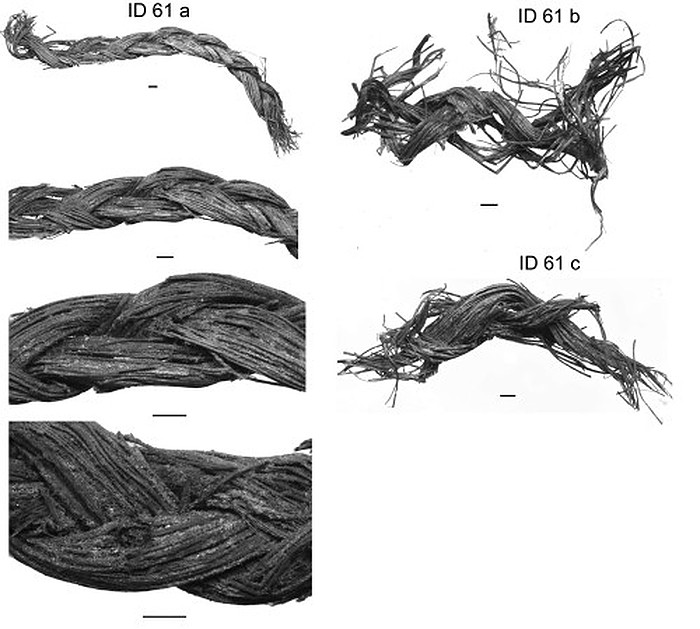
These are fragments of braided rope and basketwork imprints on clay. The rope has provided the oldest direct dating in Europe for an object made of braided fibres: 12,700 years ago. In the same work, the first evidence on the use of containers made from clay-coated baskets has also been revealed.

The work analyses both the species used to obtain braided ropes, their treatment and preparation, as well as their use to manufacture more complex devices such as baskets and containers. These materials have been dated back about 13,000 years. Ethnological data indicate that these materials have been widely used among historical societies, but we are largely unaware of their use in Prehistory.


“It is an important contribution to the knowledge of the use of perishable materials among the hunter-gatherer-fishermen societies of the European Palaeolithic” according to J. Emili Aura, Professor of the Department of Prehistory, Archaeology and Ancient History of the University of Valencia.

The conservation of vegetable fibres of this age requires particular preservation conditions. Also that of clay fragments with baskets imprints, whose exposure to fire has allowed their conservation. These are containers whose age exceeds 5,000 years of the first Neolithic ceramics of the western Mediterranean. The study has been published in the academic journal Vegetation History and Archaeobotany.

Research shows people made ropes and baskets during the Paleolithic era
String fragments analyzed in the study [Credit: U. València]
The analysis of the vegetal fibres has allowed to identify the remains as belonging to a monocotyledonus, probably from the group of grasses and very similar to esparto. Its leaves were braided to make ropes with which a large number of artefacts could be made and with several uses.


The director of the excavation project, J. Emili Aura, points out that the Santa Maira data allow us to begin to correct a great bias. To think that only the materials that are best preserved, such as stone, bone or shell, were the most used is a mistake. These evidences show that other materials and techniques must have a wide use and diverse applications: baskets, backpacks or footwear.

This bias also affects the importance attributed to these techniques during the Palaeolithic. “The same goes for the character of this braiding rope activity and its possible authors. It is known that in historical societies it was a seasonal task developed largely by women.”

The materials analysed indicate the manufacture of various basketry objects using ropes, without ruling out the possible elaboration of fabrics. The fragments of mud with imprints allow us to propose the hypothesis that these are baskets that were covered with mud, which could be used for the preservation of liquids or for cooking. Its discovery opens a good number of questions. Ropes and containers are related to the rest of the techniques and materials found in the site, with the palaeoeconomics of these groups and their settlement systems.

Source: Asociación RUVID [November 18, 2019]

Alpine rock axeheads became social and economic exchange fetishes in the Neolithic


Axeheads made out of Alpine rocks had strong social and economic symbolic meaning in the Neolithic, given their production and use value. Their resistance to friction and breakage, which permitted intense polishing and a re-elaboration of the rocks, gave these artefacts an elevated exchange value, key to the formation of long-distance exchange networks among communities of Western Europe. Communities who had already begun to set the value of exchange of a product according to the time and effort invested in producing them.

Alpine rock axeheads became social and economic exchange fetishes in the Neolithic
Alpine rock axehead found at Harras, Thuringia, from the Michelsberg Culture (c. 4300-2800 BCE)
[Credit: Juraj Liptak, State Office for Heritage Management and Archaeology Saxony-Anhalt]
This is what a study led by a research group at the Universitat Autonoma de Barcelona (UAB) indicates in regards to the mechanical and physical parameters characterising the production, circulation and use of a series of rock types used in the manufacturing of sharp-edged polished artefacts in Europe during the Neolithic (5600-2200 BCE).

The objective of the study was to answer a long debated topic: the criteria by which Alpine rocks formed part of an unprecedented pan-European phenomenon made up of long-distance exchange networks, while others were only used locally. Was the choice based on economic, functional or perhaps subjective criteria? Stone axeheads were crucial to the survival and economic reproduction of societies in the Neolithic. Some of the rocks used travelled over 1000 kilometres from their Alpine regions to northern Europe, Andalusia in southern Spain and the Balkans.


This is the first time a study includes in the specialised bibliography comparative data obtained by testing the resistance to friction and breakage of the rocks. These mechanical parameters have led to the definition of production and use values, which were then correlated with the distances and volumes of the rocks exchanged in order to obtain their exchange value. The results help understand the basic principles underlying the supply and distribution system of stone materials during the Neolithic in Western Europe, as well as its related economic logic.

"The reasons favouring the integration of specific rock types into these long-distance networks depended on a complex pattern of technological and functional criteria. This pattern was not solely based on economic aspects, their use value, but rather on the mechanical capacity to resist successive transformation processes, i.e. their production value, and remain unaltered throughout time", explains Selina Delgado-Raack, researcher at the Department of Prehistory, UAB, and first author of the article.

Supply System and Economic Logic

The study points to the diverging economic conception between the manufacturing of tools using other rocks and Alpine rock axeheads. Neolithic communities selected the most suitable raw materials available from all the resources in their region and knew each of their mechanical and physical characteristics. These tools normally travelled in a radius of 200 kilometres from where they originated and rarely went farther than 400-500 kilometres. Only Alpine rocks travelled further than those regional and economic limits.

Alpine rock axeheads became social and economic exchange fetishes in the Neolithic
Microscopic view of a thin section of an omphacitite, one of the Alpine rock types used for axeheads
 in the Neolithic analysed in this study [Credit: UAB]
"The circulation of these rocks at larger distances did not respond to a functional and cost-efficient logic, in which each agent takes into account the costs of manufacturing and transport when selecting the different rock types, all of them viable in being converted into fully functioning tools", indicates Roberto Risch, also researcher at the Department of Prehistory, UAB, and coordinator of the research.


"It rather obeys the emergence of a very different economic reasoning, based on the ability to transform one material through ever greater amounts of work, something which many centuries later Adam Smith used to define the British economy of the 18th century. In the case of Alpine axeheads, their exceptional exchange value was due to the increase in manufacturing costs, a result of the intense polishing of these stones as they passed from one community to another".

A Primitive Form of Currency?

For the research team, the fact that the Alpine axeheads are categorised as the most commonly crafted and modified artefact in different periods and regions during the Neolithic rules out their role as symbols of power or ceremonial elements. "The economic pattern points towards more of a fetish object used in social and economic interactions among European communities of highly different socio-political productions and orientations", Selina Delgado-Raack states.

The exceptional exchange value reached by some rock types, such as the omphacitites and jadeitites, leads the team to think that they may have been used as a primitive form of currency, although they admit that there is a need for more studies before this topic can be clarified.

The study is published in the Journal of Archaeological Method and Theory.

Source: Autonomous University of Barcelona [November 14, 2019]

Ancient cup given to first marathon victor returned to Greece


An ancient Greek cup awarded as a prize to the marathon winner in the first modern Olympics of 1896 has been returned to Athens from a German university.

Ancient cup given to first marathon victor returned to Greece
An ancient Greek drinking cup decorated with runners, which was one of the awards presented to Spyros Louis,
the Greek winner of the Marathon in the 1896 first modern Olympic Games in Athens, is seen at the
National Archaeological Museum in Athens [Credit: Petros Giannakouris/AP]
Greece's Culture Ministry said Wednesday that the 6th century B.C. pottery vessel was considered lost for decades until research in 2014 by archaeologist Giorgos Kavvadias identified it in the University of Muenster's collections.

A ministry statement said it was proved "beyond any doubt" that the two-handled wine cup painted with ancient runners was the one given to Spiros Louis, the Greek marathon victor in the 1896.


Following correspondence with Greek officials, the university agreed to return the cup, which was part of a private German collection it had bought in 1986. The statement said the collection had been put together by Werner Peek, a scholar of Greek and historian who lived in Athens during the 1930s. But it was unclear how the cup ended up in Peek's hands.

The vessel was presented at a ceremony at the National Archaeological Museum in Athens, where it will be exhibited for the next three months before being put on permanent display at a museum in Ancient Olympia, birthplace and venue of the ancient Games.

Louis, a humble water carrier with no training in running, won enduring fame in Greece for his unexpected victory on home turf in the marathon, seen as the most Greek of Olympic disciplines. He was presented with a silver cup and a silver medal—both of which are in Greece—as well as the drinking cup.

Source: Associated Press [November 13, 2019]

Venice on its knees as floods devastate city


Venice was in a state of crisis on Wednesday due to huge flooding after the high-water mark reached 187cm late on Tuesday, the highest level since the record 1966 flood.

Venice on its knees as floods devastate city
Credit: ANSA/AP


"Venice is on its knees," Venice Mayor Luigi Brugnaro said via Twitter. "St Mark's Basilica has suffered serious damage, like the whole city and the islands... We need everyone's help to get through the next few days that are putting us to the test.". A 78-year-old man was electrocuted due a short circuit, apparently linked to the flooding, at his home on the island of Pellestrina.

Another person also died during the flooding on the lagoon island, although in his case it may have been natural causes.

Venice on its knees as floods devastate city
Credit: ANSA/AP
There is massive damage. Brugnaro estimated that the cost ran into several hundred million euros. Three barges sank, while gondolas and other boats were stripped from their moorings. A fire broke our at the Ca' Pesaro museum because of an electrical malfunction.

Brugnaro said the council was asking central government to declare the city to be in a state of emergency and told local people and businesses to collect photographic and video evidence of the damage suffered for compensation claims. "We are faced with total, apocalyptic devastation," Veneto Governor Luca Zaia told Mediaset television.

Venice on its knees as floods devastate city
Credit: ANSA/AP


"I'm not exaggerating; 80% of the city is under water, the damage is unimaginable". Premier Giuseppe Conte is due to arrive in the city to assess the situation on Wednesday and Zaia said he would stay the night. Infrastructure Paola De Micheli is heading to Venice too.

President Sergio Mattarella called Brugnaro and Raffaello De Ruggieri, the mayor 2019 European Culture Capital Matera, which was badly hit by flooding on Tuesday.

Venice on its knees as floods devastate city
Credit: ANSA/AP
Venice's La Fenice has been temporarily put out of action too. Although the theatre itself is not flooded, water has entered an auxiliary area affecting the electrical and fire-prevention systems.

Pierpaolo Campostrini, a member of St. Mark's management board, said things could have been even worse for the cathedral.

Venice on its knees as floods devastate city
Credit: ANSA/AP


"We came within a whisker of the apocalypse," he said. "The water got into the basilica, it flooded the floor, broke windows and entered the crypt. It is dangerous, not so much because of what is contained in there, but because the water could have caused problems for the columns that hold up the basilica".


The devastation has led to controversy about the fact that the MOSE flood barrier system, which has been hit by delays and a corruption scandal, is still not operative. Environment Minister Sergio Costa linked the situation to the climate crisis.

The acqua alta came down to around 144cm on Wednesday after Tuesday's peak.

Source: ANSA [November 13, 2019]