Theme images by kelvinjay. Powered by Blogger.

USA

AFRICA

ASIA

Brazil

Portugal

United Kingdom

Switzerland

Unique sled dogs helped the inuit thrive in the North American Arctic


A unique group of dogs helped the Inuit conquer the tough terrain of the North American Arctic, major new analysis of the remains of hundreds of animals shows.

Unique sled dogs helped the inuit thrive in the North American Arctic
A team of Greenland sled dogs working in Greenland’s Disko Bay
 [Credit: Tatiana Feuerborn]
The study shows that the Inuit brought specialised dogs with them when they migrated from Alaska and Siberia instead of adopting local dogs they would have come across during their migration. They instead maintained their own dogs, suggesting they were keen to enhance or keep the special features they had. By analysing the shape of elements from 391 dogs, the study shows that the Inuit had larger dogs with a proportionally narrower cranium to these earlier dogs. The Inuit dogs are the direct ancestors of modern Arctic sledge dogs, although their appearance has continued to change over time.

Experts had thought the Inuit used dogs to pull sledges, and this is the first study which shows they introduced a new dog population to the region to do this. These dogs then spread across the North American Arctic alongside Inuit migrants.


Dr Carly Ameen, an archaeologist from the University of Exeter who led the study, said: "Dogs have lived in North America for as long as humans, but we show here that the Inuit brought new dogs to the region which were genetically distinct and physically different from earlier dogs.

"Thousands of years ago there was not the huge number of dog breeds as we know them today. Through analysing the DNA and morphology of the remains of hundreds of dogs we've found that the dogs used by the Inuit had distinctive skull and teeth shapes, and would have likely looked different in life to dogs already in the Arctic."

Unique sled dogs helped the inuit thrive in the North American Arctic
The ancestors of these dogs arrived with the Inuit to the North American Arctic
[Credit: Tatiana Feuerborn]
Experts also examined the DNA from 921 dogs and wolves who lived during the last 4,500 years. This analysis of the DNA, and the locations and time periods in which they were found, shows dogs from Inuit sites occupied from around 2,000 years ago were genetically different from the dogs already in the region.


Study co-lead author Tatiana Feuerborn, from the Globe Institute in Denmark and the Centre for Palaeogenetics in Sweden, said: "Archaeological evidence has shown us that before the Inuit arrived in North America dog sledging was a rarity. Our analysis of the DNA suggests dogs brought by the Inuit were distinct from the earlier dogs of the North American Arctic to fill specialist role in helping communities thrive in this hostile environment by aiding with transportation and hunting. The genetic legacy of these Inuit dogs can still be seen today in Arctic sledge dogs."

The Inuit were specialised sea mammal hunters, and were more mobile than other groups living in the Arctic, migrating huge distances across the region over 1,000 years ago, with the help of dog sledges and water craft. Today, sledge dogs whose origins can be traced back to the Inuit period continue to be an important part of Arctic communities.

The article is published in the journal Proceedings of the Royal Society B.

Source: University of Exeter [November 27, 2019]

Did human hunting activities alone drive great auks' extinction?


New insight on the extinction history of a flightless seabird that vanished from the shores of the North Atlantic during the 19th century has been published in eLife.

Did human hunting activities alone drive great auks' extinction?
A mounted great auk skin, The Brussels Auk (RBINS 5355), from the collections
at the Royal Belgian Institute of Natural Sciences (RBINS)
[Credit: Thierry Hubin, RBINS]
The findings suggest that intense hunting by humans could have caused the rapid extinction of the great auk, showing how even species that exist in large and widespread populations can be vulnerable to exploitation.

Great auks were large, flightless diving birds thought to have existed in the millions. They were distributed around the North Atlantic, with breeding colonies along the east coast of North America and especially on the islands off Newfoundland. They could also be found on islands off the coasts of Iceland and Scotland, as well as throughout Scandinavia.


But these birds had a long history of being hunted by humans. They were poached for their meat and eggs during prehistoric times, and this activity was further intensified in 1500 AD by European seamen visiting the fishing grounds of Newfoundland. Their feathers later became highly sought after in the 1700s, contributing further to their demise.

"Despite the well-documented history of exploitation since the 16th century, it is unclear whether hunting alone could have been responsible for the species' extinction, or whether the birds were already in decline due to natural environmental changes," says lead author Jessica Thomas, who completed the work as part of her PhD studies at Bangor University, UK, and the University of Copenhagen, Denmark, and is now a postdoctoral researcher at Swansea University, Wales, UK.

Did human hunting activities alone drive great auks' extinction?
Great auk humeri from Funk Island. These samples are part of the great auk collection
at the American Museum of Natural History [Credit: J. Thomas]
To investigate this further, Thomas and her collaborators carried out combined analyses of ancient genetic data, GPS-based ocean current data, and population viability - a process that looks at the probability of a population going extinct within a given number of years. They sequenced complete mitochondrial genomes of 41 individuals from across the species' geographic range and used their analyses to reconstruct the birds' population structure and dynamics throughout the Holocene period, the last 11,700 years of Earth's history.

"Taken together, our data don't suggest that great auks were at risk of extinction prior to intensive human hunting behaviour in the early 16th century," explains co-senior author Thomas Gilbert, Professor of Evolutionary Genomics at the University of Copenhagen. "But critically, this doesn't mean that we've provided solid evidence that humans alone were the cause of great auk extinction. What we have demonstrated is that human hunting pressure was likely to have caused extinction even if the birds weren't already under threat from environmental changes."


Gilbert adds that their conclusions are limited by a couple of factors. The mitochondrial genome represents only a single genetic marker and, due to limited sample preservation and availability, the study sample size of 41 is relatively small for population genetic analyses.

"Despite these limitations, the findings help reveal how industrial-scale commercial exploitation of natural resources have the potential to drive an abundant, wide-ranging and genetically diverse species to extinction within a short period of time," says collaborator Gary Carvalho, Professor in Zoology (Molecular Ecology) at Bangor University. This echoes the conclusions of a previous study* on the passenger pigeon, a bird that existed in significant numbers before going extinct in the early 20th century.

"Our work also emphasises the need to thoroughly monitor commercially harvested species, particularly in poorly researched environments such as our oceans," concludes co-senior author Michael Knapp, Senior Lecturer in Biological Anthropology and Rutherford Discovery Fellow at the University of Otago, New Zealand. "This will help lay the platform for sustainable ecosystems and ensure more effective conservation efforts."

Source: eLife [November 26, 2019]

Dinosaur skull turns paleontology assumptions on their head


A team of researchers at the University of Alberta has unearthed a well-preserved Styracosaurus skull--and its facial imperfections have implications for how paleontologists identify new species of dinosaurs.

Dinosaur skull turns paleontology assumptions on their head
Styracosaurus skull [Credit: Pixabay]
The skull was discovered by Scott Persons in 2015, then a graduate student in the Department of Biological Sciences, during an expedition in the badlands northwest of Dinosaur Provincial Park.


Nicknamed Hannah, the dinosaur was a Styracosaurus - a horned dinosaur over five metres in length with a fan of long horns. UAlberta paleontologists led by Robert Holmes, professor in the Department of Biological Sciences, have learned much from those horns--because they aren't symmetrical.

"When parts of one side of the skull were missing, paleontologists have assumed that the missing side was symmetrical to the one that was preserved," explained Persons. "Turns out, it isn't necessarily. Today, deer often have left and right antlers that are different in terms of their branching patterns. Hannah shows dramatically that dinosaurs could be the same way."

Dinosaur skull turns paleontology assumptions on their head
Hannah's skull, seen from all sides. The jacket used to recover Hannah’s skull weighed 2500
kilograms—requiring a helicopter to retrieve from the field! [Credit: Scott Persons]
The differences in the skull's left and right halves are so extreme that had the paleontologists found only isolated halves, they might have concluded that they belong to two different species


"The skull shows how much morphological variability there was in the genus," said Holmes. Like the antlers of modern deer and moose, Hannah shows that the pattern of dinosaur horns could vary significantly--meaning some fossils that were once assumed to be unique species will have to be reevaluated.

Tradition dictates that the person who finds an important dinosaur specimen gets to give it a nickname. "Hannah the dinosaur is named after my dog," explained Persons, now a professor and museum curator at the College of Charleston. "She's a good dog, and I knew she was home missing me while I was away on the expedition."

Dinosaur skull turns paleontology assumptions on their head
Paleontologist Scott Persons, pictured alongside the partially-uncovered skull. The Styracosaurus skull
has implications for how horned dinosaurs are identified [Credit: Scott Persons]


Despite the nickname, paleontologists have no way of knowing if the dinosaur was female. But they have learned other details from the skull--from a partnership with researchers in the Faculty of Engineering.

"Ahmed Qureshi and graduate student Baltej Rupal in the Faculty of Engineering assisted us in performing a 3D laser scan of the skull," said Persons. "That let our publication to include a digital reconstruction, allowing scientists all over the world to download the 3D model and inspect it in detail."

"This is the future of paleontological collections: digital dinosaurs."

The paper was published in Cretaceous Research.

Author: Andrew Lyle | Source: University of Alberta [November 25, 2019]

Scientists use modern technology to understand how ochre paint was created in rock art


Ochre, one of Earth's oldest naturally occurring materials, was often used as a vivid red paint in ancient rock art known as pictographs across the world. Despite its broad use throughout human history and a modern focus on how the artistic symbolism is interpreted, little research exists on the paint itself and how it was produced.

Scientists use modern technology to understand how ochre paint was created in rock art
One of the pieces of rock art found at Babine Lake. It is representative of the rock art
that was analyzed in the study [Credit: University of Missouri]
Now, scientists led by Brandi MacDonald at the University of Missouri are using archaeological science to understand how ochre paint was created by hunter-gatherers in North America to produce rock art located at Babine Lake in British Columbia.


"Ochre is one of the only types of material that people have continually used for over 200,000 years, if not longer," said MacDonald, who specializes in ancient pigments. "Therefore, we have a deep history in the archeological record of humans selecting and engaging with this material, but few people study how it's actually made."

This is the first study of the rock art at Babine Lake. It shows that individuals who prepared the ochre paints harvested an aquatic, iron-rich bacteria out of the lake -- in the form of an orange-brown sediment.

Scientists use modern technology to understand how ochre paint was created in rock art
In the study, the scientists heated a single grain of ochre and watched the effects of temperature change under
an electron microscope at MU's Electron Microscopy Core facility [Credit: University of Missouri]


In the study, the scientists used modern technology, including the ability to heat a single grain of ochre and watch the effects of temperature change under an electron microscope at MU's Electron Microscopy Core facility. They determined that individuals at Babine Lake deliberately heated this bacteria to a temperature range of approximately 750°C to 850°C to initiate the color transformation.

"It's common to think about the production of red paint as people collecting red rocks and crushing them up," MacDonald said. "Here, with the help of multiple scientific methods, we were able to reconstruct the approximate temperature at which the people at Babine Lake were deliberately heating this biogenic paint over open-hearth fires. So, this wasn't a transformation done by chance with nature. Today, engineers are spending a lot of money trying to determine how to produce highly thermo-stable paints for ceramic manufacturing or aerospace engineering without much known success, yet we've found that hunter-gatherers had already discovered a successful way to do this long ago."

The study was published in Scientific Reports.

Author: Eric Stann | Source: University of Missouri-Columbia [November 19, 2019]

Fossil dig leads to unexpected discovery of 91-million-year-old shark new to science


A 91-million-year-old fossil shark newly named Cretodus houghtonorum discovered in Kansas joins a list of large dinosaur-era animals. Preserved in sediments deposited in an ancient ocean called the Western Interior Seaway that covered the middle of North America during the Late Cretaceous period (144 million to 66 million years ago), Cretodus houghtonorum was an impressive shark estimated to be nearly 17 feet or slightly more than 5 meters long based on a new study appearing in the Journal of Vertebrate Paleontology.

Fossil dig leads to unexpected discovery of 91-million-year-old shark new to science
Credit: Taylor & Francis
The fossil shark was discovered and excavated in 2010 at a ranch near Tipton, Kansas, in Mitchell County by researchers Kenshu Shimada and Michael Everhart and two central Kansas residents, Fred Smith and Gail Pearson. Shimada is a professor of paleobiology at DePaul University in Chicago. He and Everhart are both adjunct research associates at the Sternberg Museum of Natural History, Fort Hays State University in Hays, Kansas. The species name houghtonorum is in honor of Keith and Deborah Houghton, the landowners who donated the specimen to the museum for science.


Although a largely disarticulated and incomplete skeleton, it represents the best Cretodus specimen discovered in North America, according to Shimada. The discovery consists of 134 teeth, 61 vertebrae, 23 placoid scales and fragments of calcified cartilage, which when analyzed by scientists provided a vast amount of biological information about the extinct shark. Besides its estimated large body size, anatomical data suggested that it was a rather sluggish shark, belonged to a shark group called Lamniformes that includes modern-day great white and sand tiger sharks as distant cousins, and had a rather distinct tooth pattern for a lamniform shark.

"Much of what we know about extinct sharks is based on isolated teeth, but an associated specimen representing a single shark individual like the one we describe provides a wealth of anatomical information that in turn offers better insights into its ecology," said Shimada, the lead author on the study.

"As important ecological components in marine ecosystems, understanding about sharks in the past and present is critical to evaluate the roles they have played in their environments and biodiversity through time, and more importantly how they may affect the future marine ecosystem if they become extinct," he said.


During the excavation, Shimada and Everhart believed they had a specimen of Cretodus crassidens, a species originally described from England and subsequently reported commonly from North America. However, not even a single tooth matched the tooth shape of the original Cretodus crassidens specimen or any other known species of Cretodus, Shimada said.

"That's when we realized that almost all the teeth from North America previously reported as Cretodus crassidens belong to a different species new to science," he noted.

The growth model of the shark calibrated from observed vertebral growth rings indicates that the shark could have theoretically reached up to about 22 feet (about 6.8 meters).

"What is more exciting is its inferred large size at birth, almost 4 feet or 1.2 meters in length, suggesting that the cannibalistic behavior for nurturing embryos commonly observed within the uteri of modern female lamniforms must have already evolved by the late Cretaceous period," Shimada added.


Furthermore, the Cretodus houghtonorum fossil intriguingly co-occurred with isolated teeth of another shark, Squalicorax, as well as with fragments of two fin spines of a yet another shark, a hybodont shark.

"Circumstantially, we think the shark possibly fed on the much smaller hybodont and was in turn scavenged by Squalicorax after its death," said Everhart.

Discoveries like this would not be possible without the cooperation and generosity of local landowners, and the local knowledge and enthusiasm of amateur fossil collectors, according to the authors.

"We believe that continued cooperation between paleontologists and those who are most familiar with the land is essential to improving our understanding of the geologic history of Kansas and Earth as a whole," said Everhart.

Source: Taylor & Francis [November 18, 2019]

Ancient rain gauge: New evidence links groundwater, climate changes in deep time


Changes in groundwater millions of years ago created alternating layers of vivid yellow and brown in the mineral sphalerite, and those variations align with movements in Earth's orbit that impacted climate in the deep past, Penn State scientists found.

Ancient rain gauge: New evidence links groundwater, climate changes in deep time
Yellow and brown banding in the mineral sphalerite are caused by changes in rainfall and groundwater.
Penn State scientists found patterns in the banding match movement in Earth's orbit
that impacted climate in the deep past [Credit: Mingsong Li]
The findings provide new evidence for how changes in climate influenced the planet's rainfall and groundwater, a process that scientists have not well documented, the researchers said.

"This study shows sphalerite banding can be used as a fingerprint of groundwater in the geological past," said Mingsong Li, assistant research professor of geosciences at Penn State. "Groundwater is crucial for understanding global sea level change, chemical weathering and landscape evolution, and this study presents a new idea to help discern the role of groundwater in the Earth system."

Increased precipitation influenced the colored banding in sphalerite samples from the Upper Mississippi Valley Ore Mineral District in the U.S. Midwest, the scientists said. More rainfall lead to oxygen-rich groundwater flowing to depths where the mineral formed, and the increased oxidation resulted in lighter yellow bands. Drier times yielded darker brown colors.


Using new dating technology, the scientists found these deposition patterns corresponded with changes in Earth's orbit over tens of thousands to hundreds of thousands of years, known as Milankovitch astronomical cycles.

These cycles refer to changes in the shape of Earth's orbit and variations in the tilt of its rotation that may have led to warmer, wetter conditions for periods from 299 million to 252 million years ago, when the sphalerite formed, the scientists said.

"What we are doing is marrying geochemical research on ores with what we know about astronomical cycles from very different research," said Hubert Barnes, distinguished professor emeritus at Penn State. "No one has ever made an attempt at this before."


The research builds on previous work that shows hydrothermal fluids that created ore deposits in modern day Iowa, Illinois and Wisconsin started as groundwater in the Appalachian Mountains. The water was heated by geothermal processes and picked up metals and solutes along it journey.

But during times of high precipitation, new sources of groundwater flowed to roughly 3,000 feet below the surface carrying higher oxygen levels and mixing with the hydrothermal fluids to create different colored bands in the sphalerite.

The researchers digitized a grayscale profile of the sphalerite from Wisconsin and analyzed the bands using new computer software that can detect periodic signals in the samples. They found distinct frequency peaks in the banding that correlate with the Milankovitch cycles.


The results - published in the journal Geochemical Perspective Letters - could help explain changes in sea level during times in Earth's history when the planet was too warm for ice, the scientists said.

Changes in groundwater can have real impacts on sea level. If all groundwater drained into oceans today, sea level would rise more than 180 feet, according to the scientists.

Yet projections of long-term global mean sea level on times scales of hundreds to thousands of years often do not include the contributions of land water storage, the scientists said. The Intergovernmental Panel on Climate Change, for instance, considers water storage on land contribution to sea level rise to be small.

"This research opens a new way to evaluate climate control on groundwater activities linked to global water cycles," Li said. "This is the first direct evidence to show groundwater activities in the deep past."

Author: Matthew Carroll | Source: Pennsylvania State University [November 12, 2019]

'Ghost' footprints from Pleistocene era revealed by radar tech


Invisible footprints hiding since the end of the last ice age - and what lies beneath them - have been discovered by Cornell University researchers using a special type of radar in a novel way.

'Ghost' footprints from Pleistocene era revealed by radar tech
The researchers collecting GPR data at White Sands National Monument in New Mexico
 [Credit: Cornell University]
The fossilized footprints reveal a wealth of information about how humans and animals moved and interacted with each other 12,000 years ago.


"We never thought to look under footprints," said Thomas Urban, research scientist at Cornell and lead author on the study. "But it turns out that the sediment itself has a memory that records the effects of the animal's weight and momentum in a beautiful way. It gives us a way to understand the biomechanics of extinct fauna that we never had before."

The researchers examined the footprints of humans, mammoths and giant sloths in the White Sands National Monument in New Mexico. Using ground-penetrating radar (GPR), they were able to resolve 96% of the human tracks in the area under investigation, as well as all of the larger vertebrate tracks.

'Ghost' footprints from Pleistocene era revealed by radar tech
Human footprints from the last Ice Age at White Sands National Monument in New Mexico
[Credit: Matthew Robert Bennett]
"But there are bigger implications than just this case study," Urban said. "The technique could possibly be applied to many other fossilized footprint sites around the world, potentially including those of dinosaurs. We have already successfully tested the method more broadly at multiple locations within White Sands."


While these "ghost" footprints can become invisible for a short time after rain and when conditions are just right, "now, using geophysics methods, they can be recorded, traced and investigated in 3D to reveal Pleistocene animal and human interactions, history and mechanics in genuinely exciting new ways," said co-author Sturt Manning, archaeology professor.

GPR is a nondestructive method that allows researchers to access hidden information without the need for excavation. The sensor - a kind of antenna - is dragged over the surface, sending a radio wave into the ground. The signal that bounces back gives a picture of what's under the surface.

'Ghost' footprints from Pleistocene era revealed by radar tech
The pressure data from the mammoth footprints closely resembled those of modern elephants
[Credit: Matthew Robert Bennett]
In addition to this biomechanical treasure trove of data, the GPR technique gives researchers a way to learn about what early humans did when they were not at a campsite or kill site, the two types of archaeological sites best known for this time period.

The study is published in Scientific Reports.

Author: Linda B. Glaser | Source: Cornell University [November 11, 2019]

Researchers use drones reveal secrets of ancient Florida village


Using drone technology, a team of UF researchers has uncovered how an ancient Florida village played a pivotal role in pre-Columbian geopolitics.

Researchers use drones reveal secrets of ancient Florida village
A drone equipped with Light Detection and Ranging quickly collected architectural details and topographic data
about he Raleigh Island settlement with unprecedented resolution. The images revealed rings made
of oyster shells surrounding 37 residences [Credit: University of Florida]
In research led by anthropology Ph.D. student Terry Barbour, the team discovered that the settlement on Raleigh Island, located on the northern Gulf coast of Florida around 900–1200 AD, operated as a major producer of beads made from seashells. The beads, used in rituals at the time, were highly prized in communities as far from the coast as the lower Midwest.

"In form, scale and purpose, the Raleigh Island settlement has no parallel in the archaeological record of the American Southeast," said Ken Sassaman, Barbour's advisor and the co-creator of the study. Sassaman is the Hyatt and Cici Brown Professor of Florida Archaeology in the Department of Anthropology.


The researchers used drones to survey the ancient settlement in a fraction of the time traditional methods would have taken. Working with UF partners at the GatorEye Unmanned Flying Laboratory, the team equipped the drone with Light Detection and Ranging (LiDAR) scanners that quickly collected architectural details and topographic data with unprecedented resolution.

The LiDAR shed light on how the settlement—a complex of at least 37 residential spaces surrounded by 4-meter-tall ridges of oyster shells—was organized to make beads in the very place where shells were found. In several of the living spaces, the researchers' excavations uncovered ample evidence of large-scale bead production.


The Raleigh Island settlement is one of the few coastal communities where such extensive craft production has been found.

"What we have here is a settlement at the source of this raw material at the time when marine shell was starting to become a heavily demanded social item," Barbour said. "The fact we have strong evidence of bead manufacture at a site with equally impressive architecture to guide us in understanding how production was organized socially makes this place really special, and as of now the only place like it we are aware of."

The findings have been published in Proceedings of the National Academy of Sciences.

Source: University of Florida [November 06, 2019]

Ancient bone protein reveals which turtles were on the menu in Florida, Caribbean


Thousands of years ago, the inhabitants of modern-day Florida and the Caribbean feasted on sea turtles, leaving behind bones that tell tales of ancient diets and the ocean's past.
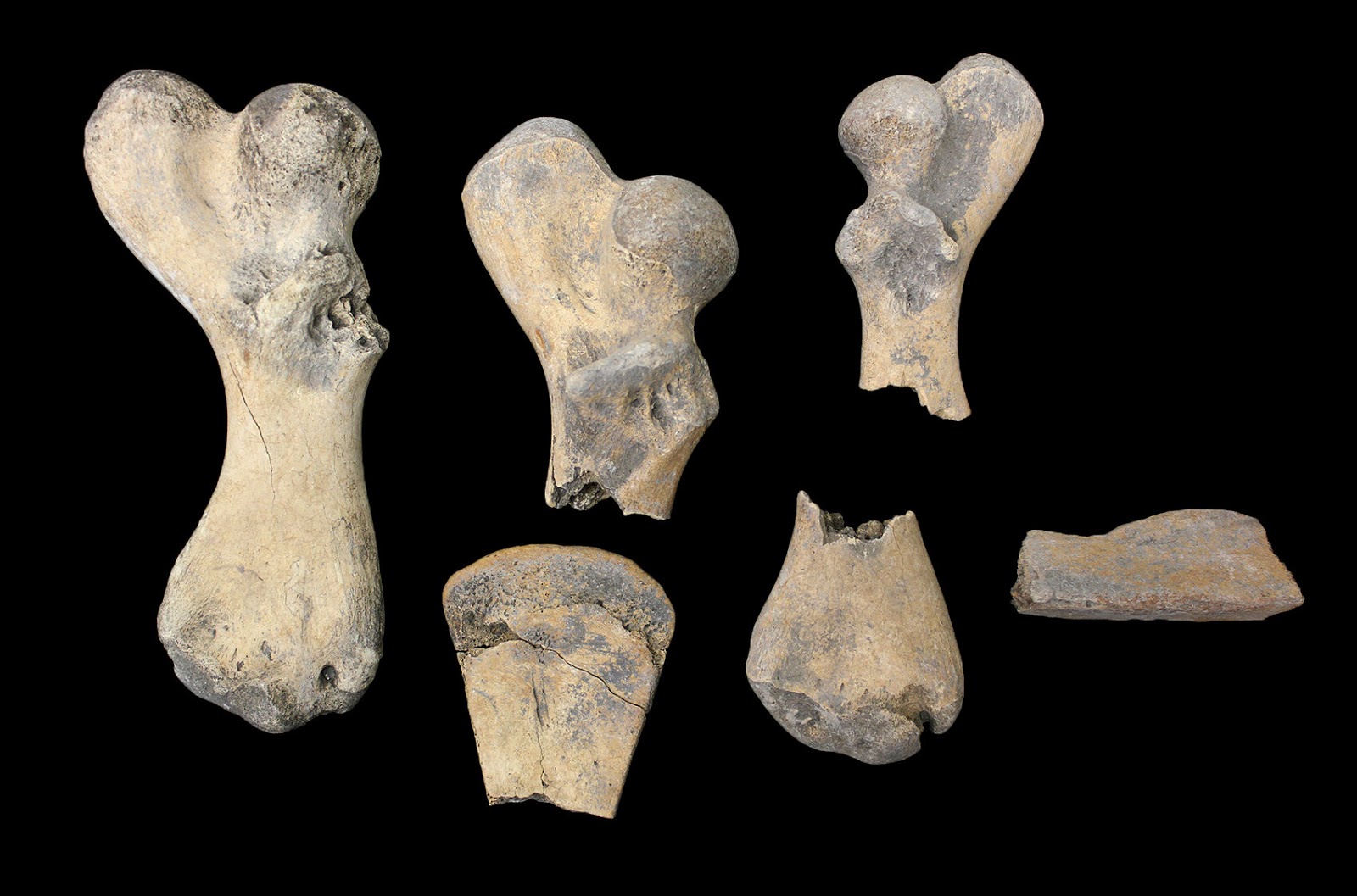
Ancient bone protein reveals which turtles were on the menu in Florida, Caribbean
Organic material can quickly decay in the hot, humid conditions of the tropics. But researchers found that many
ancient turtle bones still contained collagen. They used this protein to identify which sea turtle species
 ancient people in Florida and the Caribbean were fishing from the oceans
[Credit: Michelle LeFebvre/Florida Museum]
An international team of scientists used cutting-edge technology to analyze proteins from these bones to help identify which turtle species people fished from the ocean millennia ago. This can aid modern conservation efforts by helping construct historical baselines for turtle populations, many of which are now endangered, and illuminate long-term trends of human impacts.

The technique, known as collagen fingerprinting, allows scientists to visualize distinct chemical signatures in collagen, the main structural protein in bone, that are often species-specific. This provides a complementary alternative to comparing specimens' physical characteristics and analyzing ancient DNA, two methods that can be unsuccessful for species identification in fragmented archaeological bones found in the tropics.


Applying collagen fingerprinting to more than 100 turtle samples from archaeological sites up to 2,500 years old, the researchers found that 63% of the collagen-containing bones belonged to green turtles, Chelonia mydas, with smaller numbers of hawksbill turtles, Eretmochelys imbricata, and ridley turtles, Lepidochelys species. Some specimens previously identified as sea turtles from their skeletal features were in fact bones from snapping turtles, terrapins and tortoises.

"This is the first time anyone has obtained species-level information using proteins preserved in archaeological sea turtle bone," said Virginia Harvey, the study's lead author and a doctoral researcher in marine biology and zooarchaeology at the University of Manchester. "Our method has allowed us to unlock ancient data otherwise lost in time to see which species of turtle humans were targeting thousands of years ago in the Caribbean and Florida regions."

Ancient bone protein reveals which turtles were on the menu in Florida, Caribbean
Virginia Harvey of the University of Manchester and Casper Toftgaard of the University of Copenhagen select turtle bone
samples excavated from the U.S. Virgin Islands for collagen analysis at the National Museum of Denmark. In an
analysis of 130 archaeological turtle samples, the team was able to detect collagen in 88%
[Credit: National Museum of Denmark]
Globally, sea turtles have been exploited for millennia for their meat, eggs, shells and other products. Today, they face threats from habitat loss and disturbance, poaching, pollution, climate change and fisheries. Only seven species of sea turtle remain, six of which are classified as vulnerable, endangered or critically endangered. Gaining a historical perspective on how turtle populations have changed through time is a crucial component of conserving them, Harvey said.

One of the research team's initial goals was to discern whether any collagen still survived in ancient turtle bone remains. In an analysis of 130 archaeological turtle samples, the team was able to detect collagen in 88%.


"We were very impressed with the levels of protein preservation in the turtle bones, some of which are thought to be up to 2,500 years old," said study co-author Michelle LeFebvre, assistant curator of South Florida archaeology and ethnography at the Florida Museum of Natural History. "The fact we were then able to use the protein signatures for species identification to better understand these archaeological sites was very exciting."

The team uncovered an unusual chemical signature in a small number of bone samples that could suggest they belong to a different species than those present in oceans today. But when the researchers attempted ancient DNA analysis on them, they found the material was too degraded.

Ancient bone protein reveals which turtles were on the menu in Florida, Caribbean
Michelle LeFebvre scores a turtle bone for collagen extraction
[Credit: Nicole Cannarozzi/Florida Museum]
"Where DNA sequencing can often give more accurate information about species identity, this molecule is very fragile and does not always survive too well in ancient samples from hot, humid climates," said study co-author Konstantina Drosou, ancient DNA specialist at the University of Manchester.

In contrast, proteins are present in much higher concentrations and therefore more likely to survive in the archaeological record, Drosou said.


"Proteins are very sturdy molecules," Harvey added. "The absence of preserved DNA in these samples means we have not been able to verify whether they represent a new species of sea turtle or not, but it does show us that our work here is far from complete. There is so much that we can still learn from the turtle remains at these sites and beyond."

Using collagen fingerprinting to correct misidentifications based on physical characteristics was "a nice additional outcome of the study," said Michael Buckley, senior author of the study and senior research fellow at the University of Manchester.

Ancient bone protein reveals which turtles were on the menu in Florida, Caribbean
In this illustration, blue represents the percentage of bones identified as green turtles, Chelonia mydas, green
represents hawksbill turtles, Eretmochelys imbricata, and purple represents ridley turtles, species
in the genus Lepidochelys [Credit: Harvey et al. 2019]
Susan deFrance, study co-author and professor in the University of Florida department of anthropology, said juvenile sea turtles are often misidentified because they are small and may lack the characteristics used to distinguish adult sea turtle bones.

"This is the first time we have been able to look so specifically into the preferred food choices of the site occupants," she said. "At the Florida Gulf Coast site, they captured a lot of juvenile turtles. The positive species-level identifications of these samples could not have been accomplished without this collagen fingerprinting technology."


At the same site, researchers found green turtle remains in both refuse heaps and mounds, but ridley turtle specimens were only found in mounds, suggesting they may have been reserved for feasting rituals, LeFebvre said.

"We knew these ancient people were eating sea turtles, but now we can begin to hone in on which turtles they were eating at particular times," she said. "It's no different than today - we associate certain foods with certain events. It's how humans roll."

The researchers are also eager to continue to apply collagen fingerprinting to other archaeological museum specimens, many of which have yet to be positively identified to the species level.

Harvey said she hopes the study inspires further research on sea turtles and other vulnerable and endangered animals.

"Now that this method is available, we hope that biologists, archaeologists and conservationists globally will continue this important work."

The findings are published in Royal Society Open Science.

Source: Florida Museum of Natural History [November 04, 2019]

Ancient rhinos roamed the Yukon


In 1973, a teacher named Joan Hodgins took her students on a hike near Whitehorse in Canada's Yukon Territory. In the process, she made history for this chilly region.

Ancient rhinos roamed the Yukon
An artist's imagining of an ancient relative of today's rhinoceroses splashing through a stream next to turtles
 and fish in the Yukon [Credit: Julius Csotonyi]
While exploring the tailings left behind by a now-defunct copper mine, Hodgins and her students stumbled across a few fragments of fossils--bits and pieces of what seemed to be teeth alongside pieces of bone.

The ancient fragments of teeth were so small and in such bad shape that "most paleontologists may not have picked them up," said Jaelyn Eberle, a curator of fossil vertebrates at the University of Colorado Boulder's Museum of Natural History.

But Hodgins did. Now, more than 40 years after the teacher's fateful hike, an international team led by Eberle used modern technology to identify the origins of those enigmatic fossils.


In a study published in American Museum Novitates, Eberle and her colleagues report that the fossil tooth fragments likely came from the jaw of a long-extinct cousin of today's rhinoceroses. This hefty animal may have tromped through the forests of Northwest Canada roughly 8 to 9 million years ago.

And it's a first: Before the rhino discovery, paleontologists had not found a single fossil vertebrate dating back to this time period in the Yukon.

"In the Yukon, we have truckloads of fossils from ice age mammals like woolly mammoths, ancient horses and ferocious lions," said Grant Zazula, a coauthor of the new study and Yukon Government paleontologist. "But this is the first time we have any evidence for ancient mammals, like rhinos, that pre-date the ice age."

Ancient rhinos roamed the Yukon
Series of fossils recovered from the Yukon. They are pieces of shells from two different species
 of turtle (top), a fossil from a relative of a modern pike fish (middle) and two fragments
of ancient rhino teeth (bottom) [Credit: Grant Zazula]
It's a gap in the fossil record that scientists have been keen to fill. To understand why, imagine the Earth during the Tertiary Period, a span of time that began after the dinosaurs went extinct and ended about 2.6 million years ago. In that age, a land bridge called Beringia connected what are today Russia and Alaska.

Paleontologists believe that animals of all sorts, including mammoths and rhinos, poured over that bridge. There's just one problem: The geology and environment of the Yukon, which sat at the center of that mass migration route, isn't conducive to preserving fossils from land animals.

"We know that a land bridge must have been in operation throughout much of the last 66 million years," Eberle said. "The catch is finding fossils in the right place at the right time."


In this case, the people at the right place and at the right time was a Yukon schoolteacher and her students.

When Eberle first saw Hodgins' fossil teeth, now housed in the Yukon Government fossil collections in Whitehorse, she didn't think she could do much with them. Then she and her colleagues landed on an idea: Eberle put one of the small pieces under a tool called a scanning electron microscope that can reveal the structure of tooth enamel in incredible detail.

She explained that mammal teeth aren't all built alike. The crystals that make up enamel can grow following different patterns in different types of animals, a bit like a dental fingerprint. The Yukon tooth enamel, the team found, carried the tell-tale signs of coming from a rhinoceros relative. "I hadn't thought that enamel could be so beautiful," Eberle said.

Ancient rhinos roamed the Yukon
Enamel from a fragment of an ancient rhinoceros tooth as seen under
 increasing levels of magnification [Credit: Jaelyn Eberle]
The method isn't detailed enough to determine the precise species of rhino. But, if this animal was anything like its contemporaries to the south, Eberle said, it may have been about the same size or smaller than today's black rhinos and browsed on leaves for sustenance. It also probably didn't have a horn on its snout.

The group also looked at a collection of fossils found alongside the rhino's tooth chips. They belonged to two species of turtle, an ancient deer relative and a pike fish. The discovery of the turtles, in particular, indicated that the Yukon had a warmer and wetter climate than it does today.

Hodgins, now-retired, is excited to see what became of the fossils she and her students discovered more than 40 years ago: It's "just so wonderful to learn what has developed with them from long ago," she said.

Eberle added that the Yukon's newly-discovered rhino residents are a testament to the importance of museums.

"The fact that these specimens were discovered in the Yukon museum collection makes me really want to spend more time in other collections, including at CU Boulder, looking for these kinds of discoveries that are there but haven't had the right eyes on them yet," Eberle said.

Source: University of Colorado at Boulder [October 31, 2019]

Dozens of dinosaur footprints reveal ancient ecosystem of Alaskan Peninsula


Abundant dinosaur footprints in Alaska reveal that high-latitude hadrosaurs preferred tidally influenced habitats, according to a study published in the open-access journal PLOS ONE by Anthony Fiorillo of the Perot Museum of Nature and Science in Texas and colleagues.

Dozens of dinosaur footprints reveal ancient ecosystem of Alaskan Peninsula
Hadrosaur double prints [Credit: Fiorillo et al, 2019]
Dinosaur fossils are well-known from Alaska, most famously from areas like Denali National Park and the North Slope, but there are very few records of dinosaurs from the Alaskan Peninsula in the southwest part of the state. In this study, Fiorillo and colleagues document abundant dinosaur trackways from Aniakchak National Monument, around 670km southwest of Anchorage.


The trackways were preserved in the Chignik Formation, a series of coastal sediment deposits dating back to the Late Cretaceous Period around 66 million years ago. Survey work from 2001-2002 and 2016-2018 identified more than 75 trackway sites including dozens of dinosaur footprints.

Based on the anatomy of the prints, the authors identified two footprints of armored dinosaurs, one of a large predatory tyrannosaur, and a few footprints attributable to two types of birds. The remaining 93% of the trackways belonged to hadrosaurs, highly successful herbivores which are typically the most common dinosaurs in high-latitude fossil ecosystems.


Previous research on skeletal dinosaur remains in northern Alaska has found that hadrosaurs were most abundant in coastal habitats. The trackways documented in this study reveal that the same trend was true in southern Alaska. The authors suggest that understanding habitat preferences in these animals will contribute to understanding of how ecosystems changed through time as environmental conditions shifted and dinosaurs migrated across northern corridors between continents.

Fiorillo adds, "Our study shows us something about habitat preferences for some dinosaurs and also that duck-billed dinosaurs were incredibly abundant. Duck-billed dinosaurs were as commonplace as cows, though given we are working in Alaska, perhaps it is better to consider them the caribou of the Cretaceous."

Source: Public Library of Science [October 30, 2019]

New discovery of dinosaur relative documented


Films such as those in the "Jurassic World" series feature a range of large prehistoric creatures, but Kwanasaurus has been absent from their plots. That's because the significantly smaller reptilian herbivore was only recently discovered by researchers Bryan Small of Colorado and Dr. Jeffrey Martz, Assistant Professor of Natural Science at the University of Houston-Downtown.

New discovery of dinosaur relative documented
Credit: University of Houston-Downtown
Their discovery, named Kwanasaurus williamparkeri, is a small "dinosauromorph" that existed in Colorado over 200 million years ago. It is the oldest known dinosaur relative to have lived in Colorado.

"The findings are from the Triassic Period, which is the beginning of the age of dinosaurs and a critical period in vertebrate evolution," Martz said.

The species was named using the Ute Indian word for 'eagle' and for paleontologist William Parker of Petrified Forest National Park. Its fossils were found at Eagle Basin near the towns of Eagle and Gypsum in northern Colorado, west of Denver.


According to Martz, the Kwanasaurus belongs to a group of animals called silesaurids, which had teeth perfect for eating vegetation.

"Most early dinosaurs and dinosaur relatives had teeth appropriate for eating meat," he said. "These animals are interesting because they are a very early dinosaur relative with teeth used for consuming plants. Their teeth are very similar to plant-eating reptiles of today, including iguanas… The discovery of these species suggests that their parallel evolution was occurring in the Triassic Period. Their teeth and jaws have similarities to plant-eating dinosaurs."

The largest individuals of Kwanasaurus, Martz said, was approximately the size of a medium sized dog … about four or five feet in length, half of which was a long tail. In addition to its distinctive teeth, its jaws were particularly powerful to consume fibrous plant life. It also has a beak at the end of its snout.


The discovery was made during Small's excavations in the Eagle Basin. Fossils have been collected over a 20-year period and were carefully stored and preserved for study.

"The material from this site is very fragile," Martz said. "Extracting these bones from the rock is a delicate process, which is why the discovery of the Kwanasaurus has taken two decades."

Small is a Research Associate in Paleontology at the Museum of Texas Tech University and previously served at the Denver Museum of Nature and Science. He and Martz have collaborated on previous articles documenting the discovery of other prehistoric reptiles of the same age, including Stenomyti (an armored reptile that looked like a cross between a crocodile and an armadillo).

During the summer months, Martz leads digs in Utah and Arizona. For the several years, he has been retrieving fossils form an Arizona bone quarry and studying them at the University.

The article was published in the online journal PeerJ.

Author: Mike Emery | Source: University of Houston-Downtown [October 30, 2019]

Preserved pollen tells the history of North American floodplains


Many of us think about pollen only when allergy season is upon us. However, for soil scientists like Matthew Ricker, pollen can be an invaluable tool. By tracking fossil pollen in soil, scientists can look back in time to better understand past land use and climate dynamics.

Preserved pollen tells the history of North American floodplains
This floodplain in the southeastern US can preserve pollen for land use reconstruction
[Credit: M.C. Ricker]
For example, when European settlers cleared forests in the eastern United States and planted crops, the pollen profile in soil changed. Ragweed and grass pollen became more common. Tree pollen became rarer.

But, the study of fossil pollen has been restricted to relatively few sites, usually those near lakes or bogs. In a new study, Ricker and colleagues report that fossil pollen can be a viable tool in floodplain soils.

"We show that floodplains can contain abundant preserved pollen," says Ricker, a scientist at North Carolina State University. "Therefore, floodplains can be useful sites to explore past climate and land uses."


The study also showed that certain soil properties, such as the concentration of organic matter, are positively correlated to pollen abundance. That's important because pollen extraction and counting is relatively expensive if sent to a commercial lab. "It can often cost hundreds to thousands of dollars," says Ricker. "If done in-house, it can be a very time-consuming process."

The new findings will allow scientists to use easy-to-measure soil properties to predict whether preserved pollen is likely to be found in specific soil layers. Soil properties that correlate with pollen abundance include organic matter concentration and carbon-to-nitrogen ratio.

For the study, the researchers collected a total of 117 soil samples. Study sites were spread across 18 locations in Connecticut, Rhode Island and Massachusetts.

The researchers measured several soil properties, including organic matter, particle size and iron content. "We measured these soil properties as proxies for processes known to impact the preservation of pollen in natural systems," says Ricker.


Fossil pollen can break down over time in soils with high levels of oxygen. "One of the challenges of working in floodplains is that these soils are usually well oxygenated," says Ricker. "That can result in greater pollen degradation."

Very wet landscapes, such as lakes and bogs, are good sites to find preserved pollen. "These sites lack oxygen, which limits microbial breakdown of pollen," explains Ricker.

However, many areas of the world lack natural lakes or bogs. "So, alternative landscapes - such as floodplains - need to be used for climate and land use reconstruction," he says.

Surprisingly, even within floodplains, up to 40% of soil layers contained no pollen. Other nearby horizons had abundant preserved pollen. "This highlights the importance of being able to use easily measured soil properties to estimate the likelihood of pollen presence in specific soil layers," says Ricker.

In addition to land use changes, fossil pollen can also help reconstruct past climate shifts. For example, certain soils in the eastern United States show shifts in pollen over the past 11,000 years.


After the last ice age, as glaciers retreated, pollen analysis showed changes in tree species, corresponding with the change in climate. Tundra sedges, characteristic of artic regions, were replaced by spruce trees - which we now find in the boreal forests of the subarctic regions. Then, as the climate continued to warm, mixed pine and deciduous forests (like we see today) became more common.

"Pollen can tell us how plants responded to past climate changes," says Ricker. That can allow scientists to better predict future shifts in plant species and agriculture as global temperatures continue to rise. "We hope researchers start to use floodplains more frequently to reconstruct land use and paleoclimate," he says.

Ricker is already looking beyond floodplains. "We are aiming to expand studying fossil pollen to other areas that have not been extensively studied," he explains.

The study is published in Soil Science Society of America Journal.

Source: American Society of Agronomy [October 30, 2019]

Did an extraterrestrial impact trigger the extinction of ice-age animals?


A controversial theory that suggests an extraterrestrial body crashing to Earth almost 13,000 years ago caused the extinction of many large animals and a probable population decline in early humans is gaining traction from research sites around the world.

Did an extraterrestrial impact trigger the extinction of ice-age animals?
New evidence about a mini ice age that killed off mammoths and mastodons has been found in the muck
underneath a lake near Elgin, South Carolina [Credit: Mauricio Anton © PLOS 2008]
The Younger Dryas Impact Hypothesis, controversial from the time it was presented in 2007, proposes that an asteroid or comet hit the Earth about 12,800 years ago causing a period of extreme cooling that contributed to extinctions of more than 35 species of megafauna including giant sloths, sabre-tooth cats, mastodons and mammoths. It also coincides with a serious decline in early human populations such as the Clovis culture and is believed to have caused massive wildfires that could have blocked sunlight, causing an "impact winter" near the end of the Pleistocene Epoch.

In a new study published this week in Scientific Reports, a publication of Nature, UofSC archaeologist Christopher Moore and 16 colleagues present further evidence of a cosmic impact based on research done at White Pond near Elgin, South Carolina. The study builds on similar findings of platinum spikes -- an element associated with cosmic objects like asteroids or comets -- in North America, Europe, western Asia and recently in Chile and South Africa.

"We continue to find evidence and expand geographically. There have been numerous papers that have come out in the past couple of years with similar data from other sites that almost universally support the notion that there was an extraterrestrial impact or comet airburst that caused the Younger Dryas climate event," Moore says.


Moore also was lead author on a previous paper documenting sites in North America where platinum spikes have been found and a co-author on several other papers that document elevated levels of platinum in archaeological sites, including Pilauco, Chile -- the first discovery of evidence in the Southern Hemisphere.

"First, we thought it was a North American event, and then there was evidence in Europe and elsewhere that it was a Northern Hemisphere event. And now with the research in Chile and South Africa, it looks like it was probably a global event," he says.

In addition, a team of researchers found unusually high concentrations of platinum and iridium in outwash sediments from a recently discovered crater in Greenland that could have been the impact point. Although the crater hasn't been precisely dated yet, Moore says the possibility is good that it could be the "smoking gun" that scientists have been looking for to confirm a cosmic event. Additionally, data from South America and elsewhere suggests the event may have actually included multiple impacts and airbursts over the entire globe.

Did an extraterrestrial impact trigger the extinction of ice-age animals?
University of South Carolina archaeologist Christopher Moore (second from right) and colleagues collect core samples
 from White Pond near Elgin, South Carolina, to look for evidence of an impact from an asteroid or comet that may
have caused the extinction of large ice-age animals such as sabre-tooth cats and giant sloths and mastodons
[Credit: University of South Carolina]
While the brief return to ice-age conditions during the Younger Dryas period has been well-documented, the reasons for it and the decline of human populations and animals have remained unclear. The impact hypothesis was proposed as a possible trigger for these abrupt climate changes that lasted about 1,400 years.

The Younger Dryas event gets its name from a wildflower, Dryas octopetala, which can tolerate cold conditions and suddenly became common in parts of Europe 12,800 years ago. The Younger Dryas Impact Hypothesis became controversial, Moore says, because the all-encompassing theory that a cosmic impact triggered cascading events leading to extinctions was viewed as improbable by some scientists.

"It was bold in the sense that it was trying to answer a lot of really tough questions that people have been grappling with for a long time in a single blow," he says, adding that some researchers continue to be critical.


The conventional view has been that the failure of glacial ice dams allowed a massive release of freshwater into the north Atlantic, affecting oceanic circulation and causing the Earth to plunge into a cold climate. The Younger Dryas hypothesis simply claims that the cosmic impact was the trigger for the meltwater pulse into the oceans.

In research at White Pond in South Carolina, Moore and his colleagues used a core barrel to extract sediment samples from underneath the pond. The samples, dated to the beginning of the Younger Dryas with radiocarbon, contain a large platinum anomaly, consistent with findings from other sites, Moore says. A large soot anomaly also was found in cores from the site, indicating regional large-scale wildfires in the same time interval.

In addition, fungal spores associated with the dung of large herbivores were found to decrease at the beginning of the Younger Dryas period, suggesting a decline in ice-age megafauna beginning at the time of the impact.

Did an extraterrestrial impact trigger the extinction of ice-age animals?
Core samples from White Pond near Elgin, South Carolina, show evidence of
platinum spikes and soot indicative of an impact from an asteroid or comet
[Credit: University of South Carolina]


"We speculate that the impact contributed to the extinction, but it wasn't the only cause. Over hunting by humans almost certainly contributed, too, as did climate change," Moore says. "Some of these animals survived after the event, in some cases for centuries. But from the spore data at White Pond and elsewhere, it looks like some of them went extinct at the beginning of the Younger Dryas, probably as a result of the environmental disruption caused by impact-related wildfires and climate change."

Additional evidence found at other sites in support of an extraterrestrial impact includes the discovery of meltglass, microscopic spherical particles and nanodiamonds, indicating enough heat and pressure was present to fuse materials on the Earth's surface. Another indicator is the presence of iridium, an element associated with cosmic objects, that scientists also found in the rock layers dated 65 million years ago from an impact that caused dinosaur extinction.

While no one knows for certain why the Clovis people and iconic ice-age beasts disappeared, research by Moore and others is providing important clues as evidence builds in support of the Younger Dryas Impact Hypothesis.

"Those are big debates that have been going on for a long time," Moore says. "These kinds of things in science sometimes take a really long time to gain widespread acceptance. That was true for the dinosaur extinction when the idea was proposed that an impact had killed them. It was the same thing with plate tectonics. But now those ideas are completely established science."

Author: Carol J.G. Ward | Source: University of South Carolina [October 25, 2019]