Theme images by kelvinjay. Powered by Blogger.

USA

AFRICA

ASIA

Brazil

Portugal

United Kingdom

Switzerland

Melting Mongolian ice patches may threaten reindeer pastoralism, archaeological artefacts


Northern Mongolian "eternal ice" is melting for the first time in memory, threatening the traditional reindeer-herding lifestyle and exposing fragile cultural artifacts to the elements, according to a study published in the open-access journal PLOS ONE by William Taylor from the Max Planck Institute, Germany, and the University of Colorado-Boulder, USA, and colleagues.

Melting Mongolian ice patches may threaten reindeer pastoralism, archaeological artefacts
This is a domestic reindeer saddled for riding outside a Tsaatan summer camp in Khuvsgul province,
 northern Mongolia [Credit: Julia Clark]
The mountainous tundra of the northern Mongolian steppes features "munkh mus" or "eternal ice", ice patches which remain intact even in the summer. For the reindeer-herding Tsaatan people, they provide a place for heat-stressed reindeer to cool down, as well as fresh water, useful plants, and a reprieve from summer insects for herders and reindeer alike.


The authors of the present study visited the Ulaan Taiga Special Protected Area of Mongolia to investigate the potential for cultural artifacts in the ice. They conducted an archaeological survey on foot and on horseback, and also held ethnographic interviews with eight local families over 2018.

Melting Mongolian ice patches may threaten reindeer pastoralism, archaeological artefacts
(Left): Image of a persistent snow and ice patch in Mengebulag taken in 2006, showing domestic reindeer using the
 patch, and (right): the same patch in 2018, which local residents indicated had melted for the very first time
[Credit: Taylor et al, 2019]
The families interviewed described how many ice patches had melted for the first time in memory between 2016 and 2018, while stressing the importance of eternal ice for reindeer and herding families alike. Many herders complained that recent declines in pasture quality had led to reindeer sickness and death.


The archaeological survey revealed a number of wooden artifacts at one melted ice patch site which dated from the 1960s, when herders moved into the area - the first discovered artifacts from this region. Organic materials are preserved in ice but degrade rapidly upon exposure to the elements, meaning that melting ice could affect the archaeological record.

Melting Mongolian ice patches may threaten reindeer pastoralism, archaeological artefacts
A domesticated reindeer from northern Mongolia
[Credit: O. Batchuluun]
As Mongolia continues to warm at a higher rate than the global average, the authors note that the eternal ice appears to be melting due to the increasing summer temperatures--and stress this puts both cultural heritage and traditional reindeer herding at extreme risk in the years to come.

The authors add: "This study shows us that global climate change is an urgent threat in Inner Asia - melting ice is threatening both reindeer herding as a way of life, and the region's cultural heritage."

Source: Public Library of Science [November 20, 2019]

Archaeological site in Inner Mongolia formed 9,000 years ago


A recent analysis has validated the exact age of a prehistoric settlement in northern China's Inner Mongolia Autonomous Region, local experts said Friday.

Archaeological site in Inner Mongolia formed 9,000 years ago
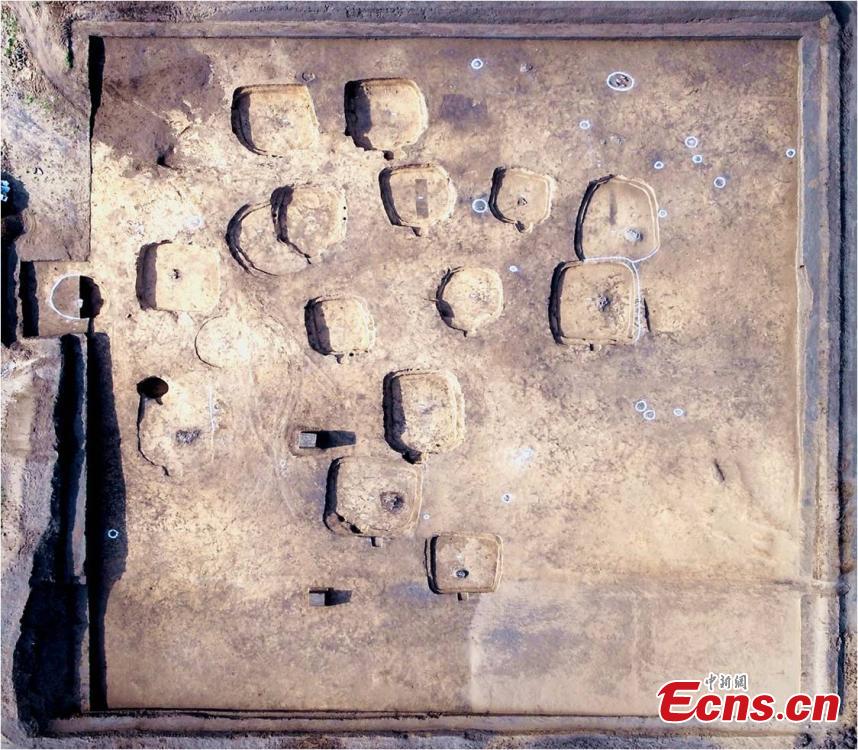
Aerial view of the Simagou site in Huade county, Northwest China's Inner Mongolia
autonomous region [Credit: China News Service]


The carbon-14 test conducted by a U.S. laboratory showed the Simagou ruins in Huade County could date back to 9,000 years ago in the Neolithic period, according to the regional institute of cultural relics and archaeology.

Archaeological site in Inner Mongolia formed 9,000 years ago
View of the excavations at the Simagou site in Huade county, Northwest China's Inner Mongolia
autonomous region 
[Credit: China National Daily]
Bao Qingchuan, a researcher with the institute, said the ruins were believed to be the earliest site of the Neolithic period ever found in vast steppes of northern China, and the discovery is of great significance to Chinese archaeology.

Archaeological site in Inner Mongolia formed 9,000 years ago
 Bao Qingchuan, a researcher with the Inner Mongolia Autonomous Region Institute of Archaeology, said the
remains have been radiocarbon dated to approximately 7000-9000 years ago [Credit: 
Weibo]


From 2017 to 2019, archaeologists discovered 19 houses and 19 outdoor cooking ranges covering an area of over 2,200 square meters on the Simagou site. The houses are of different shapes, including circle and rectangle.

Archaeological site in Inner Mongolia formed 9,000 years ago
Stone tools discovered at the Simagou site in Huade county, Northwest
China's Inner Mongolia autonomous region
 [Credit: China Times]
So far, over 4,000 items such as stone tools, bone artifacts and pottery shards have been unearthed from the Simagou ruins.

Archaeological site in Inner Mongolia formed 9,000 years ago
Stone pestles and querns discovered at the Simagou site in Huade county, Northwest China's
Inner Mongolia autonomous region
 [Credit: China National Daily]


Archaeologists said the ruins might be related to the Yumin ruins, another prehistoric settlement found in the same county. They are likely to have belonged to the same clan, which migrated to the Simagou settlement in spring and summer and moved to the Yumin ruins when temperatures dropped.

Archaeological site in Inner Mongolia formed 9,000 years ago
View of the Simagou site in Huade county, Northwest China's Inner Mongolia
autonomous region
 [Credit: China National Daily]
"The discovery can provide clues for archaeologists to probe into the origin of the culture of the Neolithic age and the advent of primitive agriculture and animal husbandry in northern China," Bao said.

Source: Xinhua News Agency [September 20, 2019]

Gilded silver dragons among treasures found in Mongolian tomb


Among a trove of gold, silver, bronze, jade and wood artifacts, two gilded silver dragons attracted the eyes of Chinese archaeologists taking part in a joint field excavation project in Mongolia.

Gilded silver dragons among treasures found in Mongolian tomb
The two gilded silver dragons unearthed from the tombs of Xiongnu aristocrats in north-central Mongolia
[Credit: Henan Provincial Institute of Cultural Relics and Archaeology]
The work on the tombs of Xiongnu aristocrats in north-central Mongolia has entered its third year. In July, the Sino-Mongolian joint team completed the excavation of one of the 400 tombs, numbered M189, in which the gilded silver dragons were unearthed.


"The dragons, each 8 cm in length and with a gesture looking back to its vertical tail, bear obvious characteristics of the Western Han Dynasty (206 B.C.-A.D. 25)," said Dr. Lan Wanli, head of the Chinese archaeological team.

Gilded silver dragons among treasures found in Mongolian tomb
The two gilded silver dragons as they were found in the M189 tomb [Credit: Henan Provincial
Institute of Cultural Relics and Archaeology]
Details of the dragons' horns, eyes, teeth and feathers were exquisitely carved. Experts suspect they were ornaments attached to a decorative vessel.


Lan said the two gilded silver dragons not only testify to the cultural exchange and interaction between the prairie in the north and central China, but also indicate that the owner of the tomb had a high status in Mongol society.

Gilded silver dragons among treasures found in Mongolian tomb
Gold ornaments retrieved from the M189 tomb [Credit: Henan Provincial
Institute of Cultural Relics and Archaeology]


Gilded silver dragons among treasures found in Mongolian tomb
Turquoise and jade ornaments retrieved from the M189 tomb [Credit: Henan Provincial
Institute of Cultural Relics and Archaeology]


Gilded silver dragons among treasures found in Mongolian tomb
Remains of bronzeware retrieved from the M189 tomb [Credit: Henan Provincial
Institute of Cultural Relics and Archaeology]
The Xiongnu people were an alliance of nomadic tribes also known as the Huns that emerged around the end of the third century B.C. and had a huge impact on Chinese and world history. During the Han Dynasty, the Xiongnu and the Chinese imperial court clashed several times.

"The tomb in Mongolia predates most of the previously discovered Xiongnu aristocratic tombs in Russia and Mongolia," said Lan.

Gilded silver dragons among treasures found in Mongolian tomb
The excavation site of the tombs of Xiongnu aristocrats in north-central Mongolia
[Credit: Henan Provincial Institute of Cultural Relics and Archaeology]
He said the archaeological team also unearthed a jade belt hook, wooden cups, leather horse harness and other household utensils, chariots and weapons from the tomb.

"The bottom of the coffin is covered with a layer of fabric, followed by a layer of unhusked millet, with a small amount of chenopodium, covered with fabric, followed by a layer of unhusked millet and a large amount of sawdust, mixed with small pieces of charcoal and chenopodium, and another layer of fabric," he said.

This kind of arrangement was found for the first time in the tombs of Xiongnu aristocrats, Lan said.

Source: Xinhua News Agency [September 10, 2019]

Humans migrated to Mongolia much earlier than previously believed


Stone tools uncovered in Mongolia by an international team of archaeologists indicate that modern humans traveled across the Eurasian steppe about 45,000 years ago, according to a new University of California, Davis, study. The date is about 10,000 years earlier than archaeologists previously believed.

Humans migrated to Mongolia much earlier than previously believed
Ancient tools were found in a site in the western flank of the Tolbor Valley
[Credit: UC Davis]
The site also points to a new location for where modern humans may have first encountered their mysterious cousins, the now extinct Denisovans, said Nicolas Zwyns, an associate professor of anthropology and lead author of the study. Zwyns led excavations from 2011 to 2016 at the Tolbor-16 site along the Tolbor River in the Northern Hangai Mountains between Siberia and northern Mongolia.

The excavations yielded thousands of stone artifacts, with 826 stone artifacts associated with the oldest human occupation at the site. With long and regular blades, the tools resemble those found at other sites in Siberia and Northwest China -- indicating a large-scale dispersal of humans across the region, Zwyns said.


"These objects existed before, in Siberia, but not to such a degree of standardization," Zwyns said. "The most intriguing (aspect) is that they are produced in a complicated yet systematic way -- and that seems to be the signature of a human group that shares a common technical and cultural background."

That technology, known in the region as the Initial Upper Palaeolithic, led the researchers to rule out Neanderthals or Denisovans as the site's occupants. "Although we found no human remains at the site, the dates we obtained match the age of the earliest Homo sapiens found in Siberia," Zwyns said. "After carefully considering other options, we suggest that this change in technology illustrates movements of Homo sapiens in the region."

Humans migrated to Mongolia much earlier than previously believed
A sampling of stone tools uncovered at the Tolbor-16 site in Mongolia, with examples of long triangular (bottom row, left)
and double-edged blades (bottom row, middle) that resemble those found at other sites in Siberia and Northwest China.
The discovery suggests a dispersal through the region of early modern humans who shared a cultural
and technological background. The shorter blades, top row, are examples of tool technology
 known before to researchers [Credit: UC Davis]
The age of the site -- determined by luminescence dating on the sediment and radiocarbon dating of animal bones found near the tools -- is about 10,000 years earlier than the fossil of a human skullcap from Mongolia, and roughly 15,000 years after modern humans left Africa.

Evidence of soil development (grass and other organic matter) associated with the stone tools suggests that the climate for a period became warmer and wetter, making the normally cold and dry region more hospitable to grazing animals and humans.


Preliminary analysis identifies bone fragments at the site as large (wild cattle or bison) and medium size bovids (wild sheep, goat) and horses, which frequented the open steppe, forests and tundra during the Pleistocene -- another sign of human occupation at the site. The dates for the stone tools also match the age estimates obtained from genetic data for the earliest encounter between Homo sapiens and the Denisovans.

"Although we don't know yet where the meeting happened, it seems that the Denisovans passed along genes that will later help Homo sapiens settling down in high altitude and to survive hypoxia on the Tibetan Plateau," Zwyns said. "From this point of view, the site of Tolbor-16 is an important archaeological link connecting Siberia with Northwest China on a route where Homo sapiens had multiple possibilities to meet local populations such as the Denisovans."

The findings were published online in an article in Scientific Reports.

Author: Kathleen Holder | Source: UC Davis [August 16, 2019]

Winter monsoons became stronger during geomagnetic reversal


New evidence suggests that high-energy particles from space known as galactic cosmic rays affect the Earth's climate by increasing cloud cover, causing an "umbrella effect."

Winter monsoons became stronger during geomagnetic reversal
Credit: Kobe University
When galactic cosmic rays increased during the Earth's last geomagnetic reversal transition 780,000 years ago, the umbrella effect of low-cloud cover led to high atmospheric pressure in Siberia, causing the East Asian winter monsoon to become stronger. This is evidence that galactic cosmic rays influence changes in the Earth's climate. The findings were made by a research team led by Professor Masayuki Hyodo (Research Center for Inland Seas, Kobe University) and published in the online edition of Scientific Reports.


The Svensmark Effect is a hypothesis that galactic cosmic rays induce low cloud formation and influence the Earth's climate. Tests based on recent meteorological observation data only show minute changes in the amounts of galactic cosmic rays and cloud cover, making it hard to prove this theory. However, during the last geomagnetic reversal transition, when the amount of galactic cosmic rays increased dramatically, there was also a large increase in cloud cover, so it should be possible to detect the impact of cosmic rays on climate at a higher sensitivity.

Winter monsoons became stronger during geomagnetic reversal
Map of the East Asian monsoon area and survey locations: The shaded area shows the Chinese Loess Plateau.
The star marks are the locations surveyed: Lingtai (35.04°N, 107.39°E) and Xifeng (35.45°N, 107.49°E)
(a) Summer monsoon (b) Winter monsoon. The blue region shows the area of the Siberian High.
The red and blue arrows indicate the summer and winter monsoon directions, respectively
[Credit: Kobe University]
In the Chinese Loess Plateau, just south of the Gobi Desert near the border of Mongolia, dust has been transported for 2.6 million years to form loess layers -- sediment created by the accumulation of wind-blown silt -- that can reach up to 200 meters in thickness. If the wind gets stronger, the coarse particles are carried further, and larger amounts are transported. Focusing on this phenomenon, the research team proposed that winter monsoons became stronger under the umbrella effect of increased cloud cover during the geomagnetic reversal. They investigated changes in particle size and accumulation speed of loess layer dust in two Loess Plateau locations.


In both locations, for about 5000 years during the geomagnetic reversal 780,000 years ago, they discovered evidence of stronger winter monsoons: particles became coarser, and accumulation speeds were up to > 3 times faster. These strong winter monsoons coincide with the period during the geomagnetic reversal when the Earth's magnetic strength fell to less than ¼, and galactic cosmic rays increased by over 50%.

Winter monsoons became stronger during geomagnetic reversal
Comparison of Loess Plateau monsoons with the paleoclimate and paleoenvironment changes from other regions:
(a) North Atlantic paleoceanic environment. (b) Northwest Pacific (Chiba Section) paleoceanic environment.
 (c) Lingtai summer rainfall. (d) Xifeng summer rainfall. (e) Osaka Bay sea levels. (f) Osaka Bay mean temperature
 of the warmest month (MTWA), mean temperature of the coldest month (MTCO). (g) Lingtai winter monsoon
strength. (h) Xifeng winter monsoon strength. (i) Magnetic dipole strength. (j) Cosmic ray flux. (k) Winter
 insolation at 45 degrees north. The blue bar shows the period of the intensified winter monsoon in
the Loess Plateau and the cooling event in Osaka Bay [Credit: Kobe University]
This suggests that the increase in cosmic rays was accompanied by an increase in low-cloud cover, the umbrella effect of the clouds cooled the continent, and Siberian high atmospheric pressure became stronger. Added to other phenomena during the geomagnetic reversal -- evidence of an annual average temperature drop of 2-3 degrees Celsius, and an increase in annual temperature ranges from the sediment in Osaka Bay -- this new discovery about winter monsoons provides further proof that the climate changes are caused by the cloud umbrella effect.


"The Intergovernmental Panel on Climate Change (IPCC) has discussed the impact of cloud cover on climate in their evaluations, but this phenomenon has never been considered in climate predictions due to the insufficient physical understanding of it," comments Professor Hyodo. "This study provides an opportunity to rethink the impact of clouds on climate. When galactic cosmic rays increase, so do low clouds, and when cosmic rays decrease clouds do as well, so climate warming may be caused by an opposite-umbrella effect. The umbrella effect caused by galactic cosmic rays is important when thinking about current global warming as well as the warm period of the medieval era."

Source: Kobe University [July 03, 2019]

Tooth enamel analyses offer insights into the diet and habitat of T. rex relative tarbosaurus


Together with an international team, Senckenberg scientist Herve Bocherens studied the fossilized teeth of the carnivorous dinosaur Tarbosaurus bataar. Based on stable isotopes, the researchers were able to draw inferences regarding the habitat and feeding habits of this relative of T. rex, who lived around 70 million years ago. According to the results, the carnivores were not very picky in their prey selection.

Tooth enamel analyses offer insights into the diet and habitat of T. rex relative tarbosaurus
Fragment of Tarbosaurus lower jaw with teeth sampled (white stripes on tooth enamel)
[Credit: Senckenberg]
The Gobi Desert in southern Mongolia is a well-known discovery site of fossil dinosaurs. “These fossils from the Cretaceous also include Tarbosaurus bataar, a representative of the Tyrannosaurids and relative of the famous Tyrannosaurus rex,” explains Prof. Dr. Herve Bocherens of the Senckenberg Centre for Human Evolution and Palaeoenvironment at the University of Tubingen.


Bocherens and his team of scientists examined the fossilized teeth of this up to twelve-meter-long dinosaur, using oxygen and carbon isotopes in the tooth enamel to draw inferences regarding the dinosaurs’ feeding habits and the environmental conditions at the time.

“It is amazing how much information is revealed by this approximately 70-million-year-old tooth enamel,” explains a delighted Bocherens, and he continues, “Our analyses show that the environment of these carnivorous reptiles was about 10 degrees Centigrade warmer than today and the amount of precipitation was subject to strong seasonal fluctuations. We assume that the dinosaurs inhabited closed forests – in a climate characterized by monsoons with cold, dry winters and hot, rainy summers.”


In addition, the researchers were able to reconstruct the Tarbosaurs’ diet based on the teeth from five differently aged individuals. According to the results, the carnivores were not very picky in their prey selection: their menu included both the Hadrosauridae, commonly known as “duck-billed dinosaurs,” as well as different species of vegetarian sauropods. “Our isotope studies therefore confirm the fossil discoveries and show that Tarbosaurus took up a position at the top of the food pyramid,” adds Bocherens in summary.

The study is published recently in the scientific journal Palaeogeography, Palaeoclimatology, Palaeoecology.

Source: Senckenberg Research Institute and Natural History Museum [June 26, 2019]

Dramatic change in ancient nomad diets coincides with expansion of networks across Eurasia


A meta-analysis of dietary information recorded in the bones of ancient animals and humans recovered from sites scattered across the Eurasian steppe, from the Caucasus region to Mongolia, demonstrates that pastoralists spread domesticated crops across the steppe through their trade and social networks.

Dramatic change in ancient nomad diets coincides with expansion of networks across Eurasia
Millet cultivation in Central Asia [Credit: © Spengler 2014]
Researchers from Kiel University sifted through previously published stable isotopic data and applied new quantitative analyses that calibrate human dietary intake against environmental inputs. The results have allowed them to better isolate the timing of the incorporation of agricultural products into the diets of pastoral nomads and, crucially, link burgeoning socio-political networks to this dietary transformation.

Through a big data project that explored over a thousand stable isotope data points, researchers were able to find evidence for an early transition to agriculture - based on dietary intake across Eurasia.


"Our understanding of the pace of crop transmission across the Eurasian steppe has been surprisingly unclear due in part to a focus on the excavation of cemeteries, rather than settlements where people threw out their food," says Alicia Ventresca Miller, lead author, formerly of Kiel University and currently at the Max Planck Institute for the Science of Human History.

"Even when settlement sites are excavated, the preservation of carbonized seed remains is often poor. This is what makes stable isotope analyses of human remains from this region so valuable - it provides direct insights into the dietary dynamics of ancient pastoralists who inhabited diverse environments."

Millet spreads across the Eurasian steppe

Millet, originally domesticated in China, appears to have been occasionally consumed at low levels by pastoralists inhabiting the far-flung regions of Siberia and southeastern Kazakhstan, possibly as early as the late third millennium. This initial uptake of millet coincided with the expansion of trans-regional networks across the steppe, when objects and ideas were first regularly exchanged over long-distances.

Dramatic change in ancient nomad diets coincides with expansion of networks across Eurasia
Map of millet and wheat/barley consumption over time: a) 1000-500 cal BC,
b) 500-200 cal BC, and c) 200 BC-AD 400 [Credit: I. Reese
& A. R. Ventresca Miller, 2017]
However, it was not until a thousand years later that millet became a regular feature of pastoralist diets. This timing coincides with the intensification of complex political structures at the transition to the Iron Age. Burgeoning socio-political confederations drove a marked increase in the exchange of costly prestige goods, which strengthened political networks - and facilitated the transfer of cultigens.


Wheat and Barley in the Trans-Urals

Despite taking part in these political networks, groups in the Trans-Urals invested in wheat and barley farming rather than millet. A dietary focus on wheat and barley may have been due to different farming techniques, greater water availability, or a higher value on these cultigens.

"Our research suggests that cultigens were converted from a rare luxury during the Bronze Age to a medium demarcating elite participation in political networks during the Iron Age," states Cheryl Makarewicz of Kiel University.

Regional variation in millet consumption

While herding of livestock was widespread, not all regions adopted millet. In southwest Siberia, dietary intake was focused on pastoral animal products and locally available wild plants and fish. In contrast, the delayed adoption of millet by populations in Mongolia during the Late Iron Age coincides with the rise of the Xiongnu nomadic empire.


"This is particularly interesting because it suggests that communities in Mongolia and Siberia opted out of the transition to millet agriculture, while continuing to engage with neighboring groups," explains Ventresca Miller.

This study shows the great potential of using the available isotope record to provide evidence for human dietary intake in areas where paleobotany is understudied. Further research should clarify the exact type of grains, for example broomcorn or foxtail millet, were fundamental to the shift in dietary intake and how networks of exchange linked different regions.

The findings are published in Scientific Reports.

Source: Kiel University [June 10, 2019]

Humans used northern migration routes to reach eastern Asia


Northern and Central Asia have been neglected in studies of early human migration, with deserts and mountains being considered uncompromising barriers. However, a new study by an international team argues that humans may have moved through these extreme settings in the past under wetter conditions. We must now reconsider where we look for the earliest traces of our species in northern Asia, as well as the zones of potential interaction with other hominins such as Neanderthals and Denisovans.

Humans used northern migration routes to reach eastern Asia
The sand dunes of Mongol Els jutting out of the steppe in Mongolia. Many of these desert
barriers only appeared after the Last Glacial Maximum (~20,000 years ago)
[Credit: Nils Vanwezer]
Archaeologists and palaeoanthropologists are increasingly interested in discovering the environments facing the earliest members of our species, Homo sapiens, as it moved into new parts of Eurasia in the Late Pleistocene (125,000-12,000 years ago). Much attention has focused on a 'southern' route around the Indian Ocean, with Northern and Central Asia being somewhat neglected.

However, in a paper published in PLOS ONE, scientists of the Max Planck Institute for the History of Human Science in Jena, Germany, and colleagues at the Institute of Vertebrate Paleontology and Paleoanthropology in Beijing, China, argue that climate change may have made this a particularly dynamic region of hominin dispersal, interaction, and adaptation, and a crucial corridor for movement.


'Heading North' Out of Africa and into Asia

"Archaeological discussions of the migration routes of Pleistocene Homo sapiens have often focused on a 'coastal' route from Africa to Australia, skirting around India and Southeast Asia," says Professor Michael Petraglia of the Max Planck Institute for the Science of Human History, a co-author of the new study. "In the context of northern Asia, a route into Siberia has been preferred, avoiding deserts such as the Gobi."

Yet over the past ten years, a variety of evidence has emerged that has suggested that areas considered inhospitable today might not have always been so in the past. "Our previous work in Saudi Arabia, and work in the Thar Desert of India, has been key in highlighting that survey work in previously neglected regions can yield new insights into human routes and adaptations," says Petraglia.

Humans used northern migration routes to reach eastern Asia
Ancient lake landforms around Biger Nuur, Mongolia, which is evidence
of larger lake sizes in the past [Credit: Nils Vanwezer]
Indeed, if Homo sapiens could cross what is now the Arabian Deserts then what would have stopped it crossing other currently arid regions such as the Gobi Desert, the Junggar Basin, and the Taklamakan Desert at different points in the past? Similarly, the Altai Mountains, the Tien Shan and the Tibetan Plateau represent a potentially new high altitude window into human evolution, especially given the recent Denisovan findings from Denisova Cave in Russia and at the Baishiya Karst Cave in China.

Nevertheless, traditional research areas, a density of archaeological sites, and assumptions about the persistence of environmental 'extremes' in the past has led to a focus on Siberia, rather than the potential for interior routes of human movement across northern Asia.


A "Green Gobi"?

Indeed, palaeoclimatic research in Central Asia has increasingly accumulated evidence of past lake extents, past records of changing precipitation amounts, and changing glacial extents in mountain regions, which suggest that environments could have varied dramatically in this part of the world over the course of the Pleistocene. However, the dating of many of these environmental transitions has remained broad in scale, and these records have not yet been incorporated into archaeological discussions of human arrival in northern and Central Asia.

Humans used northern migration routes to reach eastern Asia
Illustrated dispersal routes from the results of the Least Cost Path analysis. The three routes
 from the "wet" simulations and the single route from the "dry" simulation are presented
together in conjunction with palaeoclimatic extents (glaciers and palaeolakes)
[Credit: Nils Vanwezer and Hans Sell]
"We factored in climate records and geographical features into GIS models for glacials (periods during which the polar ice caps were at their greatest extent) and interstadials (periods during the retreat of these ice caps) to test whether the direction of past human movement would vary, based on the presence of these environmental barriers," says Nils Vanwezer, PhD student at the Max Planck Institute for the Science of Human History and a joint lead-author of the study.

"We found that while during 'glacial' conditions humans would indeed likely have been forced to travel via a northern arc through southern Siberia, during wetter conditions a number of alternative pathways would have been possible, including across a 'green' Gobi Desert," he continues. Comparisons with the available palaeoenvironmental records confirm that local and regional conditions would have been very different in these parts of Asia in the past, making these 'route' models a definite possibility for human movement.


Where did you come from, where did you go?

"We should emphasize that these routes are not 'real', definite pathways of Pleistocene human movement. However, they do suggest that we should look for human presence, migration, and interaction with other hominins in new parts of Asia that have been neglected as static voids of archaeology," says Dr. Patrick Roberts also of the Max Planck Institute for the Science of Human History, co-author of the study. "Given what we are increasingly discovering about the flexibility of our species, it would be of no surprise if we were to find early Homo sapiens in the middle of modern deserts or mountainous glacial sheets."

"These models will stimulate new survey and fieldwork in previously forgotten regions of northern and Central Asia," says Professor Nicole Boivin, Director of the Department of Archaeology at the Max Planck Institute for the Science of Human History, and co-author of the study. "Our next task is to undertake this work, which we will be doing in the next few years with an aim to test these new potential models of human arrival in these parts of Asia."

Source: Max Planck Society [May 29, 2019]