Theme images by kelvinjay. Powered by Blogger.

USA

AFRICA

ASIA

Brazil

Portugal

United Kingdom

Switzerland

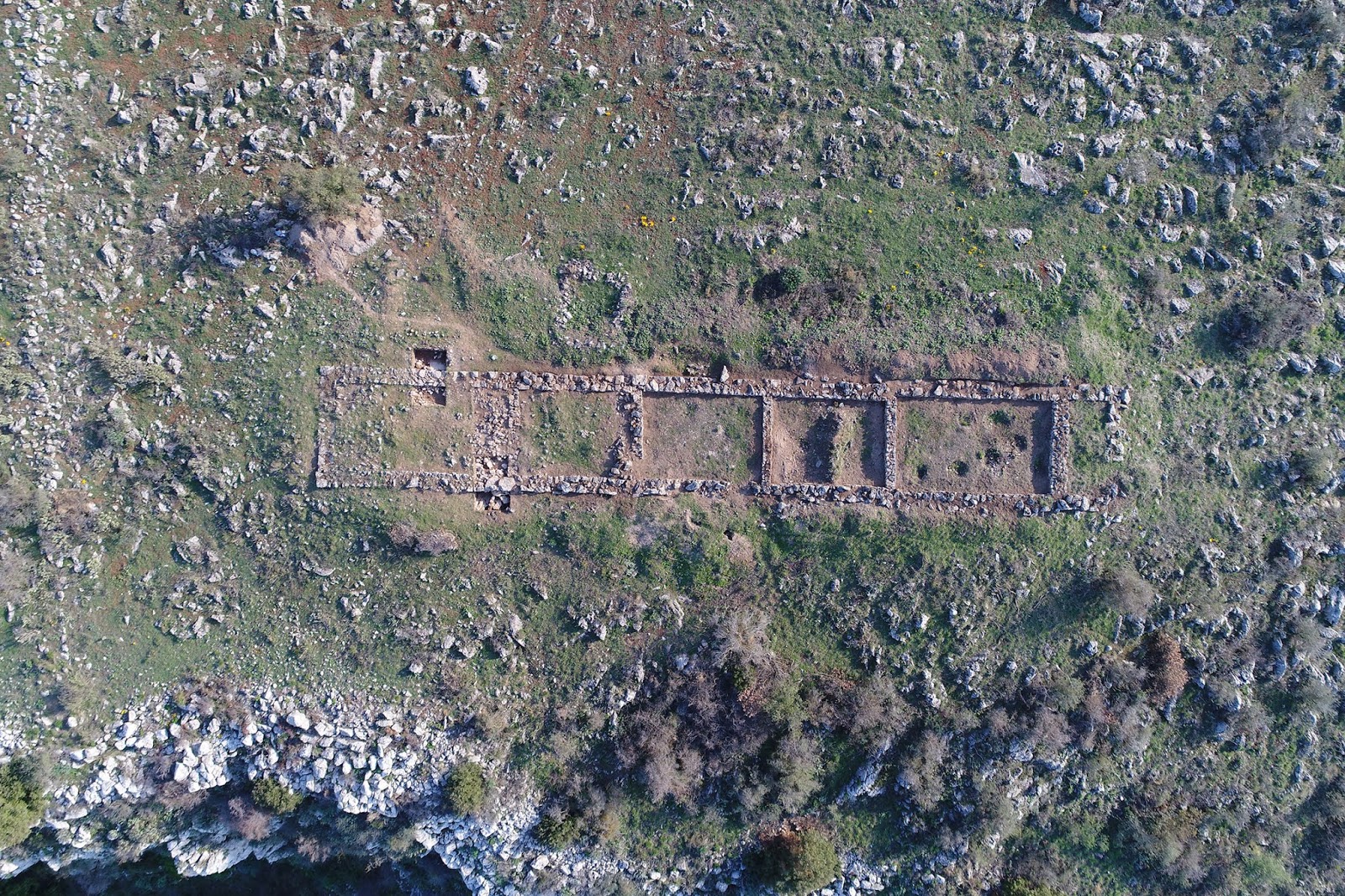
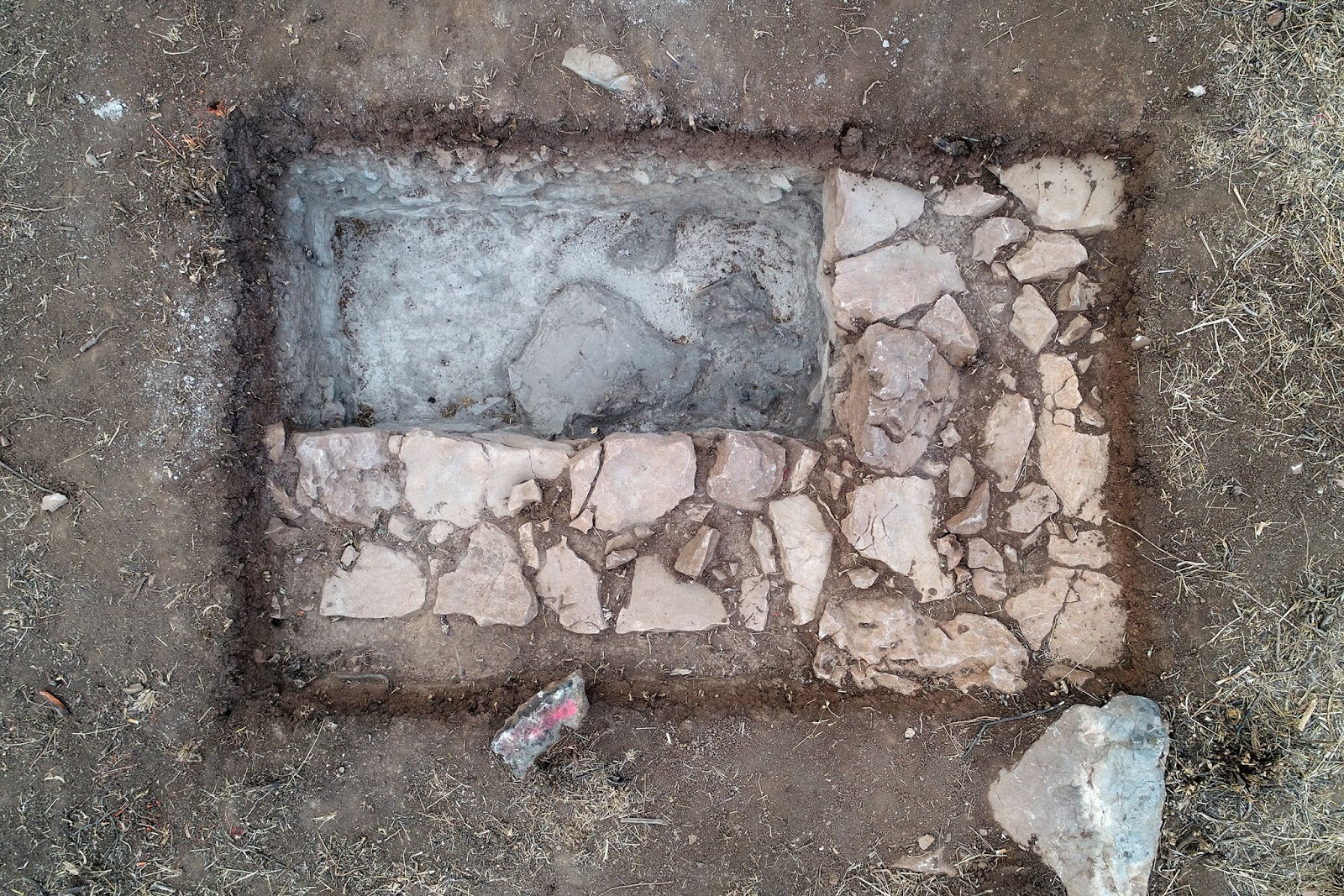
8,000-year old structure unearthed on former Greek island of Imbros


A structure believed to be around 8,000-years-old was unearthed on the former Greek island of Imbros off the western coast of Turkey, according to the head of the excavation team speaking to Turkish media sources.

8,000-year old structure unearthed on former Greek island of Imbros
Credit: AA
“During this years’ excavation work, we have found a structure that we believe dates back to around 6,000 BC,” Burcin Erdogu from Trakya University, archaeologist and head of the excavation team said.

Excavations in the Ugurlu-Zeytinlik mound in the northwestern province of Canakkale’s Gokceada (Imbros) district had earlier unearthed a 7,000-year-old structure complex.

Erdogu said the new excavation will shed light on the history of Gokceada island, which dates back to 8,800 years.


“This structure is an important discovery both for the Aegean islands and western Anatolia,” she said. She added that the T-shaped monument is an obelisk–like, four-sided tapering structure, ending in pyramidion.

It is made of two pieces, interconnected by seven-metre-long walls. It is reminiscent of the standing stones in Gobeklitepe, an archaeological site located in Turkey's southeastern Sanliurfa province.

Erdogu said it was the general thought that public structures, such as temples, were disappearing through the near East. “The monumental structures seem like part of an area where people gathered and held some activities and rituals,” she added.

Source: Anadolu Agency [November 21, 2019]

Ancient cup given to first marathon victor returned to Greece


An ancient Greek cup awarded as a prize to the marathon winner in the first modern Olympics of 1896 has been returned to Athens from a German university.

Ancient cup given to first marathon victor returned to Greece
An ancient Greek drinking cup decorated with runners, which was one of the awards presented to Spyros Louis,
the Greek winner of the Marathon in the 1896 first modern Olympic Games in Athens, is seen at the
National Archaeological Museum in Athens [Credit: Petros Giannakouris/AP]
Greece's Culture Ministry said Wednesday that the 6th century B.C. pottery vessel was considered lost for decades until research in 2014 by archaeologist Giorgos Kavvadias identified it in the University of Muenster's collections.

A ministry statement said it was proved "beyond any doubt" that the two-handled wine cup painted with ancient runners was the one given to Spiros Louis, the Greek marathon victor in the 1896.


Following correspondence with Greek officials, the university agreed to return the cup, which was part of a private German collection it had bought in 1986. The statement said the collection had been put together by Werner Peek, a scholar of Greek and historian who lived in Athens during the 1930s. But it was unclear how the cup ended up in Peek's hands.

The vessel was presented at a ceremony at the National Archaeological Museum in Athens, where it will be exhibited for the next three months before being put on permanent display at a museum in Ancient Olympia, birthplace and venue of the ancient Games.

Louis, a humble water carrier with no training in running, won enduring fame in Greece for his unexpected victory on home turf in the marathon, seen as the most Greek of Olympic disciplines. He was presented with a silver cup and a silver medal—both of which are in Greece—as well as the drinking cup.

Source: Associated Press [November 13, 2019]

Paleontologists find two new snake species in Greece


Fossilised remains of two new species of snakes found for the first time were discovered near the city of Serres in northern Greece.

Paleontologists find two new snake species in Greece
Credit: Georgalis et al. 2019
Greek researcher George Georgalis from the University of Toronto named the 5.5- to 6-million-year-old snakes: periergophis micros and paraxenophis spanios.

“These two new snakes have new names because they belong to a totally new species and are completely different from any other species,” Dr Georgalis told the Athens Macedonia News Agency.


“The strange thing is that such vertebral anatomy has not been observed anywhere else and there is nothing, either in modern or in extinct serpent species, that even comes close to the morphology of these new species.”

He explained that the serpents “are so unique that we find it difficult to include them in any known family and we immediately understand that they belong to a new species.”

The Greek paleontologist has published a scientific paper in Paleontoliga Elektronica on the discovery, in collaboration with other scientists from German, Swiss and Czech Republic Universities.

Source: Neos Kosmos [November 07, 2019]

British Museum is 'world’s largest receiver of stolen goods', says leading human rights lawyer


An outspoken human rights lawyer in a new book is calling for European and US institutions to return treasures taken from subjugated peoples by “conquerors or colonial masters.”

British Museum is 'world’s largest receiver of stolen goods", says leading human rights lawyer
Section of the Parthenon frieze helf by the British Museum
[Credit : PHAS/Universal Images Group, Getty]
In the new book by Geoffrey Robertson AO QC, the British Museum is accused of exhibiting “pilfered cultural property” and urged to ‘wash its hands of blood and return Elgin’s loot’.

“The trustees of the British Museum have become the world’s largest receivers of stolen property, and the great majority of their loot is not even on public display,” Robertson charges.

His views appear in the book, “Who Owns History? Elgin’s Loot and the Case for Returning Plundered Treasure.”


Along with a distinguished career as a trial lawyer, human rights advocate and United Nations judge, Robertson has appeared in many celebrated trials, defending Salman Rushdie and Julian Assange, prosecuting Hastings Banda and representing Human Rights Watch in the proceedings against General Pinochet.

In his just released book, he scores the British Museum for allowing an unofficial “stolen goods tour”, “which stops at the Elgin marbles, Hoa Hakananai’a, the Benin bronzes and other pilfered cultural property”. The three items he mentioned are wanted by Greece, Easter Island and Nigeria respectively.

“That these rebel itineraries are allowed is a tribute to the tolerance of this great institution, which would be even greater if it washed its hands of the blood and returned Elgin’s loot,” he wrote.

British Museum is 'world’s largest receiver of stolen goods", says leading human rights lawyer

He accused the museum of telling “a string of carefully-constructed lies and half- truths” about how the marbles “were ‘saved’ or ‘salvaged’ or ‘rescued’ by Lord Elgin, who came into possession of them lawfully.”

He criticized “encyclopedic museums” such as the British Museum, the Louvre in Paris and the Metropolitan in New York that “lock up the precious legacy of other lands, stolen from their people by wars of aggression, theft and duplicity”.


“This is a time for humility,” he observed, “something the British, still yearning for the era when they ruled the world do not do very well. Before it releases any of its share of other people’s cultural heritage, the British Museum could mount an exhibition – ‘The Spoils of Empire’.”

Advocating the return of cultural property based on human rights law principles, Robertson observes that the French president, Emmanuel Macron has “galvanized the debate” by declaring that “African cultural heritage can no longer remain a prisoner of European museums”.

“Politicians may make more or less sincere apologies for the crimes of their former empires, but the only way now available to redress them is to return the spoils of the rape of Egypt and China and the destruction of African and Asian and South American societies,” he writes.

“We cannot right historical wrongs – but we can no longer, without shame, profit from them.”

Author: Lisa Vives | Source: Global Information Network [November 06, 2019]

Results of the recent excavations on the Mycenaean Acropolis of Gla in Boeotia


Important architectural remains and movable finds dating back to the period of Mycenaean civilization were recently revealed during excavations at the Acropolis of Gla in Boeotia, the Greek Ministry of Culture announced this week.

Results of the recent excavations on the Mycenaean Acropolis of Gla in Boeotia
Aerial view of the Mycenaean Acropolis of Gla Boeotia
[Credit: Greek Culture Ministry]
The Mycenaean Acropolis of Gla, part of a settlement dating from the 13th century BC, was built on a natural rock outcrop. After its fortification it became a fortress for the outlying population, who were engaged in cultivating the fertile plain below it.


The area also served as a flood control center associated with the Mycenaean-era drainage and irrigation system, which used water from Lake Kopais.

Results of the recent excavations on the Mycenaean Acropolis of Gla in Boeotia
Building M [Credit: Greek Culture Ministry]
Results of the recent excavations on the Mycenaean Acropolis of Gla in Boeotia
Building Complex N [Credit: Greek Culture Ministry]
Results of the recent excavations on the Mycenaean Acropolis of Gla in Boeotia
Buildings Na, Nb and Nc, Building Complex N
[Credit: Greek Culture Ministry]
Results of the recent excavations on the Mycenaean Acropolis of Gla in Boeotia
Buildings O and P [Credit: Greek Culture Ministry]
Results of the recent excavations on the Mycenaean Acropolis of Gla in Boeotia
Building Q [Credit: Greek Culture Ministry]
The 50-acre area which was fortified by stout walls during Mycenaean times is seven times larger than Mycenae itself. The stone walls, which are miraculously preserved along their total length of 3 kilometers (1.86 miles) and thickness of 5.40 to 5.80 meters (up to 19 feet), are easily visible today and form an extraordinarily impressive sight.


According to the Ministry of Culture, the most recent excavations conducted as part of the 2018-19 archaeological dig uncovered six symmetrical stone blocks used in building construction.

Results of the recent excavations on the Mycenaean Acropolis of Gla in Boeotia
Preserved pithoi, Building Complex N
[Credit: Greek Culture Ministry]
Results of the recent excavations on the Mycenaean Acropolis of Gla in Boeotia
Plain Mycenaean hydra (LH IIIB), N Building Complex
[Credit: Greek Culture Ministry]
Results of the recent excavations on the Mycenaean Acropolis of Gla in Boeotia
Askos with base and ribbon decoration (LH IIIB) from the N Building Complex
[Credit: Greek Culture Ministry]
Results of the recent excavations on the Mycenaean Acropolis of Gla in Boeotia
Bronze axe, Building P [Credit: Greek Culture Ministry]
Results of the recent excavations on the Mycenaean Acropolis of Gla in Boeotia
Preserved lead pieces, Building Complex N
[Credit: Greek Culture Ministry]
Numerous storage vessels, including jars and amphorae, as well as cups and utensils, decorative frescoes, lead sculptures, and figurines — all of which represent a familiar, common cultural and artistic tradition of the times of Mycenaean expansion — were also unearthed.

The Mycenaean Acropolis of Gla itself was destroyed by fire and abandoned a little before 1200 B.C.

The painstakingly-constructed drainage system on the plain below was abandoned as well and the lake once again flooded the area, as it had before the years of improvement and development in the golden age of Mycenae.

Author: Tasos Kokkinidis | Source: Greek Reporter [November 05, 2019]

Minoan settlement uncovered on tiny islet


Great quantities of porfyra (murex shells) and buildings of a Minoan settlement were located in excavations by the Lasithi Ephorate of Antiquities west of the islet of Chrysi where ancient carved fish ponds have survived on the coast. The numerous broken porfyra shells found in the rooms of the houses are evidence of a very early cottage industry of porfyra dye established during Crete’s first palaces.

Minoan settlement uncovered on tiny islet
Building B2 with the modern lighthouse at its centre [Credit: MOCAS/
Greek Culture Ministry]


The settlement had a flourishing economy not apparent from the architectural remains but from the fine quality artefacts found in the houses.

Minoan settlement uncovered on tiny islet
The treasure of metals in situ [Credit: MOCAS/
Greek Culture Ministry]
Minoan settlement uncovered on tiny islet
Building B2 [Credit: MOCAS/Greek Culture Ministry]
Chrysi islet is situated in the south of Crete in the administrative Region of Lasithi and belongs to the Ierapetra Municipality. The surface survey conducted between 2008-2011 provided evidence of human activity and habitation since the Bronze Age.

Minoan settlement uncovered on tiny islet
Gold Bracelet [Credit: MOCAS/Greek Culture Ministry]
Minoan settlement uncovered on tiny islet
Gold ring [Credit: MOCAS/Greek Culture Ministry]


In 2018 and 2019 the by now systematic excavation on Chrysi under the Lasithi Antiquities Ephorate’s Head Chrysa Sophianou, brought to light a large building with many rooms, known as B2, which was inhabited without interruptions during the Protopalatial and Neopalatial period, from the Middle Minoan IIB to the Late Minoan IB period (ca 1800-1500 BC).

Minoan settlement uncovered on tiny islet
Gold beads [Credit: MOCAS/Greek Culture Ministry]
Minoan settlement uncovered on tiny islet
Lapis beads [Credit: MOCAS/Greek Culture Ministry]
The rooms had simple architectural elements, such as built in vats, stone benches, work surfaces, hearths and a staircase with stone slabs. Pottery is a typical mixture of vessels for drinking, eating, cooking and storage, while many stone tools were recovered. It was a surprise to discover no evidence in this entire building of a cottage industry for the production of porfyra, unlike the other excavated houses of the settlement.

Minoan settlement uncovered on tiny islet
Copper vessel [Credit: MOCAS/Greek Culture Ministry]
Minoan settlement uncovered on tiny islet
Copper ingot [Credit: MOCAS/Greek Culture Ministry]


Despite their simple architecture, two rooms contained “treasures/hoards” of metal, glass and semiprecious stones. The first treasure was found in 2018 in a room which most probably was used as a storage area. The deposit contained two parts of copper talents, a mass of slag and jewellery: a gold ring, a gold bracelet, 26 gold beads (disc shaped, round and shaped like a papyrus), one bead of silver, 5 of bronze and the band of a bronze ring. There was also a large number of different shaped glass beads (39 round and 25 papyrus-shaped), 4 of so called Egyptian blue, 20 of corneal stone, 1 of amethyst, 10 of lapis, one agate seal depicting a ship whose prow has the shape of an animal’s head and a stone amulet shaped like a monkey.

Minoan settlement uncovered on tiny islet
Layer of murex shells [Credit: MOCAS/
Greek Culture Ministry]
Minoan settlement uncovered on tiny islet
Broken murex shells [Credit: MOCAS/
Greek Culture Ministry]
While continuing the excavation in 2019, another treasure of talents was discovered in the corner of a room in the same building, along with a large saw and three vessels, one made of copper. Their overall weight is 68 kilos and together with the parts of the other treasure they are in all over two talents. It is the largest treasure of metals found to date on Crete. Moreover, stored inside a vessel were pieces of a tin talent. The latter is considered a rare find being the second from the Late Minoan period found on Crete. The first was discovered in a settlement on the islet of Mochlos.

Minoan settlement uncovered on tiny islet
Crete as seen from Chrysi islet [Credit: MOCAS/
Greek Culture Ministry]
The above data leads to the hypothesis that the inhabitants of building B2 in the Late Minoan period (ca 1500 BC) belonged to a higher social class and played a different part in the society of Chrysi; probably one of administration. They managed production, the promotion of products, the trading of porfyra dye and the import or distribution of metals.

Source: Greek Ministry of Culture [trsl. Archaeology & Arts, November 05, 2019]

Three ancient shipwrecks discovered off Aegean island of Kasos


Greece's Culture Ministry says three shipwrecks from ancient and mediaeval times and large sections of their cargoes have been discovered off the small Aegean island of Kasos.

Three ancient shipwrecks discovered off Aegean island of Kasos
Stone pyramid-shaped anchor from late classical shipwreck in Kassonissia
[Credit: F. Kvalo/Greek Culture Ministry]
A statement Monday said an underwater survey that ended last month also located cannons and other scattered finds - possibly from other foundered vessels that have not yet been pinpointed.


The oldest of the wrecks found was a 2,300-year-old trader. Its surviving cargo included amphorae - large jars used to transport wine, oil or foodstuffs - and fine tableware.

Three ancient shipwrecks discovered off Aegean island of Kasos
Shipwreck of the Hellenistic period [Credit: C. Hoye/
Greek Culture Ministry]
Three ancient shipwrecks discovered off Aegean island of Kasos
Iron cannon resting on sloping limestone sediments
[Credit: C. Hoye/Greek Culture Ministry]
Three ancient shipwrecks discovered off Aegean island of Kasos
Wreck from the Greek War of Independence [Credit: F. Kvalo/
Greek Culture Ministry]


Three ancient shipwrecks discovered off Aegean island of Kasos
Amphora from Byzantine era shipwreck ready to be lifted to the surface
[Credit: F. Kvalo/
Greek Culture Ministry]
Three ancient shipwrecks discovered off Aegean island of Kasos
Lifting of amphora from Byzantine era shipwreck [Credit: F. Kvalo/
Greek Culture Ministry]
Archaeologists also located five stone anchors in the wreck. The two other ships dated to the 1st century BC and the 8th-10th century AD.

Kasos lies between Crete and Rhodes on what remains a key trade route linking the Aegean with the Middle East.

Source: Associated Press [November 04, 2019]

A sea strewn with shipwrecks


If one had to imagine a sea strewn with shipwrecks, one would not have to go very far. "One has only to consider that in the region of Fournoi alone we have located 58 such shipwrecks" says head of the Ephorate of Underwater Antiquities Pari Kalamara to the Athens and Macedonia News Agency. But how many of these can be visited?

A sea strewn with shipwrecks
View of the shipwreck in Peristera, Alonnisos [Credit: Ephorate of Underwater Antiquities]
The last big bet made by the service she runs is precisely in regards to this matter of accessibility. Creating the so called "underwater museums" where visitors will be able to scuba dive to enjoy one of the most mysterious chapters of history may soon become a reality. How did these ships go down and under what circumstances? Were they war or trading ships? What do the findings have to say about their identity?

The first museum that will open as a pilot scheme next summer is that of Peristera in the North Sporades and the three in the Pagasetic Gulf. However, for one to arrive at such a finished shipwreck as to be considered an archaeological wonder or ,even with a degree of exaggeration, as the "Parthenon of the deep", one has to go back to 2005 when recreational scuba diving was first made legitimate. "It is then that the concept is mentioned of archaeological diving parks and the possibility of creating underwater museums" says Pari Kalamara to the AMNA. "Till that moment recreational scuba diving was forbidden", she adds.

Since becoming Head of the Ephorate of Underwater Antiquities in February 2018, she herself only recently began her first scuba diving. "When we talk of underwater sites open to visitors, we are talking about average depths, i.e. up to thirty metres", she points out. This was not the only term however. The law stipulated that no private diving could take place without the presence of an archaeologist or antiquities keeper.


After 2005 at least another eight years had to pass to determine which underwater sites can be visited. These sites were determined since 2012 until 2015, while this year, four more shipwrecks were rated as accessible.

"We have a group of eight shipwrecks in the Pagasetic Gulf and the Alonnisos region, a second group of seven shipwrecks between Lavrion and Makronisos and a third in Methoni Messinia, where one of them is the historically charged site of the Naval Battle of Navarino. These three regions can be made accessible to visitors", said Ms Kalamara to the AMNA.

A visit however is not that simple. There is still a lot to be done; from the bollards for mooring visitors’ crafts, to the staff required to accompany them. In the meantime, one can let his/her imagination run free when looking at the digital map where the archaeologist scuba divers have placed the shipwreck sites: the Telegraphos, Glaros and Kikynthos in the Pagasetic Gulf. The Peristera, Tselios, Aghios Petros, Faggrou and Skantzoura in the Northern Sporades.

In all these cases, the sunken ships borrowed their names from the geographic locations. But to what era do all these shipwrecks belong? "To all eras", replies Ms Kalamara. "We have shipwrecks even from Prehistoric times and of course from the Classical, Late Roman, Byzantine and also far more recent".


The safest guide for placing a ship in its correct period is its cargo. The Peristera shipwreck is a true archaeological wonder precisely because it has a rare collection of amphorae that, according to Pari Kalamara, transported wine, oil or preserved goods. The same evidence is also given by the route taken by the ship before it ended up on the seabed.

Ms Kalamara also tells the AMNA that every sunken ship or aircraft becomes a monument after 50 years on the seabed, so warships from the two world wars are considered monuments, as are commercial or passenger ships that became a watery grave for those travelling on them.

Many of these ships are submerged at much greater depths that are prohibitive for any diver. For those again that have been designated as suitable for visiting, some underwater coordination will be necessary, starting from the underwater route and including the safety of visitors. Once underwater, one finds an archaeological treasure of amphorae, jars, pots, columns, sarcophagi and other objects, among which a special place is held by anchors. One of the most well known shipwrecks lies in Cretan waters. "La Therese" has been resting there since the 17th century. "Canons are the basic evidence of warships belonging to that time", Pari Kalamara tells the AMNA.


If one had to accurately describe the Ephorate of Underwater Antiquities, one would say it is a service of archaeologist scuba divers. George Koutsouflakis is one of the most experienced. He has been a diver since he was 16 and was drawn to the science of Archaeology precisely via the underwater world. "My first contact with shipwrecks was a revelation", he says to the AMNA. "A shipwreck is many things. It is a place of tragedy but also a place of memory. It is in a spot that is not friendly to human beings; if not even hostile at times. You have the sense of adventure, History and the rare opportunity of looking at something rarely seen", he adds.

Nevertheless, it was the dream of a life time to be able to visit underwater museums even as a scuba diver archaeologist himself who has dived almost all over Greece. "The wealth is incredible and to think that we have mapped only 5% of it", he says. But can there be an even greater number of well preserved shipwrecks such as that of Peristera, where the arrangement of the thousands of amphorae goes as far as revealing even that the ship was 25 metres long? "No doubt about it" he replies. "But they are most probably at much greater depths".

Meanwhile, the Peristera underwater museum is preparing to open in a few months. Till then you can visit the information centre at Alonnisos. There, you are given a pair of spectacles that take you down into the magic world of shipwrecks by a 3D representation application. This virtual diving is the first taste of a reality that soon will come about.

Source: ANA-MPA [trsl. Arts & Archaeology, October 31, 2019]

Researchers pinpoint source of unique chemical composition of volcanic rocks on Greek island


A new analysis has revealed the source of oxidation found in rock samples from the coast of Greece, where geological activity spawned explosive arc volcanoes about 45 million years ago, a team of researchers reports in the journal Nature Geoscience.

Researchers pinpoint source of unique chemical composition of volcanic rocks on Greek island
Boston College Professor of Earth and Environmental Sciences Ethan Baxter, at work on Greek island of Sifnos.
Analysis of garnet samples collected on the island confirmed theories that water flowing from deep in the
 Earth millions of years ago is the source of oxidation found in the remnants of ancient arc volcanoes
[Credit: Boston College]
Arc volcanic rocks are highly oxidized, which has led scientists to speculate that the fluids coming from subducted oceanic rocks might be the oxidizing agent, said Boston College Professor of Earth and Environmental Sciences Ethan Baxter, a co-author of the report.

To test that hypothesis, Baxter's team at Boston College along with colleagues from the Sorbonne, the University of South Carolina, and Durham University (UK) sought to identify a fingerprint of the fluid source in the remnants of ancient subducted oceanic crust found on the Greek island of Sifnos.


The team of researchers studied samples of large garnet crystals, which contain concentric rings of growth, much like the rings of a tree. Within these rings are chemically unique zones that change from the core of the crystal to the rim, said Baxter. These zones reflect the evolution of the rock system within which the garnet grows over millions of years.  In these rocks, the iron isotope composition varies from core to rim in a way that supports the release of an oxidizing fluid.

The team used electron microprobe analysis and iron isotopic analysis to document progressive changes in the rock system recorded in these strongly zoned garnets, said Baxter, whose research is funded by the National Science Foundation.

"Garnet chemical and iron isotope zonation supports the idea that these rocks released oxidizing fluids during subduction," said Baxter. "We have chemically 'fingerprinted' a source of these oxidizing fluids in subduction zones."


These novel measurements reveal for the first time that garnet crystals preserve zonation of iron isotopic composition from early formed core to later forming rims, the team reports.

"When we found significant zonation in iron isotope composition within these garnets, we knew we had found an untapped archive of fluid-related chemical change," said Baxter, who co-authored the report with Boston College researchers Anna R. Gerrits and Paul G. Starr, Edward C. Inglis of the Sorbonne, Besim Dragovic of the University of South Carolina, and Kevin W. Burton of Durham University (U.K.).

Baxter said the next steps in this research involve further testing the hypothesis by exploring what caused the fluids to be oxidizing.

"These oxidizing fluids carry certain agents capable of oxidizing rocks they enter," Baxter said. "The most familiar example would be the way that oxidizing fluids can cause iron-bearing materials to rust as they weather. Based on the garnet chemical zonation, we know the fluids liberated from our samples are oxidizing, but we don't know why they are oxidizing or what the oxidizing agents are."

Source: Boston College [October 28, 2019]

Tombs of the family of Alexander the Great finally giving up their secrets after 2,300 years


Anthropologists and material scientists working on the Vergina tombs in northern Greece may be just ‘forensic steps away’ from solving one of history’s great remaining riddles: which members of Alexander’s family were buried in the subterranean vaults.

Tombs of the family of Alexander the Great finally giving up their secrets after 2,300 years
The Facade of Tomb II at Vergina, possibly the resting place of Philip II of Macedon,
father of Alexander the Great [Credit: Alamy]
In November 1977 Professor Manolis Andronikos and his team unearthed the first of two unlooted tombs containing never-before-witnessed riches including exquisite weapons and armour. In ‘Tomb II’ lay the cremated skeletal remains of what appeared to be a king and queen, while ‘Tomb III’ held the bones of a ‘prince’. The subterranean cluster also revealed a shrine and two further looted tombs decorated in breath-taking wall paintings. The find was considered the ‘archaeological discovery of the century.’

The burial artefacts were dated to the mid-to-late fourth century BC (350s to 310 BC), corroborated by inscriptions, pottery, metalworking and the ‘Macedonian’ vaulted tomb design. Remarkably, this spanned the reigns of Philip II (359-336 BC) and Alexander III, the ‘Great’ (336-323 BC). The unique ‘Vergina Sun’ or ‘Star’ emblem of the Argead royal clan was embossed on the lids of the two gold chests holding cremated skeletal remains.

The second unlooted structure, named ‘Tomb III’, contained the cremated bones of an adolescent, likely a male. The son of Alexander the Great, by his Bactrian wife Rhoxane, was executed around 310 BC when in his teens by a throne usurper and historians linked him to the tomb. But a divisive controversy has clouded these identifications ever since.

Philip II: A National Treasure

The excavator believed Tomb II held the remains of Philip II, the twenty-fourth monarch of the Argead royal line and the first king to unite ancient Macedon; he trebled the land mass under its control into the first ‘European Empire’. His military reforms and statecraft brought Greece to its knees, enabling his son, Alexander the Great, to conquer the Persian Empire. Philip was a cultured cunning diplomat whose polygamous court hosted seven wives.


In October 336 BC Philip II was stabbed to death at his daughter’s wedding; it was a world-shaking event that heralded in the reign of Alexander. Equally driven by his heroic lineage, Alexander conquered the Persian Empire in eleven years but died mysteriously in Babylon where after his body was taken to Egypt where it lay in state until the late-Roman era.

How the Royal Tombs vanished

The political capital of Macedon was moved from Aegae to Pella a century before Philip and Alexander. After their deaths, in the 270s BC invading Gallic Celts ransacked the old Aegae cemetery. When the danger had passed, the still-unlooted royal tombs were buried under a great earthen mound to protect them from further looting by an unnamed monarch.

Tombs of the family of Alexander the Great finally giving up their secrets after 2,300 years
A model of the shrine and tombs under the Great Tumulus at Vergina
[Credit: David Grant]
When Rome defeated Macedon at the battle of Pydna in 168 BC, both Aegae and Pella were partially destroyed. A landslide covered much of what remained at Aegae in the first century AD and as Rome’s influence expanded, the importance of the cities diminished. When Rome’s empire was finally overrun, the name of the fallen-stone city survived in oral legend only.

What was likely an earthquake caused the collapse of the top of the earthen tumulus and shattered doors in the tombs below, but the sturdy stone structure remained hidden under the occupied landscape for the next to thousand years.

Rediscovering Aegae

Modern excavations started in occupied Greece in 1855 in what was still part of the Ottoman Empire. Nothing more than ransacked tombs and Byzantine-period ruins were found. However, the intriguing scale of the stone foundations suggested a substantial city once stood in the hills overlooking the Thermaic Gulf southwest of Thessalonica, the heartland of ancient Macedon.

Malarial marshlands hampered excavations and Greek refugees who had been resettled there from Turkish Anatolia after the Graeco-Turkish War, knew nothing of its history. They used the ancient fallen stones from the anonymous ruins to build their houses at the modern village of Vergina.

Tombs of the family of Alexander the Great finally giving up their secrets after 2,300 years
The gold chest of ‘larnax’ holding the male bones in the main chamber of Tomb II, with the royal ‘Vergina Sun’
or ‘Star’ symbol [Credit: Aristotle University of Thessaloniki-Vergina Excavation Archive]
In 1968 English historian Nicholas Hammond proposed the ‘heretical’ idea that the ruins at Vergina sat on the site of ancient Aegae, the burial ground of the nation’s kings. Few credited his theory; the belief prevailed that this was either the lost city of Valla, or a summer palace of unknown royalty.

In 1976 Professor Andronikos and team finally excavated the ancient necropolis where graves had been overturned and tombstones smashed in antiquity. This correlated strongly with the ancient texts claiming Celts had plundered the cemetery at Aegae some fifty years after Alexander’s death; the burial ground of the nation’s kings had finally been found.

Confusion over Identities

The ages of the deceased in Tomb II were determined from wear and tear on bones: the main chamber contained a middle-aged male and the antechamber a far younger female. This narrowed down the list of kings and queens either side of Alexander’s reign.

But an ‘unfortunate symmetry’ obscured the background to the double burial in Tomb II’, says London-based historian David Grant who collaborated with the scientists studying the skeletal remains. This led to a ‘battle of the bones’ among historians, causing a rift which divided the academic community ‘obsessed’ on proving their identities.

Tombs of the family of Alexander the Great finally giving up their secrets after 2,300 years
Wall painting depicting the Abduction of Persephone in Tomb I
[Credit: WikiCommons]
The Tomb II occupants could either be Alexander’s father Philip II and his final teenage wife Cleopatra, or Philip’s half-witted son Arrhidaeus who was executed twenty years later when of similar age and with an equally young bride. Questions of ritual or forced suicide raised their head, because kings and queens rarely died together.


Philip II was a national hero who befitted such a tomb and he had seven wives we know of. But Grant’s research points out the elephant in the room: none of the ancient sources mentions any women being buried with Philip at Aegae. ‘What superficially appears to be a two-phase construction of Tomb II, plus the different cremation conditions the female bones underwent, suggest she was buried later than the male in the still-empty or incomplete second chamber.’

On the other hand, Arrhidaeus and his young bride Adea-Eurydice were executed together by Alexander’s mother Olympias when she regained political control of the state capital. She also murdered Philip’s last wife, Cleopatra, along with her new-born child. This ‘double assassination’ of Arrhidaeus and Adea-Eurydice explains the ‘double burial’ given to them after Olympias was herself executed.

Tombs of the family of Alexander the Great finally giving up their secrets after 2,300 years
The gold quiver and greaves of the female in Tomb II stacked against the chamber-dividing door
[Credit: Ekdotike Athinon S.A. Publishers]
When Alexander the Great died in Babylon in 323 BC, his royal regalia including his cloak, sceptre and ceremonial weapons were passed to newly crowned ‘King Philip III Arrhidaeus’ and escorted with him and Adea-Eurydice back to Macedon. So, the artefacts in Tomb II could be the very weapons of Alexander, other commentators believed, explaining the grandeur with the half-wit.

Arguments revolved around wounds evident or invisible on the male bones, wall paintings, entrance frescos and even salt cellars found on the floor; but it was debatable whether the twenty years between these kings could be discerned by interrogating the tombs this way.

The question remained: who was buried in the adjacent simpler looted Tomb I? Because initial reports concluded the scattered remains were those of a male, woman and baby, these must be to Philp II, Cleopatra and her newly born daughter. The logic of this argument gained momentum in the academic community.

The mystery Scythian 'Amazon'

In the Tomb II woman’s antechamber lay a weapon of great mystery: a gold-plated Scythian bow-and-arrow quiver like those carried by Scythian horseback archers. Grave digs in Russia and Ukraine have proven the existence of female warriors. Professor Andronikos mused that the Tomb II woman therefore had ‘Amazonian leanings.’

Tombs of the family of Alexander the Great finally giving up their secrets after 2,300 years
A female Scythian archer with hip-slung bow-and-arrow quiver; from an Attica plate
dated 520-500 BC [David Grant, 2019]
Others were more sceptical. ‘Weapons were for men what jewels were for women,’ reads a plaque in the subterranean Vergina Museum. So many commentators believed that the antechamber weapons belonged to the man next door, as their upright position against the dividing door might indicate.

Alexander’s father campaigned against Scythians at the River Danube, but Philip lost all the booty on his return when he was almost killed in a Thracian attack and limped ever after. The Tomb II woman was therefore a Scythian bride or captured concubine, postulated some commentators.

Grant is unconvinced: ‘the Scythians were not renowned as metalsmiths; the exquisite jewellery we find in their graves is of local Greek workmanship, likely from the Bosporus Kingdom. But there was also a thriving metalworking industry in Macedon, where weapons and armour were fashioned for Philip II. The possible domestic manufacture of what could have included ornate goods for Scythian warlords means the ‘Amazon’ of Vergina could have been born rather closer to home.’

'Final Solution' Forensics

By 2009, the ‘battle of the bones’ reached a stalemate when academics arguing the tomb identities ran out of debating ammunition. The American Journal of Archaeology even called for a moratorium on ‘Vergina papers’ until new evidence came to light.

Forward momentum recommenced in 2010 when an anthropological team led by Professor Theo Antikas and funded by a modest grant from the Aristotle University of Thessalonica, commenced a six-month task of cataloguing the Tomb II bones; their ground-breaking study would last five years.

Tombs of the family of Alexander the Great finally giving up their secrets after 2,300 years
The leg bones allegedly evidencing the ‘terrible’ knee wound Philip II may have suffered,
showing the fused position of the shinbone and thighbone with the puncture hole
[Credit: PNAS]
The Antikas team found new incontrovertible age evidence on previously unanalysed bones, as well as undocumented trauma, which further narrowed down the list of candidates. The woman’s pubic symphysis aged her at 32 +/- 2 years at death, ruling out Philip’s teenage wife Cleopatra and discounting Arrhidaeus and his wife completely.

Dispelling the case of ‘archaeological gender bias’ was an overlooked shinbone wound providing proof that the armour and weapons belonged to the women, because the unevenly sized gilded-bronze greaves were fashioned to fit her shortened deformed leg. She was, indeed, being honoured as a warrior at death.


The Antikas team comprised both anthropologists and material scientists. Their additional microscopic finds, including textile stains, composite material fragments and melted metals on the cremated skeletons, hinted at ancient burial rituals, a death mask and the profound belief in the afterlife.

The rare white mineral huntite and Tyrian Purple in the composite material were bound with egg white in layers and created the vivid image of an unknown mystic Orphic funeral rite involving a face mask. Melted gold on the upper vertebrae begged the question of whether the male was initially wearing a crown as flames licked the funeral pyre, as the incomplete crown found inside the tomb showed signs of intense heat.

There may even be fragments of a fireproofing asbestos shroud worn by the cremated king, just as the Roman naturalist Pliny claimed was the practice of ancient Greek kings to help separate the bones from the rest of the pyre debris.

'Unearthing the Family of Alexander the Great, the Remarkable Discovery of the Royal Tombs of Macedon' by David Grant

A final ‘identity-shattering’ discovery was made by the Antikas team. ‘Forgotten’ and unanalysed skeletal remains from Tomb I were found in storage below the Vergina laboratory; they were probably consigned to thirty-five-years of obscurity in the aftermath of the ‘great’ Thessalonica earthquake of 20 June 1978 when the preservation of unlooted Tombs II and III was the focus of attention. These additional bones from Tomb I contained the remains of at least seven individuals, not just two adults and a baby.

The team’s finds were published in an academic journal 2015. Although hampered by underfunding and a lack of support from those fearing unwanted results, they continued to push for ‘next-generation’ forensics: DNA testing, radiocarbon dating, and stable isotope analysis on the Tomb II and Tomb III bones.

Permission was denied in 2016, Grant reveals. Instead, the scientists were allowed to test the scattered bones found in looted ‘Tomb I’, but with no formal funding provided. Although these bones lay exposed in soil for over 2,000 years, dating and DNA results were successfully extracted, disproving yet more of the identity theories. Moreover, controversial leg bones, which supposedly evidenced the terrible a knee wound Philip may have suffered in Thrace, appeared to be ‘intruders’ from a completely different tomb. The results have yet to be published and Grant says they will amaze everyone.

What has become clear is that the great earthen tumulus at ancient Aegae was bitten into by looters on more than one occasion, and when exposed, Tomb I became a dumping ground for the dead.

Now Grant’s new book is revealing all, the pressure will certainly be on the Greek Ministry of Culture to take a new progressive stance on permitting the outstanding forensics on the ‘royal’ bones from the unlooted tombs. With the possible identities greatly narrowed down by the Antikas-team study, new DNA, radio carbon dating and stable isotope analysis of the ‘king’, ‘queen’ and ‘prince’ may solve the puzzle once and for all.

Unearthing the Family of Alexander the Great, the Remarkable Discovery of the Royal Tombs of Macedon launches on 30th October 2019 and is available from Amazon and other major online book retailers.

Author: David Grant | Source: TANN [October 23, 2019]

New discoveries at ancient Greek city of Tenea


Excavations at the ancient city of Tenea in the Peloponnese, which was built by Trojan prisoners of war, have unearthed significant new finds,the Greek Culture Ministry announced on Tuesday. The discoveries include enormous baths dating from Roman times.

New discoveries at ancient Greek city of Tenea
Ionic capital and column drum at ancient Tenea 
[Credit: Greek Ministry of Culture]
The lost city of Tenea, which is mentioned in many Greek myths as well as historical texts,  was uncovered in October of 2018. One of the sources mentioning the existence of the city of Tenea is the ancient legend of Oedipus, the mythical king of Thebes who unwittingly killed his father and married his mother.


This year, archaeologists led by Eleni Korka uncovered a complex of bathing facilities, about 500 square meters (5,382 square feet) in total, dating from between the end of the third century BC to the mid-1st century BC.

New discoveries at ancient Greek city of Tenea
Archaeologists have been excavating the ruins of the Trojan city of Tenea since 2013 
and last year confirmed it was the city they had believed it to be [Credit: EPA]
New discoveries at ancient Greek city of Tenea
An archaeologist examines shards of ceramics in Tenea 
[Credit: EPA]
New discoveries at ancient Greek city of Tenea
A Roman-era oil lamp which depicts the Trojan hero Aeneas carrying his father 
during the evacuation of Troy [Credit: EPA]
New discoveries at ancient Greek city of Tenea
Ceramic vessels which may have been used to store food and drink 
[Credit: EPA]
New discoveries at ancient Greek city of Tenea
This pyxis – a type of Ancient Greek round, lidded vessel which was used to store jewellery 
or cosmetics – has been dated to 580BC [Credit: EPA]
New discoveries at ancient Greek city of Tenea
Coin specialist Constantinos Lagos examines a silver coin 
discovered in the ruins [Credit: EPA]
There are three bath areas which once had heated water, two of them ending in arches and well-preserved clay floors; some of the floors miraculously still have paint on them.


An ancient well which reaches a depth of 15 meters (49 feet) was found to the north of the baths. Next to the well is what seems to be an area where offerings, including figurines and miniature vessels had been deposited. The existence of these objects in this one area points to a religious use of the site.

New discoveries at ancient Greek city of Tenea
Archaeologist Constantine Psychas (left) transports debris removed by a colleague from 
an ancient well found next to Roman baths in ancient Tenea [Credit: EPA]
New discoveries at ancient Greek city of Tenea
Archaeologist Constantine Psychas empties debris removed from an ancient well found
 next to Roman baths in ancient Tenea [Credit: EPA]
New discoveries at ancient Greek city of Tenea
The lower portion of Greek goddess Aphrodite, possibly Hellenistic, 
was found in an ancient well 16 meters deep [Credit: EPA]
New discoveries at ancient Greek city of Tenea
An archaeologist holds a fragment of a statue of the Greek goddess Aphrodite 
which was discovered in a well 16m underground in Tenea [Credit: EPA]
New discoveries at ancient Greek city of Tenea
This drone photo shows the footprint of a Roman-era baths complex discovered
 in the ancient city of Tenea [Credit: EPA]
New discoveries at ancient Greek city of Tenea
Aerial photo of the Roman-era baths complex discovered in the ancient city of Tenea 
[Credit: Greek Ministry of Culture]
Other objects recently uncovered by the archaeologists include vessels for the storage of aromatic oils as well as parts of statues dating from Hellenistic times.

According to myth, the city of Tenea was founded by the Trojans sometime around 1100 BC and its buildings were constructed by prisoners of war. They chose this spot because it was on the road between Corinth and the ancient settlement of Mycenae. Oedipus himself was said to have been raised here after being sent away from his parents as a baby.


Tenea was for many years one of the largest and most prosperous cities in the ancient region of Corinthia in the northern Peloponnese. Until 2018, however, no one had been able to work out exactly where it was located – or why it had declined and seemingly disappeared off the map.

Author: Tasos Kokkinidis | Source: Greek Reporter [October 22, 2019]