Theme images by kelvinjay. Powered by Blogger.

USA

AFRICA

ASIA

Brazil

Portugal

United Kingdom

Switzerland

Almost a third of tropical Africa's flora faces extinction


31.7% of tropical Africa’s vascular plant species could be threatened with extinction, reveals an international study coordinated by an IRD researcher, published in the journal Science Advances. Using a new approach based on the key elements of the assessment process used by the International Union for Conservation of Nature (IUCN), for the first time researchers have been able to assess the potential conservation status of tropical flora on the scale of a continent.

Almost a third of tropical Africa's flora faces extinction
Mountains of the eastern arch of Tanzania. The flora of this region is threatened with extinction
[Credit: IRD - Thomas Couvreur]
Given the anthropological and climate threats facing nature, the conservation of tropical biodiversity is a major challenge. To encourage the implementation of better biodiversity management practices, countries and international agreements on biodiversity refer to the assessments of species "at risk of extinction" performed by the IUCN as part of a standardised procedure (See Red List of Threatened Species). This approach remains the most comprehensive and objective means of identifying species in need of protection.

However, while the conservation status of the majority of vertebrate species has been assessed, the same cannot be said for plants, although they are critical to earth ecosystems. This is especially true in tropical regions where the flora is very diverse but remains poorly documented.


In this study, the researchers developed a new fast and automatic approach based on key elements of the conservation assessment process used by the IUCN. Their objective was to provide relevant information on the conservation status of a large number of plant species at broad scales, in the form of Preliminary Automated Conservation Assessments (PACA).

The researchers therefore applied this methodology to the RAINBIO database, which contains over 600,000 georeferenced occurrences of plants in tropical Africa across more than 20,000 vascular plant species.

Almost a third of tropical Africa's flora faces extinction
Infographic of the main results
[Credit: Thomas L.P. Couvreur]
After classifying these species into six categories - which include species that are "probably or potentially threatened", those that are "potentially rare" and those that are "potentially not threatened" - they reveal that almost a third (31.7%) of the 22,036 vascular plant species studied are potentially threatened with extinction, and an additional 33.2% are potentially rare (they could be threatened in the near future).


After determining the most endangered species, the researchers identified four regions in Africa that are particularly exposed: Ethiopia, central Tanzania, the south of the Democratic Republic of the Congo and the West African tropical rainforests.

They highlight the advantages of this approach, based on the preliminary automated conservation assessments, in terms of cost reduction, time saving and the potential to carry out large-scale assessments. "This study is the first large-scale assessment of the potential conservation status of the tropical African flora, explicitly using the IUCN's methodology", explains botanist Thomas Couvreur from the IRD who coordinated the study.

"These assessments could provide crucial information for improving biodiversity management and promoting sustainable economic development in Africa. They are, however, not intended to replace the comprehensive assessments carried out by the IUCN which lead to official statuses. The two approaches are complementary, and a significant international effort is still needed to assess all plant species in Africa", he urges.

"These results were possible because the partners involved agreed to share their data", says Bonaventure Sonke, Professor at the Laboratory of Systematic Botany and Ecology of the Ecole Normale Superieure (University Yaounde 1, Cameroon). "This is a strong signal to encourage researchers to share their data, in order to obtain results on a larger scale".

Source: Institut de recherche pour le developpement [November 21, 2019]

Scientists find no evidence for 'insect Armageddon' but there's still cause for concern


Researchers who set out to test the widespread theory that the UK is experiencing an alarming plunge in insect numbers have found no evidence For "insect Armageddon."

Scientists find no evidence for 'insect Armageddon' but there's still cause for concern
The large emerald (Geometra papilionaria). These moths feed on birch trees, which are very sensitive
to dry conditions and drought [Credit: Dr Callum Macgregor]
Instead, the researchers from the University of York found peaks and troughs in moth populations over a period of 50 years. They suggest changing weather patterns and climate change could be an explanation.

The study tracked the amount of moths—which the researchers measured by estimating the combined weight, or "biomass" of all moths in a given area—between 1967 and 2017. The findings reveal there is around twice the combined weight of moths in the present day compared with the 1960s.

While there has been a gradual decline in the amount of moths at a rate of around 10 percent per decade since the early 1980s, this came after a steep increase between the late 1960s and 1982.

Lead author of the study, Dr. Callum Macgregor, from the Department of Biology, said: "Moths are a good indicator of what may also be happening in other insect populations as they are the second most diverse group of insect herbivores, with a full range of species from extreme habitat generalists to extreme specialists.


"Our study does not support the narrative that insects are vanishing en masse before our eyes, because there has been a net increase in biomass over the last 50 years. However, the clear decline we observed since the 1980s is still a cause for concern.

"Moths come in all shapes and sizes, so measuring their combined weight allowed us to analyze changes in their populations that are relevant to their predators and food plants."

Co-author Professor Chris Thomas, from the Department of Biology at the University of York, added: "Biomass is particularly important because it is linked to ecosystem processes, such as the total amount of plant material consumed by insects and food availability for other animals that eat insects.

"Moths provide pollination nocturnally to a wide range of plants, and they provide food for birds, bats and small mammals. Their survival is crucially important to the rest of life on earth."

Better data

The authors investigated the possible reasons behind the fluctuations in insect populations, and why the results of the study might differ from the conclusions of previous research.

Scientists find no evidence for 'insect Armageddon' but there's still cause for concern
Elephant hawk-moth (Deilephila elpenor)has declined by 11% over the last 50 years,
according to Rothamsted Insect Survey data [Credit: Dr Callum Macgregor]
According to the researchers, the use of better and longer-term data may be part of the answer: To put "Insectageddon' to the test, they analyzed data from "perhaps the best insect population database available anywhere in the world"—the Rothamsted Insect Survey's national network of light-traps.

The data allowed them to estimate the weight of moths caught each year at 34 different sites around the UK between 1967 and 2017. Co-author Dr. James Bell from the Rothamsted Insect Survey explained: "Since 1964, the Rothamsted Insect Survey has been at the forefront of the insect declines research, exploiting the longest standardized terrestrial insect time series in the world.

"Even though we have reported on population change in aphids, moths, ladybirds, wasps and general insect biomasses for decades, this study represents a major advance in our understanding."

Driving force

Two of the most commonly suggested causes of "Insectageddon' are agricultural intensification and, for night-flying insects like moths, light pollution. However, the researchers found no evidence that agricultural practices or urban light pollution are the main driving force behind this recent decline.


The researchers categorized the moth trap sites into four land use types: woodland, grassland, arable and urban, and found that land use type (as well as changes over time in land use) had little impact on the pattern of increase and decline.

Dr. Macgregor commented: "If pesticides were causing the problem you would expect to see the biggest decline in arable landscapes; likewise, if it was light pollution, the biggest decline would be in urban environments. We found neither of these to be the case—in fact, the habitats with the biggest decline were woodland and grassland."

Extreme weather events

Changing weather patterns and climate change could be an explanation, the researchers say. Sharp increases in the amount of moths in the late 1970s came soon after one of the hottest, driest years on record. Disturbance from extreme weather events can sometimes cause equally extreme and unpredictable population changes in insects, including both increases and declines.

Scientists find no evidence for 'insect Armageddon' but there's still cause for concern
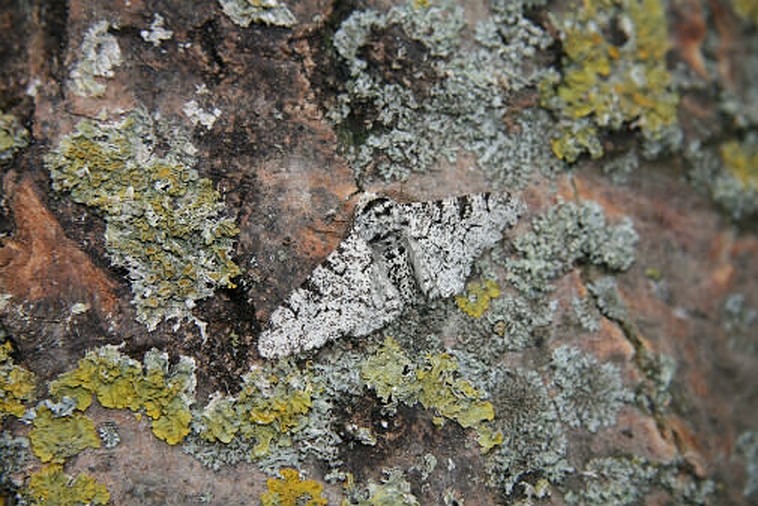
Peppered moth biston betularia has declined by 81% over the last 50 years,
according to Rothamsted Insect Survey data [Credit: Callum Macgregor]
Whether climate is contributing to the more recent decline requires further investigation; rising average annual temperatures and rainfall patterns did not match up with the peaks and troughs in moth populations, but extreme weather events—from deluge and flooding to heatwaves and drought—are often not reflected in average climate records.

The post-1982 decline appears to be real, but the researchers concluded that the reasons for this ecological decline are not as straightforward as is sometimes suggested.

"There is no simple explanation and more research on long-term data sets is required" added Professor Thomas. "We found that short-term studies and infrequent sampling can give erroneous estimates of biomass change. The complexity of insect population change requires more, better and longer-running data if we are to draw robust conclusions, particularly for parts of the world where insect data are limited."

The study is published in Nature Ecology & Evolution.

Author: Shelley Hughes | Source: University of York [November 11, 2019]

Miniature fanged 'deer' rediscovered tiptoeing through Vietnam's coastal forests


Global Wildlife Conservation and partners Southern Institute of Ecology and Leibniz Institute for Zoo and Wildlife Research have rediscovered a species lost to science since 1990 called a silver-backed chevrotain -- a deer-like species that is the size of a rabbit, has a silver sheen, and has been hanging on in a region of Vietnam ravaged by poaching by snares. The silver-backed chevrotain, also called the Vietnamese mouse deer, was last recorded more than 25 years ago and is the first mammal rediscovered on GWC's top 25 most wanted lost species in the Search for Lost Species.

Miniature fanged 'deer' rediscovered tiptoeing through Vietnam's coastal forests
This is a camera trap image in Vietnam [Credit: Southern Institute of Ecology/Global Wildlife Conservation/
Leibniz Institute for Zoo and Wildlife Research/NCNP]
The rediscovery in southern Vietnam was published in the scientific journal Nature Ecology & Evolution and is spurring on efforts to protect the chevrotain and the other mysterious and extraordinary wildlife that shares its home in Vietnam.

"We had no idea what to expect, so I was surprised and overjoyed when we checked the camera traps and saw photographs of a mouse deer with silver flanks," said An Nguyen, associate conservation scientist for GWC and expedition team leader. Nguyen is also field coordinator and PhD student with the Leibniz Institute for Zoo and Wildlife Research. "For so long, this species has seemingly only existed as part of our imagination. Discovering that it is, indeed, still out there, is the first step in ensuring we don't lose it again, and we're moving quickly now to figure out how best to protect it."


The silver-backed chevrotain was described in 1910 from four individuals collected from southern Vietnam. A Russian expedition in 1990 in central Vietnam collected a fifth individual. Scientists know almost nothing about general ecology or conservation status of this species, making it one of the highest mammal conservation priorities in the Greater Annamite mountains, one of GWC's focal wildlands.

After several interviews with local villagers and government forest rangers who reported seeing a gray mouse deer -- the colour distinguishing the silver-backed chevrotain from the more common lesser mouse deer -- the field team set three camera traps for five months in an area of southern Vietnam where locals indicated they may have seen the animal. This resulted in 275 photos of the species. The team then set up another 29 cameras in the same area, this time recording 1,881 photographs of the chevrotain over five months.


"The rediscovery of the silver-backed chevrotain provides a big hope for the conservation of biodiversity, especially threatened species, in Vietnam," said Hoang Minh Duc, head of the Southern Institute of Ecology's Department of Zoology. "This also encourages us, together with relevant and international partners, to devote time and effort to further investigate and conserve Vietnam's biodiversity heritage."

There are 10 known species of chevrotains in the world, primarily from Asia. Despite their common English names, chevrotains are neither mice nor deer, but the world's smallest small ungulates (hoofed mammals). They are shy and solitary, appear to walk on the tips of their hooves and have two tiny fangs. Chevrotains typically weigh less than 5 kg.


The silver-backed chevrotain is one of a number of fascinating species that live in the diverse tropical forests of Southeast Asia, where some species have been discovered only in the last few decades. This includes the antelope-like saola (the Asian "unicorn"), which was only discovered in 1992 and that no biologist has seen in the wild. Animals in this area of the world, however, are victims of a devastating hunting technique -- the use of cheap and homemade wire snares. The level of indiscriminate hunting in the region has led to the widespread "empty forest syndrome" across Vietnam, pushing numerous Annamite species to the brink of extinction.

A team is now setting out to determine how large -- and stable -- this population of silver-backed chevrotains is, assess the wider distribution of the species and explore the threats to its survival. As part of the first-ever comprehensive survey on the species, the team began camera trap surveys in October in two additional areas. They will use all of the information that they gather to develop a conservation action plan that strengthens enforcement and protection of the species across its range, building on the increased enforcement already put in place at the site of rediscovery.

"It is an amazing feat to go from complete lack of knowledge of the wildlife of the Greater Annamites 25 years ago to now having this question mark of the silver-backed chevrotain resolved," said Barney Long, GWC senior director of species conservation. "But the work is only beginning with the rediscovery and initial protection measures that have been put in place -- now we need to identify not just a few individuals on camera traps, but one or two sites with sizable populations so that we can actually protect and restore the species."

Source: Forschungsverbund Berlin [November 11, 2019]

Unless warming is slowed, emperor penguins will be marching towards extinction


Emperor penguins are some of the most striking and charismatic animals on Earth, but a new study from the Woods Hole Oceanographic Institution (WHOI) has found that a warming climate may render them extinct by the end of this century. The study, which was part of an international collaboration between scientists, published in the journal Global Change Biology.

Unless warming is slowed, emperor penguins will be marching towards extinction
The fate of emperor penguins is largely tied to sea ice, making them particulary vulnerable to warming
[Credit: Stephanie Jenouvrier, Woods Hole Oceanographic Institution]
"If global climate keeps warming at the current rate, we expect emperor penguins in Antarctica to experience an 86 percent decline by the year 2100," says Stephanie Jenouvrier, a seabird ecologist at WHOI and lead author on the paper. "At that point, it is very unlikely for them to bounce back."


The fate of the penguins is largely tied to the fate of sea ice, which the animals use as a home base for breeding and molting, she notes. Emperor penguins tend to build their colonies on ice with extremely specific conditions -- it must be locked in to the shoreline of the Antarctic continent, but close enough to open seawater to give the birds access to food for themselves and their young. As climate warms, however, that sea ice will gradually disappear, robbing the birds of their habitat, food sources, and ability to hatch chicks.

Jenouvrier and her team conducted the study by combining two existing computer models. The first, a global climate model created by the National Center for Atmospheric Research (NCAR), offered projections of where and when sea ice would form under different climate scenarios. The second, a model of the penguin population itself, calculated how colonies might react to changes in that ice habitat.


"We've been developing that penguin model for 10 years," says Jenouvrier. "It can give a very detailed account of how sea ice affects the life cycle of emperor penguins, their reproduction, and their mortality. When we feed the results of the NCAR climate model into it, we can start to see how different global temperature targets may affect the emperor penguin population as a whole."


The researchers ran the model on three different scenarios: a future where global temperature increases by only 1.5 degrees Celsius (the goal set out by the Paris climate accord), one where temperatures increase by 2 degrees Celsius, and one where no action is taken to reduce climate change, causing to a temperature increase of 5 to 6 degrees Celsius.

Under the 1.5 degree scenario, the study found that only 5 percent of sea ice would be lost by 2100, causing a 19 percent drop in the number of penguin colonies. If the planet warms by 2 degrees, however, those numbers increase dramatically: the loss of sea ice nearly triples, and more than a third of existing colonies disappear. The 'business as usual' scenario is even more dire, Jenouvrier adds, with an almost complete loss of the colonies ensured.

"Under that scenario, the penguins will effectively be marching towards extinction over the next century," she says.

Source: Woods Hole Oceanographic Institution [November 07, 2019]

The importance of Madagascar's lowland rainforest for lemur conservation


Throughout their evolutionary history, animals in regions with limited lowland habitat have evolved to adapt to higher elevations. Although lemurs--among the most endangered mammals on earth--are flexible and can persist at intermediate and high elevations in the Madagascar's eastern rainforest, a new Mammal Review study shows that the few remaining patches of lowland rainforest host the highest levels of lemur abundance for several species.

The importance of Madagascar's lowland rainforest for lemur conservation
A new study shows that the few remaining patches of lowland rainforest host the highest levels
of lemur abundance for several species [Credit: Marco Campera]
The findings suggest that the rapid human encroachment occurring in Madagascar's coastal areas has disproportionately threatened these primates.


"Very few lowland forests remain in Madagascar, and most of them have been poorly studied compared with areas at mid-elevations," said lead author Marco Campera, PhD, of Oxford Brookes University, in the UK. "Our research group found that the few remaining forests at low elevations host the highest abundance of lemurs,"

"It is crucial to promote research and conservation management in the few remaining patches of lowland rainforests to reconstruct the evolutionary history of the lemurs and to ensure the best possible protection of these unique primates," added senior author Giuseppe Donati, PhD, of Oxford Brookes University, in the UK.

Source: Wiley [November 06, 2019]

11,000 scientists declare climate emergency


A global team of scientists including Dr Thomas Newsome at the University of Sydney and international colleagues has warned that "untold human suffering" is unavoidable without deep and lasting shifts in human activities that contribute to greenhouse gas emissions and other factors related to climate change.

11,000 scientists declare climate emergency
Credit: Rui Vieira/PA
The declaration is based on scientific analysis of more than 40 years of publicly available data covering a broad range of measures, including energy use, surface temperature, population growth, land clearing, deforestation, polar ice mass, fertility rates, gross domestic product and carbon emissions.

"Scientists have a moral obligation to warn humanity of any great threat," said Dr Newsome from the School of Life and Environment Sciences. "From the data we have, it is clear we are facing a climate emergency."

In a paper published in BioScience, the authors from the University of Sydney, Oregon State University, University of Cape Town and Tufts University, along with more than 11,000 scientist signatories from 153 countries, declare a climate emergency, present data showing trends as benchmarks against which to measure progress and outline six areas of action to mitigate the worst effects of a human-induced climate change.

"Despite 40 years of major global negotiations, we have generally conducted business as usual and are essentially failing to address this crisis," said Professor William Ripple, distinguished professor of ecology in the Oregon State University College of Forestry and co-lead author of the paper. "Climate change has arrived and is accelerating faster than many scientists expected."


Dr Newsome said that measuring global surface temperatures will continue to remain important. However, he said that a "broader set of indicators should be monitored, including human population growth, meat consumption, tree-cover loss, energy consumption, fossil-fuel subsidies and annual economic losses to extreme weather events".

He said the indicators are intended to be useful for the public, policymakers and the business community to track progress over time.

"While things are bad, all is not hopeless. We can take steps to address the climate emergency," Dr Newsome said.

The scientists point to six areas in which humanity should take immediate steps to slow down the effects of a warming planet:

1. Energy. Implement massive conservation practices; replace fossil fuels with clean renewables; leave remaining stocks of fossil fuels in the ground; eliminate subsidies to fossil fuel companies; and impose carbon fees that are high enough to restrain the use of fossil fuels.

2. Short-lived pollutants. Swiftly cut emissions of methane, hydrofluorocarbons, soot and other short-lived climate pollutants. This has the potential to reduce the short-term warming trend by more than 50 percent over the next few decades.

3. Nature. Restrain massive land clearing. Restore and protect ecosystems such as forests, grasslands and mangroves, which would greatly contribute to the sequestration of atmospheric carbon dioxide, a key greenhouse gas.

4. Food. Eat mostly plants and consume fewer animal products. This dietary shift would significantly reduce emissions of methane and other greenhouse gases and free up agricultural lands for growing human food rather than livestock feed. Reducing food waste is also critical - the scientists say at least one-third of all food produced ends up as garbage.

5. Economy. Convert the economy's reliance on carbon fuels to address human dependence on the biosphere. Shift goals away from the growth of gross domestic product and the pursuit of affluence. Curtail the extraction of materials and exploitation of ecosystems to maintain long-term biosphere sustainability.

6. Population. Stabilise global population, which is increasing by more than 200,000 people a day, using approaches that ensure social and economic justice.


The paper states: "Mitigating and adapting to climate change means transforming the ways we govern, manage, eat, and fulfil material and energy requirements.

"We are encouraged by a recent global surge of concern - governments adopting new policies; schoolchildren striking; lawsuits proceeding; and grassroots citizen movements demanding change.

"As scientists, we urge widespread use of the vital signs and hope the graphical indicators will better allow policymakers and the public to understand the magnitude of the crisis, realign priorities and track progress."

The graphs illustrate how climate-change indicators and factors have changed over the past 40 years, since scientists from 50 nations met at the First World Climate Conference in Geneva in 1979.

In the ensuing decades, multiple other global assemblies have agreed that urgent action is necessary, but greenhouse gas emissions are still rapidly rising. Other ominous signs from human activities include sustained increases in per-capita meat production, global tree cover loss and number of airline passengers.

There are also some encouraging signs - including decreases in global birth rates and decelerated forest loss in the Brazilian Amazon and increases in wind and solar power - but even those are tinged with worry.

The decline in birth rates has slowed over the last 20 years, for example, and the pace of Amazon forest loss may be starting to increase again.

"Global surface temperature, ocean heat content, extreme weather and its costs, sea level, ocean acidity and land area are all rising," Professor Ripple said.

"Ice is rapidly disappearing as shown by declining trends in minimum summer Arctic sea ice, Greenland and Antarctic ice sheets, and glacier thickness. All of these rapid changes highlight the urgent need for action."

Source: University of Sydney [November 05, 2019]

To save biodiversity, scientists suggest 'mega-conservation'


While the conservation of charismatic creatures like pandas, elephants and snow leopards are important in their own right, there may be no better ecological bang-for-our-buck than a sound, science-based effort to save widespread keystone systems. And the majestic aspens could be a perfect start for such an endeavor.

To save biodiversity, scientists suggest 'mega-conservation'
Hairy Woodpecker (Leuconotopicus villosus) at the famed Pando aspen clone, Fishlake National Forest,
Utah, USA [Credit: Paul C. Rogers, Western Aspen Alliance]
That's the conclusion of the researchers behind the first-ever compendium of world aspen communities. In their new publication, the researchers advance the idea of "mega-conservation," where the conservation of widespread, common, species -- like aspen -- may have a strategic advantage over traditional, single-species conservation.

"The significance of aspen is that they support large numbers of dependent species, meaning aspen are truly keystone species," said Paul Rogers, the director of the Western Aspen Alliance at Utah State University and a co-author of the report. "There are six species of aspen that span much of the northern hemisphere and similarities in these aspen ecosystems allow us to employ continental conservation practices with enormous benefits to world biodiversity."


Aspen forests have been directly and indirectly impacted by human actions, including forest management favoring high-value timber trees, domestic and wild herbivore mismanagement, fire suppression, land development and mining, and extended droughts related to climate warming. A vast array of species depend on intact aspen forests; as aspen thrive or decline, so do those species dependent on their status.

Previous research, for example, has demonstrated localized declines in bird species, insects, lichens, and small mammals when aspen forests are denuded. A healthy aspen forest, on the other hand, can support thousands of other species, forming a "protective bubble," of sorts, around many vulnerable or endangered species at once.

To save biodiversity, scientists suggest 'mega-conservation'
Major world aspen species and ranges. Coloured polygons represent range extent and should not be construed
 as tree species coverage densities (i.e., species may be very dense or extremely sparse within colored polygons).
Aspen in all regions are known to support relatively high biodiversity of plants and animals
[Credit: Paul Rogers]
"While we don't advocate choosing one strategy only, we do suggest considering the broader benefits inherent in preserving world biodiversity by using keystone ecosystems, or mega-conservation," said Bradley Pinno (Univ. Alberta, Canada), another co-author of the paper, which uses regional experts to synthesize the best-available aspen science for use by government, commercial, and non-profit research and restoration institutions.


Fourteen leading aspen ecologists from eight countries across North America and Eurasia were assembled to review aspen science, threats, and restoration practices, including an examination of 200 published papers in the field. In all regions, the group found healthy aspen enhance biodiversity, facilitate rapid recolonization in natural and damaged settings like abandoned mines, and provide adaptability in changing environments.

A key take-home message is that shared cross-border science for widespread keystone systems can facilitate effective, global-scale, biodiversity. "Moving forward, we hope to expand our burgeoning Aspen Conservation Consortium will include more national experts and will continually improve the quality of world aspen science and management," Jan Sebesta (Mendel Univ., Czechia) said, "Using aspen forests as a proxy for a mega-conservation approach, we believe that an internationally focused research and conservation management approach may be the most effective way to preserve total species numbers."

Aspen forests aren't the only potential "keystone communities," Rogers suggests. Other potential widespread keystone communities are sage-steppe lands in Europe and North America, vast taiga forests of Eurasia, or Eucalypt forests across Australia.

The study is published in Global Ecology and Conservation.

Source: Utah State University [November 05, 2019]

Scientists examine reasons for plant extinction in different world regions


Species have been getting extinct on our planet since the beginning of life on it. However, the rate of extinction considerably increased with the rise of human population. The humans affect the biosphere and causes large alterations in it. These changes destroy habitats, cause the biological invasions into ecosystems, and accelerate the extinction of many species. These processes may differ depending on the region and might affect the plant diversity. In this study a team of researchers from Tyumen State University and their foreign colleagues investigated such differences in world biodiversity hotspots (predominantly regions with Mediterranean-type of climate) and coldspots (predominantly Eurasian countries).

Scientists examine reasons for plant extinction in different world regions
One of the endangered trees, palmate adansonia
[Credit: Thomas Marent]
"We demonstrated that currently plants are getting extinct 350 times faster than on average along the studied time span, i.e. 300 years. If we continue ignoring the importance of natural ecosystems and their integrity, this can lead to disastrous consequences, and relationships between plants, insects, and other species may be broken," warned Anatoliy Khapugin, a PhD degree Researcher of the Tyumen State University.

On the basis of the obtained data, the research group studied the tendencies, reasons, and dynamics of plant extinction over the past 300 years. Today's extinction rates of many plants appeared to be higher in the biodiversity hotspots worldwide. However, according to the present study, the extinction rates have recently reduced in all regions. The most threatened species were perennial herb plants growing in temperate regions such as dandelion, crowfoot, and others. In unfavorable conditions, parts of their shoots die out, and remnants remain on the ground level.


The main reasons for plant extinction in both groups of regions are agriculture and urbanization. In hotspot regions, one more threat caused plant extinction were biological invasions of plants and animals penetrated to new habitats and often caused harm to local flora and fauna. In biodiversity coldspots, changes in the hydrological regime of habitats (such as new dams that negatively affect the functioning of water bodies) may also cause plant extinctions.

"To counteract the biodiversity loss, new Protected Areas should be created, and special protection regime should be maintained in these territories to predominantly or completely prevent human activity there. In many world regions, including Russia, both national and regional Protected Area Networks prove to be inefficient. They have to be expanded to protect more habitats of threatened plants and animals," stated by Anatoliy Khapugin.

The study is published in Current Biology.

Source: University of Tyumen [November 05, 2019]