Theme images by kelvinjay. Powered by Blogger.

USA

AFRICA

ASIA

Brazil

Portugal

United Kingdom

Switzerland

World's oldest comma shrimp was way ahead of the curve


Scientists have discovered the world's oldest "comma" shrimp, a tiny crustacean shaped like its punctuation namesake. The 90-million-year-old creature fills in a major evolutionary gap for a family of marine animals now found in abundance around the planet, according to researchers from Yale and the University of Alaska. The discovery appears in the journal Proceedings of the Royal Society B.

World's oldest comma shrimp was way ahead of the curve
Eobodotria muisca [Credit: Javier Luque]
The fossilized shrimp, named Eobodotria muisca, comes from Mesozoic rocks in tropical South America. Researchers found exceptionally well-preserved fossils representing more than 500 individuals between 6 and 8 millimeters long, with features that are rarely preserved in fossil crustaceans: mouthparts, the gut, tiny hairs, and small compound eyes.

"We are amazed by how similar Eobodotria muisca is to today's species," said Yale paleontologist Javier Luque, lead author of the study. "There are eight families or main groups of living comma shrimp, and none of them have a confirmed fossil occurrence. This means we had no idea when modern comma shrimp evolved, until now."


The only previous record of a modern-looking comma shrimp is a 160-million-year-old fossil from Europe, Luque said. Although that shrimp fit within the range of comma shrimp body forms, it couldn't be linked to any of the main modern families of comma shrimp.

Eobodotria muisca, on the other hand, belongs to the Bodotriidae family of living comma shrimp, Luque said, extending the fossil record of that family of shrimp by nearly 100 million years.

The new species lived during the mid-Cretaceous period, when a long, narrow inland sea covered a large part of what is today the Eastern and Central Andes of Colombia. Luque found the fossils together with fossils of the crab Callichimaera perplexa. Eobodotria muisca is named after the Muisca native Americans who lived in the Colombian Andes.

Live 3-D model of Eobodotria muisca [Credit: Yale University]

Luque said that the similarity between Eobodotria muisca and its modern relatives suggests that the rates of external anatomical changes over millions of years in this group was low compared to other crustacean groups found in the same location. He also noted that the new cache of fossils is the first of its kind in northern South America.


Sarah Gerken of the University of Alaska-Anchorage is co-author of the study.

Gerken and Luque said most of the Eobodotria muisca fossils they found were adult males. Large aggregations of males usually happen in the water column when they are searching for females by means of their large antennae for smelling and their flappy tail appendages for swimming—both features that females lack, the researchers explained.

One possible explanation for this unusual accumulation of adult males is that they could have died suddenly in the water column while swarming in search of females, and then sunk down to the soft bottom where they fossilized, Gerken and Luque said.

The researchers said the discovery not only helps paleontologists understand the origin of the comma shrimp's curved body, it also can be used to help understand the origins of related crustaceans on the evolutionary family tree.

Author: Jim Shelton | Source: Yale University [November 26, 2019]

Fifteen pre-Hispanic burials discovered in Colombia


Archaeologists have uncovered 15 burials with the remains of a pre-Hispanic indigenous community on the grounds of the Pedagogical and Technological University of Colombia (UPTC) located in the city of Tunja in Northern Colombia.

Fifteen pre-Hispanic burials discovered in Colombia
Credit: UPTC - Universidad Pedagógica y Tecnológica de Colombia


The burials, which are believed to date back over 500 years, were found approximately 50 centimetres deep over an area of 1,500 square metres on the University grounds. About 500 kg of ceramic and lithic remains were also recovered at the site.

Fifteen pre-Hispanic burials discovered in Colombia
Credit: UPTC - Universidad Pedagógica y Tecnológica de Colombia


According to archaeologists, the characteristics of the findings suggest the remains belong to the Muisca people, who occupied the Andean Highland region of Colombia prior to the arrival of the Spaniards in 1537. There is a population of around 14,000 indigenous Muiscans still living in present-day Colombia.

Fifteen pre-Hispanic burials discovered in Colombia
Credit: UPTC - Universidad Pedagógica y Tecnológica de Colombia


Anthropologist working on the site Fabian Alvarez said: “We have the footprints, the vestiges of the footprints of the house and the graves of the people who probably lived here. Once we have cleaned and classified all these findings, they will help us answer a lot of questions.”


The findings will be given to the UPTC’s forensic laboratory, where they will be analysed for scientific purposes.

Source: UPTC - Universidad Pedagógica y Tecnológica de Colombia [November 05, 2019]

2,000-year-old burial discovered in Colombia


A ancient burial was found during the archaeological rescue that INCIVA is carrying out on the Cali - Yumbo highway, section Gecolsa - Dapa, near the junction that leads to the village of Dapa.

2,000-year-old burial discovered in Colombia
Credit: Inciva Patrimonio Vital


Jonathan Velasquez Alzate, Director in charge of INCIVA, reported that based on the initial findings this is a primary burial of approximately 2,000 years old that can be attributed to the Malagana or Yotoco culture since the area was the territorial boundary between the two tribes.

2,000-year-old burial discovered in Colombia
Credit: Inciva Patrimonio Vital


The skeletal remains are in supine position, accompanied by a medium sized bowl decorated with red paint.  Fragments of charcoal were also found.

2,000-year-old burial discovered in Colombia
Credit: Inciva Patrimonio Vital


The burial, located at a depth of 186 cm, is in a bad state of preservation due to the vibrations caused by the high traffic of vehicles on the road.

2,000-year-old burial discovered in Colombia
Credit: Inciva Patrimonio Vital
The new find confirms the presence of a pre-Hispanic cemetery in the area, which will have to be preserved as an important vestige of the cultural and archaeological heritage of Valle del Cauca.

Source: INCIVA [trsl. TANN, August 11, 2019]

Fossil crab reveals a new branch in the tree of life


A new fossil from the dinosaur era challenges the understanding of evolution. In a paper published in Science Advances, an international team, including researchers from the Smithsonian Tropical Research Institute (STRI) in Panama, announced their discovery of a new fossil crab species, Callichimaera perplexa in Boyacá, Colombia, and in Wyoming in the United States.

Fossil crab reveals a new branch in the tree of life
Life reconstruction of Callichimaera perplexa: The strangest crab that has ever lived
[Credit: Oksana Vernygora, University of Alberta]
"This new discovery is one of the most exciting fossil findings in the tropics in the past decade," said Javier Luque, former predoctoral fellow in staff scientist Carlos Jaramillo's lab at STRI, now NSERC postdoctoral fellow in the Department of Geology and Geophysics at Yale University. "We discovered a treasure trove of fossil crabs, dozens of exceptionally preserved specimens with eyes, antennae, muscles and reproductive organs."


Sometimes it is difficult to piece together the tree of life that maps the evolution of the animals seen today. Important pieces in the puzzle may be rare or yet to be discovered. According to the authors, this fossil crab's unique body form pushes the textbook definition of what a crab is. It has large, unprotected compound eyes, a small body and mouthparts that look like legs. Its large, oar-like legs are the oldest record of adaptations of crabs for swimming.

Fossil crab reveals a new branch in the tree of life
Callichimaera perplexa: The oldest swimming crab from the dinosaur era
 [Credit: Daniel Ocampo R., Vencejo Films]
"This baffling fossil is like the platypus of the crab world," Luque said. "It is the earliest arthropod to evolve swimming oar-like legs since the sea scorpions disappeared more than 250 million years ago, a beautiful and perplexing chimera, as its name indicates."


By comparing specimens of the new species with all known crab species, the team discovered several important unique characteristics of this species that sets it apart. The adults have characteristics similar to crab larvae. This would be like an adult human having the disproportionately large eyes of a baby, for example.

Fossil crab reveals a new branch in the tree of life
The diversity of body forms among crabs, including the enigmatic Callichimaera perplexa (center)
[Credit: Arthur Anker & Javier Luque; figure, Javier Luque, Yale University]


Because researchers found males and females, they concluded that they were seeing adults, even though they appeared to have many characteristics of an earlier life-stage. The phenomenon of an adult retaining characteristics of a younger form is called pedomorphosis, a way to skip evolutionary steps in order to adapt to a new environment in fewer generations.

Callichimaera perplexa, the puzzling mid-Cretaceous crab [Credit: Images by Daniel Ocampo R., Vencejo Films, 
& Javier Luque, Yale University; animation and 3D reconstruction by Alex Duque]

"This reveals a new branch in the tree of life that has never been seen before," said Jaramillo, project advisor.

Source: Smithsonian Tropical Research Institute [April 24, 2019]

Important Pre-Colombian archaeological finds uncovered during oil pipeline construction in Colombia


Colombian petroleum producer Ecopetrol and its petroleum logistics subsidiary Cenit have just announced the unearthing of a trove of archaeological artifacts, considered one of the largest finds of its kind in the Colombia’s “Eje Cafetero” coffee region, while constructing the new section between Chinchiná and Pereira, of the Salgar-Cartago-Yumbo petroleum pipeline.

Important Pre-Colombian archaeological finds uncovered during oil pipeline construction in Colombia
Credit: Ecopetrol/Finance Colombia
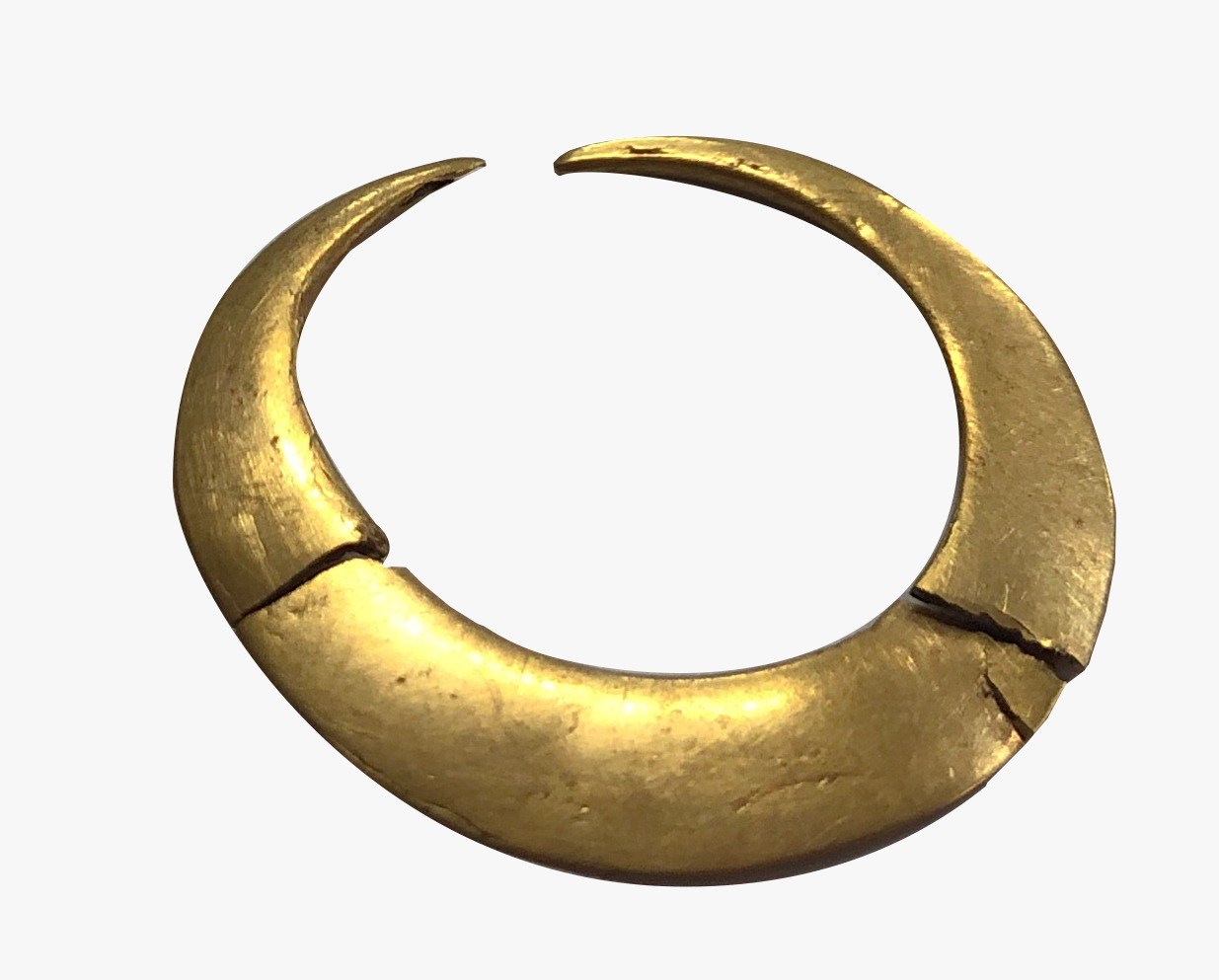
During the preparation and construction phases, a gold nosepiece, 68 complete ceramic pieces, 20 restored ceramic pieces, 1,029 lithic pieces or stone objects and 23,000 fragments, as well as bone remains and ceramic seals have been recovered. In addition to this, the archaeology teams found 14 tombs of which 8 are in perfect condition.


With the findings it was possible to describe a sequence of occupation of several epochs spanning at least 2,000 years, from the 5th century BC to the 15th century AD. Although most of the materials belong to the Mirador period, between 1,200 and 1,500 AD.

Among the findings there are 68 complete ceramic pieces, 1,209 stone objects and a gold nosepiece, together covering 2,000 years of human culture. 14 tombs have also been found, 8 of which are in perfect condition.

Important Pre-Colombian archaeological finds uncovered during oil pipeline construction in Colombia
Credit: Ecopetrol/Finance Colombia
The entire archaeological collection was delivered for preservation and care at the Technological University of Pereira. This collection will continue to accrete any additional archaeological findings that are found by the project until the completion of the construction of the entire pipeline.


For this project, an Archaeological Management Plan was established, which includes the rescue, prior to and during construction, of the identified sites along the route of the new section.

The archaeological investigation of the area began in 2013 before beginning the construction work. Throughout the 55 km of the route, 124 sites were identified, of which 78 were excavated and were part of the archaeological rescue.

Important Pre-Colombian archaeological finds uncovered during oil pipeline construction in Colombia
Credit: Ecopetrol/Finance Colombia
Although most of the rescue was made prior to the start of the works, during the construction and laying of the pipeline, a professional archaeology team continues accompanying the excavation and engineering workers to guarantee the protection of Colombia’s archaeological heritage.


According to Ecopetrol, he work, which is estimated to be completed later this year, is conducted subject to all the required safeguards and permits, and in compliance with environmental and archaeology standards to ensure the preservation of the territories and their surroundings.

The new section of the pipeline has an extension of 55 kilometers between Chinchiná and Pereira, passing through the municipalities of Santa Rosa de Cabal and Marseille.

Important Pre-Colombian archaeological finds uncovered during oil pipeline construction in Colombia
Credit: Ecopetrol/Finance Colombia
“It is a work of high engineering that is developed in harmony with the environment, the care of the coffee landscape, respect for indigenous culture, the conservation of archaeological heritage and the creation of social value.” Said Ecopetrol in a statement.

Author: Loren Moss | Source: Finance Colombia [March 27, 2019]

Tropical trees in the Andes are moving up -- toward extinction


In the most comprehensive study of its kind, an international team of scientists led by University of Miami biologists has found that tropical and subtropical forests across South America's Andes Mountains are responding to warming temperatures by migrating to higher, cooler elevations, but probably not quickly enough to avoid the loss of their biodiversity, functional collapse, or even extinction.

Tropical trees in the Andes are moving up -- toward extinction
An international study led by University of Miami tropical biologists reveals that tropical trees are migrating
upslope to escape climate change, but not fast enough [Credit: Wake Forest University]
Published in the journal Nature, the study confirmed for the first time that, like many other plant and animal species around the world, trees from across the Andean and Amazon forests of Colombia, Ecuador, Peru, and northern Argentina have been moving upward. But unlike species from the world's temperate or boreal forests, which are far more accustomed to dramatic seasonal shifts in temperature, tropical trees are running into environmental roadblocks at higher, cooler elevations that are thwarting their migration and threatening their survival.

"In the Andes, the ecosystems can change very fast and very dramatically, for example, from sunny and dry premontane forests to sopping-wet cloud forests. These changes, called ecotones, appear to be blocking species migrations," said lead author Belén Fadrique, a Ph.D. candidate who designed and carried out the study with her advisor, Kenneth J. Feeley, UM's Smathers Chair of Tropical Tree Biology. "These ecotone barriers make it hard for plants to relocate their populations -- and if they can't relocate, they will go extinct."


For the Nature study, Fadrique and Feeley set out to answer a scientific call to include more tropical plants in studies that investigate and predict the effects of climate change -- the very call that Feeley and his fellow tropical biologists have been issuing for years because, as he notes, "the tropics include most of the world's species and we know next to nothing about what those species are doing or how they are responding to climate change."

Aiming to fill that void, the UM researchers joined forces with 18 other researchers from around the world to create a new database that tracks the livelihoods of thousands of highland trees in 186 plots of land situated throughout what is known as the Tropical Andes Biodiversity Hotspot.

Sitting at elevations from 300 to over 3,000 meters above sea level, most of the plots are about the size of an American football field and have been inventoried multiple times over the past couple decades. Collectively, these forest plots contain an astonishing diversity -- a total of 120 different plant families, 528 genera, and more than 2,000 tree species. As Feeley notes, that's more species of trees than are found in all of the United States and Canada combined.

Using newly developed modeling techniques that combined the data from all the plots into a single comprehensive analysis, the researchers confirmed that, as temperatures in the high Andes rise due to global warming, heat-loving tropical trees are seeking more optimal conditions by migrating to higher and cooler altitudes. Consequently, the abundance of these heat-loving, or thermophilic, species in the study plots is increasing over time while, in contrast, the abundance of cold-loving species is declining.


The researchers were also surprised to learn that, while this phenomenon of thermophilization is widespread across the Andes, the rates of the change in forest composition are not uniform across elevations. They suggest "ecotonal roadblocks" may be, in part, responsible. In other words, as Andean species get pushed upslope by rising temperatures, they may quickly find themselves out of their comfort zones as other aspects of their habitat, such as rainfall and cloud cover, become intolerable.

"Thermophilization is a mouthful of a word but it means that forests are becoming more heat-loving over time because, as the world warms up, the species that prefer the cold are being kicked out or are dying off and the heat-loving species are moving up and taking their place," Feeley said. "Everything is moving up the mountain so the species near the tops of the mountains are running out of places to go and may soon face the risk of mountain-top extinction."

Feeley and his colleagues have published other studies examining the effects of climate change on tropical forests in different areas, but none with such a broad continental scope. Which gives Feeley both confidence -- and pause -- over the study's conclusion: "Andean forests must be added to the growing list of ecosystems and species that lack the ability to quickly and cohesively respond to climate change and thus face high risk of extinction, biodiversity loss, and functional collapse."


Feeley and his co-authors hope to conduct follow-up studies that will analyze how climatic factors are impacting specific Andean species, many of which have not even been identified or named yet, and what the consequences will be if they are lost.

"Tropical forests are one of the most important players in the world's global carbon cycle," Feeley said. "They slow down climate change by taking a lot of carbon out of the atmosphere and putting it into their growth. So the faster climate change happens, the faster we will lose our tropical forests, which in turn means that climate change will happen even faster."

Source: University of Miami [November 14, 2018]

Cacao analysis dates the dawn of domesticated chocolate trees to 3,600 years ago


Researchers analyzing the genomes of cultivated cacao trees have traced their origin to a "single domestication event" some 3,600 years ago. The discovery opens a new front in a long-running argument regarding when and where humans started growing the source of chocolate.

Cacao analysis dates the dawn of domesticated chocolate trees to 3,600 years ago
Credit: Chocolate.org
"This evidence increases our understanding of how humans moved and established in America," said Omar Cornejo, a Washington State University population geneticist and lead author of an article on the study in Communications Biology. "It is important in itself because it gives us a timeframe for asking questions that are perhaps trickier: How long did it take to make a good cacao? How strong was the process of domestication? How many plants were necessary to domesticate a tree?"

The study, which involved 18 scientists from 11 institutions, also found that cacao's domestication ended up selecting for flavor, disease resistance and the stimulant theobromine. However, that came at the cost of retaining genes that lowered crop yields.


Researchers sequenced the Theobroma cacao genome in 2010. That laid out what Cornejo refers to as an archetype of the cacao genome, while this study, by sequencing 200 plants, teases out variations in the genome that can reveal the plant's evolutionary history.

The researchers looked at "the prince of cocoas," Criollo -- rare, flavorful and the first to be domesticated. They found that it was domesticated in Central America 3,600 years ago, but originated in the Amazon basin, near the modern-day border of southern Colombia and northern Ecuador, from an ancient germplasm known as Curaray. Chances are it was introduced to Central America by traders, said Cornejo.

Cacao analysis dates the dawn of domesticated chocolate trees to 3,600 years ago
Cluster of Theobroma cacao pods in tree [Credit: Wikipedia]
The tree's population at the time consisted of between 437 and 2,674 individual trees, and most likely about 738 trees. The time of domestication 3,600 years ago, with margins of 2,481 and 10,903 years ago, is consistent with traces of theobromine found in Olmec pottery and large-scale analyses of ancient and modern human DNA that put colonization of the Americas at roughly 13,000 years ago.

The researchers also saw support for a hypothesis that domestication carries a cost as growers, in choosing plants with desirable traits, can ultimately make plants that accumulate counterproductive genes -- "deleterious mutations" -- making them less fit.


Insights from the study could help identify genes behind specific traits that breeders can emphasize, including yield.

"What we would like to have is a way to combine plants from populations with high productivity -- like Iquitos -- with plants of Criollo origin, while retaining all these desirable traits that make Criollo cacao be the best in the world," said Cornejo.

Cornejo worked on the study at both WSU, where he used the high-performance computational power of the Center for Institutional Research Computing for the analyses, and Stanford University, where he was a post-doc in the lab of Carlos Bustamante, a co-author on the paper, where the sequencing of the data was done. Funding for the research came from Mars, Incorporated, which has undertaken a large effort to sequence and study the cacao genome.

Author: Eric Sorensen | Source: Washington State University [October 24, 2018]

Colombia vows to protect prehistoric artwork in Amazon region


Colombia’s national parks authority has declared one of the world’s largest displays of prehistoric art a protected site.

Colombia vows to protect prehistoric artwork in Amazon region
Credit: Columbia Reports
The Serrania La Lindosa is one of the country’s most important archaeological sites with a history of a staggering 12,000 years.

While European peoples were barely awakening from the last ice age, Amazonian peoples were highly active in what is now the Chiribiquete nature reserve.

For thousands of years, the rocks in the park were used for art, leaving modern man one of the largest displays of prehistoric pictographs in the world.

The site is located less than 10 miles from San Jose del Guaviare, a town on the frontier of the Amazon forest.

Colombia vows to protect prehistoric artwork in Amazon region
Credit: Columbia Reports
Conservation or even investigation of the pictographs was virtually impossible for decades; until last year the area was largely controlled by now-demobilized FARC guerrillas.

The Guaviare governor’s office and national authorities are now investigating how to make the archaeological site and the nature park around it accessible to the public.

The national parks authority declared the site a Protected Archaeological Area earlier this week and has been developing a Archaeology Management Plan for years.

The plan seeks to protect the regional environment while developing sustainable tourism projects with local communities.

Source: Columbia Reports [June 24, 2018]

New details on discovery of 300-year-old San Jose shipwreck


The Woods Hole Oceanographic Institution (WHOI) recently obtained authorization by Maritime Archaeology Consultants (MAC), Switzerland AG, and the Colombian government to release new details from the successful search for the three-century old San José —a 62-gun, three-masted Spanish galleon ship that sank with a cargo believed to be worth billions of dollars. The ship, which is often called the “holy grail of shipwrecks,” went down with a treasure of gold, silver, and emeralds in 1708 during a battle with British ships in the War of Spanish Succession.

New details on discovery of 300-year-old San Jose shipwreck
In November 2015, the MAC survey team and WHOI researchers returned to Colombian waters for a second search effort.
Side scan sonar images gave the crew the first indications of the find from of the wreck. To confirm the wreck’s identity,
REMUS descended to just 30 feet above the wreck where it was able to capture photos of a key distinguishing feature
of the San José—its cannons [Credit: REMUS image, Woods Hole Oceanographic Institution]
The legendary wreck was discovered off the coast of Cartagena, Colombia, on Nov. 27, 2015, by a team of international scientists and engineers during an expedition aboard the Colombian Navy research ship ARC Malpelo led by MAC’s Chief Project Archaeologist Roger Dooley. It was found more than 600 meters below the surface during a search initiated by MAC and approved by The Colombian Ministry of Culture. The search was supervised by Instituto Colombiano de Antropología e Historia (ICANH) and Dirección General Marítima (DIMAR).

“In order to ensure a successful search, we retained the services of Woods Hole Oceanographic Institution, which has an extensive and recognized expertise in deep water exploration,” said Dooley. “This partnership was key to the discovery of the San Jose.”

WHOI played a crucial role in both the search and discovery of the final resting place of the San José, which had remained a great mystery to marine archeologists, historians, governments, and treasure hunters for decades. Specifically, the institution provided and operated an autonomous underwater vehicle called REMUS 6000 to survey an area off Colombia’s Barú Peninsula.

New details on discovery of 300-year-old San Jose shipwreck
A newly released gridded mosaic of images taken by the REMUS 6000 shows the complete wreck site
[Credit: Jeff Kaeli, Woods Hole Oceanographic Institution]
“The REMUS 6000 was the ideal tool for the job, since it’s capable of conducting long-duration missions over wide areas,” said WHOI engineer and expedition leader Mike Purcell.

Finding high-profile wrecks is nothing new for REMUS, which played an instrumental role in finding the wreckage of Air France 447 in 2011. The airplane had crashed in 2009 several hundred miles off the northeastern coast of Brazil and landed deep in the ocean on some of the most rugged seafloor terrain on Earth. REMUS was also used to map and photograph the Titanic wreck site during a 2010 expedition.

The San José discovery carries considerable cultural and historical significance for the Colombian government and people because of the ship’s treasure of cultural and historical artifacts and the clues they may provide about Europe’s economic, social, and political climate in the early 18th century. The Colombian Government plans to build a museum and world-class conservation laboratory to preserve and publicly display the wreck’s contents, including cannons, ceramics, and other artifacts.

New details on discovery of 300-year-old San Jose shipwreck
The wreck was partially sediment-covered, but with the camera images from the lower altitude REMUS
missions, the crew was able to see new details, such as ceramics and other artifacts
[Credit: REMUS image, Woods Hole Oceanographic Institution]
REMUS was initially deployed off the Malpelo to survey an approved area in June 2015. The overall search area was divided into search blocks, and in the initial blocks surveyed, the shipwreck was not found. Unfortunately, the entire area of search blocks could not be completed in this first expedition due to time constraints. In November, the WHOI team along with MAC and under the supervision of ICANH and DIMAR, returned to the search area determined by previous historical research to finalize the survey in the blocks that had not been completed.

“During that November expedition, we got the first indications of the find from side scan sonar images of the wreck,” said Purcell. “From those images, we could see strong sonar signal returns, so we sent REMUS back down for a closer look to collect camera images.”

To confirm the wreck’s identity, REMUS descended to just 30 feet above the wreck where it was able to capture photos of a key distinguishing feature of the San José—its cannons.  Subsequent missions at lower altitudes showed engraved dolphins on the unique bronze cannons.

New details on discovery of 300-year-old San Jose shipwreck
Tea cups at the wreck site [Credit: REMUS image, Woods Hole Oceanographic Institution]
“The wreck was partially sediment-covered, but with the camera images from the lower altitude missions, we were able to see new details in the wreckage and the resolution was good enough to make out the decorative carving on the cannons,” said Purcell. “MAC’s lead marine archaeologist, Roger Dooley, interpreted the images and confirmed that the San José had finally been found.”

“Once again, WHOI’s expertise in AUV technology and operations has resulted in an important discovery,” said WHOI Vice President for Marine Facilities and Operations Rob Munier. “We are pleased to have played a part in settling one of the great shipwreck mysteries for the benefit of the Colombian people and maritime history buffs worldwide. We look forward to our continued involvement to answer the basic oceanographic research questions associated with the find.”

Source: Woods Hole Oceanographic Institution [May 21, 2018]