Theme images by kelvinjay. Powered by Blogger.

USA

AFRICA

ASIA

Brazil

Portugal

United Kingdom

Switzerland

New Cretaceous mammal fossil sheds light on evolution of middle ear


Researchers from the Institute of Vertebrate Paleontology and Paleoanthropology (IVPP) of the Chinese Academy of Sciences and the American Museum of Natural History (AMNH) have reported a new species of multituberculate - a type of extinct Mesozoic rodent - with well-preserved middle ear bones from the Cretaceous Jehol Biota of China. The findings were published in Nature.

New Cretaceous mammal fossil sheds light on evolution of middle ear
Reconstruction of Jeholbaatar kielanae [Credit: XU Yong]
The new mammal, Jeholbaatar kielanae, has a middle ear that is distinct from those of its relatives. WANG Yuanqing and WANG Haibing from IVPP, along with MENG Jin from AMNH, proposed that the evolution of its auditory apparatus might have been driven by specialization for feeding.

Fossil evidence shows that postdentary bones were either embedded in the postdentary trough on the medial side of the dentary or connected to the dentary via an ossified Meckel's cartilage in early mammals, prior to their migration into the cranium as seen in extant mammals.


Detachment of the mammalian middle ear bones from the dentary occurred independently at least three times. But how and why this process took place in different clades of mammals remains unclear.

The Jeholbaatar kielanae specimen was discovered in the Jiufotang Formation in China's Liaoning Province (Jehol Biota). It displays the first well-preserved middle-ear bones in multituberculates, providing solid evidence of the morphology and articulation of these bony elements, which are fully detached from the dentary.


It reveals a unique configuration with more complete components than those previously reported in multituberculates. The new fossil reveals a transitional stage in the evolution of the surangular - a "reptilian" jawbone.

In light of current evidence, scientists argue that the primary (malleus-incus) and secondary (squamosal-dentary) jaw joints co-evolved in allotherians, allowing a distinct palinal (anteroposterior) jaw movement while chewing.

Detachment of the auditory apparatus of the middle ear would have gained higher selective pressure in order to increase feeding efficiency, suggesting that evolution of the middle ear was probably triggered by functional constraints on the feeding apparatus in allotherians.

Source: Chinese Academy of Sciences [November 27, 2019]

Animal-like embryos evolved before animals


Animals evolved from single-celled ancestors, before diversifying into 30 or 40 distinct anatomical designs. When and how animal ancestors made the transition from single-celled microbes to complex multicellular organisms has been the focus of intense debate.

Animal-like embryos evolved before animals
Three-dimensional reconstruction of a Caveasphaera specimen,
showing cell structures [Credit: NIGPAS]
Until now, this question could only be addressed by studying living animals and their relatives, but now the research team has found evidence that a key step in this major evolutionary transition occurred long before complex animals appear in the fossil record, in the fossilised embryos that resemble multicellular stages in the life cycle of single-celled relatives of animals.

The team discovered the fossils named Caveasphaera in 609 million-year old rocks in the Guizhou Province of South China. Individual Caveasphaera fossils are only about half a millimeter in diameter, but X-ray microscopy revealed that they were preserved all the way down to their component cells.


Kelly Vargas, from the University of Bristol's School of Earth Sciences, said: "X-Ray tomographic microscopy works like a medical CT scanner, but allows us to see features that are less than a thousandth of a millimeter in size. We were able to sort the fossils into growth stages, reconstructing the embryology of Caveasphaera."

Co-author Zongjun Yin, from Nanjing Institute of Geology and Palaeontology in China, added: "Our results show that Caveasphaera sorted its cells during embryo development, in just the same way as living animals, including humans, but we have no evidence that these embryos developed into more complex organisms."

Animal-like embryos evolved before animals
Computer models based on X-ray tomographic microscopy of the fossils, showing the successive stages
of development [Credit: Philip Donoghue & Zongjun Yin]
Co-author Dr John Cunningham, also from University of Bristol, said: "Caveasphaera had a life cycle like the close living relatives of animals, which alternate between single-celled and multicellular stages. However, Caveasphaera goes one step further, reorganising those cells during embryology."

Co-author Stefan Bengtson, from the Swedish Museum of Natural History, said "Caveasphaera is the earliest evidence of this most important step in the evolution of animals, which allowed them to develop distinct tissue layers and organs".


Co-author Maoyan Zhu, also from Nanjing Institute of Geology and Palaeontology, said he is not totally convinced that Caveasphaera is an animal. He added: "Caveasphaera looks a lot like the embryos of some starfish and corals - we don't find the adult stages simply because they are harder to fossilise

Co-author Dr Federica Marone from the Paul Scherrer Institute in Switzerland said "this study shows the amazing detail that can be preserved in the fossil record but also the power of X-ray microscopes in uncovering secrets preserved in stone without destroying the fossils."

a) and b), SEM image(s) of naked Caveasphaera specimen(s) with cellular structures;
e), f) showing detail of the cellular structures; c) and d), Caveasphaera specimens
with well-preserved envelope [Credit: NIGPAS]
Co-author Professor Philip Donoghue, also from the University of Bristol's School of Earth Sciences, said "Caveasphaera shows features that look both like microbial relatives of animals and early embryo stages of primitive animals. We're still searching for more fossils that may help us to decide.

"Either way, fossils of Caveasphaera tell us that animal-like embryonic development evolved long before the oldest definitive animals appear in the fossil record."

The findings are published in Current Biology.

Source: University of Bristol [November 27, 2019]

Chinese, Japanese archaeologists reconstruct millennia-old iron-smelting techniques


Chinese and Japanese archaeologists have successfully reconstructed the iron-smelting techniques that date back about two millennia.

Chinese, Japanese archaeologists reconstruct millennia-old iron-smelting techniques
Credit: Sichuan Observer


Based on the archaeological discovery of the Han Dynasty (206 BC-AD 220), archaeologists built a shaft furnace and successfully smelted pig iron in an experiment conducted over the weekend in the city of Qionglai in southwest China's Sichuan Province.

Chinese, Japanese archaeologists reconstruct millennia-old iron-smelting techniques
Credit: Sichuan Observer
The experiment provides data and a successful case for the study of iron-smelting techniques in the Han Dynasty, according to the archaeologists.

Chinese, Japanese archaeologists reconstruct millennia-old iron-smelting techniques
Credit: Sichuan Observer


The experiment was jointly sponsored by Sichuan University, the institutes of cultural relics and archaeology in Chengdu and Sichuan, Japan's Ehime University and the municipal government of Qionglai.

Chinese, Japanese archaeologists reconstruct millennia-old iron-smelting techniques
Credit: Sichuan Observer
Iron is regarded as one of the most important materials of Chinese civilization. Ancient Chinese were able to refine liquid iron as early as the Spring and Autumn Period (770 BC-476 BC).

Chinese, Japanese archaeologists reconstruct millennia-old iron-smelting techniques
Credit: Sichuan Observer
Li Yingfu, vice dean of the College of History and Culture of Sichuan University, said the iron-smelting techniques in the Han Dynasty not only greatly promoted production in ancient China, but also contributed to the development of metallurgy in Southeast Asia and beyond.

Source: Xinhua News Agency [November 19, 2019]

New finding on origin of avian predentary in Mesozoic birds


The predentary bone is one of the most enigmatic skeletal elements in avian evolution. Located at the tip of the lower jaw, this bone is absent in more primitive birds and in living birds; it is thought to have been lost during evolution. For over 30 years, the origin and function of the avian predentary has remained mysterious.

New finding on origin of avian predentary in Mesozoic birds
This is a reconstruction of Yanornis martini feeding on fish along a shallow
 lakeshore of the Jehol biota [Credit: Michael Rothman]
Now, however, Alida Bailleul, LI Zhiheng, Jingmai O'Connor and ZHOU Zhonghe from the Institute of Vertebrate Paleontology and Paleoanthropology (IVPP) of the Chinese Academy of Sciences have made significant progress towards solving this long-standing mystery. Their findings were published in Proceedings of the National Academy of Sciences.

Using a battery of analytical methods, the team, led by Dr. Bailleul, presents strong evidence that the avian predentary was covered by a keratinous beak - a horny sheath that covers the bones of the rostrum in all living birds, all of which are edentulous and have beaks. It also provides evidence the predentary was proprioceptive, i.e., it was able to detect external mechanical stimuli; and was mobile - thus representing a now extinct form of cranial kinesis.


Cranial kinesis occurs when joints are able to move within the skull - mainly between the upper jaw and the braincase. This feature is widespread in living birds; however, it is thought to be mostly absent in Mesozoic birds.

Based on her examination of the fossilized tissues of the predentary and other jaw elements of Yanornis martini from the Jehol Biota, Dr. Bailleul identified a specific type of cartilage inside the joint between the predentary and dentary that strongly suggests some movement between these elements.

New finding on origin of avian predentary in Mesozoic birds
The pink arrow points to the predentary and the blue arrow points to the upper portion of the jaw,
which has no teeth. Together, they may have been covered by a keratinous beak,
and the predentary was most likely mobile [Credit: IVPP]
The team noticed that the predentary is only found in ornithuromorphs that have teeth. However, the tip of the premaxilla - the bone of the upper bill that would have occluded with the predentary - is without teeth. This suggests that the tip of the upper jaw, like the predentary, was also covered with a keratinous beak.


The tiny beak at the tip of the skull, combined with the sensitive and mobile predentary bone and teeth that were most likely also proprioceptive, represents a unique feeding adaptation that allowed greater dexterity when manipulating food. Although bizarre and now extinct, this unique feeding apparatus persisted in the ornithuromorph clade for at least 58 million years, from the Early to the Late Cretaceous.

Using information from the fossilized tissues and preexisting data on the embryology of living birds, the team also formulated a hypothesis regarding the origin of this bone, suggesting it is a sesamoid, similar to the human knee cap. Identification as a sesamoid means this bone is a novel skeletal innovation unique to one lineage of ornithuromorphs, and that it did not arise from a preexisting skull bone.

Although additional research on fossils birds (and also extant birds) is required to confirm some of these hypotheses, the predentary is such a small bone that it is only rarely preserved, thus making it very difficult - if not impossible - to find specimens that can shed light on the remaining pieces of this mystery.

Source: Chinese Academy of Sciences [November 18, 2019]

Are hyoliths Palaeozoic lophophorates?


Hyoliths are extinct invertebrates with calcareous shells that were common constituents of the Cambrian fauna and formed a minor component of benthic faunas throughout the Palaeozoic until their demise in the end-Permian mass extinction. The biological affinity of hyoliths has long been controversial and the group has been compared with a number of animal phyla, most frequently the Mollusca or the Sipuncula, although other researchers have considered hyoliths as a separate "extinct phylum". However, recent discoveries of a tentaculate feeding apparatus ('lophophore') and fleshy apical extensions from the shell ('pedicle'), have resulted in hyoliths being placed within the lophophorates with a close relationship to the brachiopods.

Are hyoliths Palaeozoic lophophorates?
Reconstruction of Triplicatella opimus from the Chengjiang Lagerstätte in a proposed
deposit-feeding lifestyle [Credit: Science China Press]
A new article by Zhifei Zhang and his research group at Northwest University, China, together with Dr. Christian Skovsted from the Swedish Museum of Natural History have questioned this phylogenetic placement, after analyzing hundreds of hyolith fossils from the lower Cambrian (520 million years ago) Chengjiang Biota of South China (Liu et al.). In their material from South China, the first credible soft parts of an orthothecid hyolith other than the gut has been preserved in the species Triplicatella opimus.


The soft part morphology of Triplicatella opimus confirms the presence of a tentaculate feeding organ in orthothecids, demonstrating that both recognized orders of hyoliths possessed a tentaculate feeding organ. The tuft-like arrangement of the tentacles of T. opimus differs from that of hyolithids suggesting a different function of the feeding organ between orthothecid (collecting food directly from the substrate) and hyolithid hyoliths (filter feeding strategy).

A comparative study was undertaken by Liu et al., investigating the structure of the feeding organ between hyoliths and other recognized fossil and modern lophophore-bearing animals. This analysis indicated that the structure lacked many morphological features that are distinctive of a lophophore and consequently it is likely that the feeding organ of hyoliths is not a lophophore. The tuft-like morphology of the feeding apparatus of Triplicatella from South China additionally suggests that the organ was adapted to feeding on nutrients directly from the substrate rather than filter feeding as seen in younger hyolith specimens. Liu et al. further suggest filter feeding in hyoliths may have been a secondary adaption, evolving later with the appearance of helens, a mineralized structure used to lift the body of the hyoliths above the seafloor.


Recently, scientists illustrated apical structures from a species of hyolith from the Cambrian of South China, claiming that they represent an attachment structure similar to the brachiopod pedicle. A detailed analysis of the apical structures by Liu et al. have demonstrated that these structures represent crushed portions of the shell and are not in any way comparable to the brachiopod pedicle. The identical morphology of apical structures could also be observed in hyolith specimens from a nearly contemporaneous fauna (Shipai Biota) that allows for a better understanding of how this part of the shell is preserved. The similarity in ornament between the apical structure and the rest of the shell and the similarity in preservation indicates that the purported pedicle in orthothecid hyoliths represents a partly crushed apical shell section and is not a biological analogue to the complex organ that constitutes a brachiopod pedicle.

In their article published in National Science, Liu et al. consider that this new evidence suggests that hyoliths did not possess a lophophore or a pedicle similar to those of brachiopods. Liu et al. instead argue that hyoliths likely occupied a more basal position in the Lophophorata, a conclusion which is strengthened by recently published data on hyolith shell structures.

Source: Science China Press [November 18, 2019]

Horse-head statue looted by Anglo-French allied forces during Second Opium War in 1860 repatriated to China


A bronze horse head will be returned to the Old Summer Palace, or "Yuanmingyuan" in Chinese, according to China's National Cultural Heritage Administration (NCHA).

Horse-head statue looted by Anglo-French allied forces during Second Opium War in 1860 repatriated to China
The horse-head statue is among the 12 statues of Chinese Zodiac signs looted from the royal garden of 
Old Summer Palace in Beijing by Anglo-French allied forces during the Second Opium War in 1860
[Credit: China Daily]


It is the first repatriated animal head that will be housed at its original location, the Old Summer Palace.

Twelve animal head sculptures once formed a zodiac water clock in Beijing's Yuanmingyuan, built by Emperor Qianlong (1736-1795). The originals were looted from the royal garden by Anglo-French allied forces during the Second Opium War in 1860.

The horse head, designed by Italian artist Giuseppe Castiglione and crafted by royal craftsmen, is an artistic blend of East and West.

Horse-head statue looted by Anglo-French allied forces during Second Opium War in 1860 repatriated to China
Seven animal-head statues (the horse-head is second from right) that have returned to Beijing
are juxtaposed at the National Museum of China [Credit: Wang Kaihao/China Daily]


Macao billionaire Stanley Ho bought the bronze horse head in 2007 at auction and publicly displayed it in Hong Kong and Macao for many years. Ho decided to donate it to the NCHA and return it to its original palace home this month.

Through the efforts of Chinese government authorities and social forces, seven of the 12 lost sculptures have been brought back home by different means, while five remain missing.

The horse head sculpture will also join the ongoing exhibition at the national museum which runs through late November, along with the six other retrieved animal heads and returned relics.

Source: Xinhua News Agency [November 14, 2019]

Extinct giant ape directly linked to the living orangutan


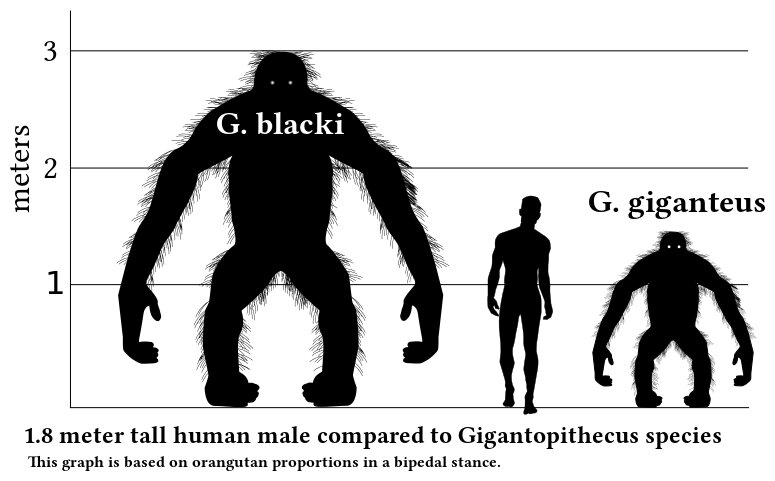
By using ancient protein sequencing, researchers have retrieved genetic information from a 1.9 million year old extinct, giant primate that used to live in a subtropical area in southern China. The genetic information allows the researchers to uncover the evolutionary position of Gigantopithecus blacki, a three-meter tall and may be up to 600 kg heavy primate, revealing the orangutan as its closest, living relative.

Extinct giant ape directly linked to the living orangutan
Artistic representation of Gigantopithecus blacki [Credit: Ikumi Kayama
(Studio Kayama LLC)]
It is the first time that genetic material this old has been retrieved from a warm, humid environment. The study is published in the scientific journal Nature, and the results are groundbreaking within the field of evolutionary biology, according to Frido Welker, Postdoc at the Globe Institute at the Faculty of Health and Medical Sciences and first author of the study.


'Primates are relatively close to humans, evolutionary speaking. With this study, we show that we can use protein sequencing to retrieve ancient genetic information from primates living in subtropical areas even when the fossil is two million years old. Until now, it has only been possible to retrieve genetic information from up to 10,000-year-old fossils in warm, humid areas.

Extinct giant ape directly linked to the living orangutan
A Gigantopithecus blacki mandible (P1-M2=74mm) [Credit: Prof. Wei Wang;
Photo retouching: Theis Jensen]
This is interesting, because ancient remains of the supposed ancestors of our species, Homo sapiens, are also mainly found in subtropical areas, particularly for the early part of human evolution. This means that we can potentially retrieve similar information on the evolutionary line leading to humans', says Frido Welker.


Today, scientists know that the human and the chimpanzee lineages split around seven or eight million years ago. With the previous methodologies though, they could only retrieve human genetic information not older than 400,000 years. The new results show the possibility to extend the genetic reconstruction of the evolutionary relationships between our species and extinct ones further back in time, at least up to two million years -- covering a much larger portion of the entire human evolution.

Analyzing ancient dental enamel proteins using mass spectrometry-based proteomics

In a recent study, also published on Nature, Enrico Cappellini, Associate Professor at the Globe Institute and senior author on this study, initially demonstrated, together with an international team of colleagues, the massive potential of ancient protein sequencing.

Extinct giant ape directly linked to the living orangutan
Gigantopithecus blacki mandible [Credit: Prof. Wei Wang;
Photo retouching: Theis Jensen]
'By sequencing proteins retrieved from dental enamel about two million years old, we showed it is possible to confidently reconstruct the evolutionary relationships of animal species that went extinct too far away in time for their DNA to survive till now. In this study, we can even conclude that the lineages of orangutan and Gigantopithecus split up about 12 million years ago', says Enrico Cappellini.


Sequencing protein remains two million years old was made possible by stretching to its limits the technology at the base of proteomic discovery: mass spectrometry. State of the art mass spectrometers and the top palaeoproteomics expertise needed to get the best out of such sophisticated instrumentation are key resources deriving from the decade-long strategic collaboration with Jesper Velgaard Olsen, Professor at Novo Nordisk Foundation Center for Protein Research and co-author on this study.

The mystery of Gigantopithecus

The fossil evidence attributed to Gigantopithecus was initially discovered in southern China in 1935, and it is currently limited to just a few lower jaws and lots of teeth. No complete skull and no other bone from the rest of the skeleton has been found so far. As a result, there has been a lot of speculation about the physical appearance of this mysterious animal.

Extinct giant ape directly linked to the living orangutan
This is a comparison graph comparing the hight of a 1.8 meter tall human male with Gigantopithecus species.
This graph is based on orangutan proportions in a bipedal stance. It is most likely that Gigantopithecus
would have spent most of its time in a quadrupedal stance on all fours [Credit: Discott]


'Previous attempts to understand which could be the living organism most similar to Gigantopithecus could only be based on the comparison of the shape of the fossils with skeletal reference material from living great apes. Ancient DNA analysis was not an option, because Gigantopithecus went extinct approximately 300,000 years ago, and in the geographic area Gigantopithecus occupied no DNA older than approximately 10,000 years has been retrieved so far. Accordingly, we decided to sequence dental enamel proteins to reconstruct its evolutionary relation with living great apes, and we found that orangutan is Gigantopithecus' closest living relative', says Enrico Cappellini.

Extinct giant ape directly linked to the living orangutan
View from the entrance of Chuifeng cave (China)
[Credit: Prof. Wei Wang]
The study of human evolution by palaeoproteomics will continue in the next years through the recently established "Palaeoproteomics to Unleash Studies on Human History (PUSHH)" Marie Skcodowska Curie European Training Network (ETN) Programme.

Source: University of Copenhagen [November 13, 2019]

800-year-old tomb found in north China


A tomb dating back 830 years to the Jin Dynasty (1115-1234) has been found in northern China, local authorities said Monday.

800-year-old tomb found in north China
Credit: Sina News


The tomb was discovered on the site of a natural gas pipeline project in Liulin Village, Xingtai County of Hebei Province, according to the county's institute of cultural relics and archaeology.

800-year-old tomb found in north China
Credit: Sina News


The round-shaped tomb is 1.9 meters tall, 1.9 meters wide and 1.7 meters long with tile frescoes on the vault.

800-year-old tomb found in north China
Credit: Sina News


Archaeologists were able to tell the age of the tomb from the inscribed dateline and believe that it belonged to a local gentleman or landlord.

800-year-old tomb found in north China
Credit: Sina News
"The tomb will provide valuable materials for research on the local funeral institution, burial custom and social conventions at that time," said Hua Penghui, head of the institute.

Two other tombs were also found nearby and are under excavation.

Source: Xinhua News Agency [November 10, 2019]

2,000 year-old tomb unearthed in east China


Chinese archaeologists have uncovered a batch of cultural relics from a tomb dating back around 2,000 years in eastern China's Jiangsu Province.

2,000 year-old tomb unearthed in east China
Credit: China Org


The ancient tomb was found in Donghai County in the city of Lianyungang. Staff at the county's museum said they have excavated a bronze statue, a mirror decorated with animal patterns and three iron swords from the tomb. Dozens of ancient coins were also unearthed, but all are in poor condition.

2,000 year-old tomb unearthed in east China
Credit: China Org


After on-site investigation and clean-up, archaeologists concluded that the owners of the tomb are a couple and the burial occurred during the Eastern Han Dynasty (25 A.D. - 220 A.D.).

2,000 year-old tomb unearthed in east China
Credit: China Org
Excavation of these cultural relics provides rare materials for further research on local history and culture, experts said.

Source: Xinhua News Agency [October 14, 2019]

Two large-scale palatial structures discovered in China's Inner Mongolia Autonomous Region


Chinese archaeologists have discovered two large-scale palatial structures in northern China's Inner Mongolia Autonomous Region.

Two large-scale palatial structures discovered in China's Inner Mongolia Autonomous Region
Credit: CCTV
The structures were found in the millennium-old ruins of the capital city of the Liao Dynasty (916-1125) by archaeologists with the Chinese Academy of Social Sciences (CASS) and regional institute of cultural relics and archaeology of Inner Mongolia.

The first structure is a pavilion-style building built on a well-preserved two-metre-tall rammed earth platform with a side length of 51 metres. Covering about 1,100 square metres, the building is the largest palatial structure found in the ancient Liao capital to date.


During the Jin Dynasty (1115-1234), the building was destroyed and a smaller one was later built on its foundation.


The other structure is a rectangular courtyard surrounded by cloisters on all four sides. With its gate opened in the middle of the east wall and the main hall located in the middle of the western end, the courtyard bore typical characteristics of Liao Dynasty constructions.

Dong Xinlin, an archaeologist with the CASS, said that the discovery of the two large structures provides important information for the study of the layout of the capital of the Liao Dynasty.

During the excavation, archaeologists also unearthed a large number of artefacts from the Liao and Jin dynasties, including precious stone Buddha statues, architectural components, iron knives and porcelain.

Source: Xinhua News Agency [October 12, 2019]

Archaeological site in Inner Mongolia formed 9,000 years ago


A recent analysis has validated the exact age of a prehistoric settlement in northern China's Inner Mongolia Autonomous Region, local experts said Friday.

Archaeological site in Inner Mongolia formed 9,000 years ago
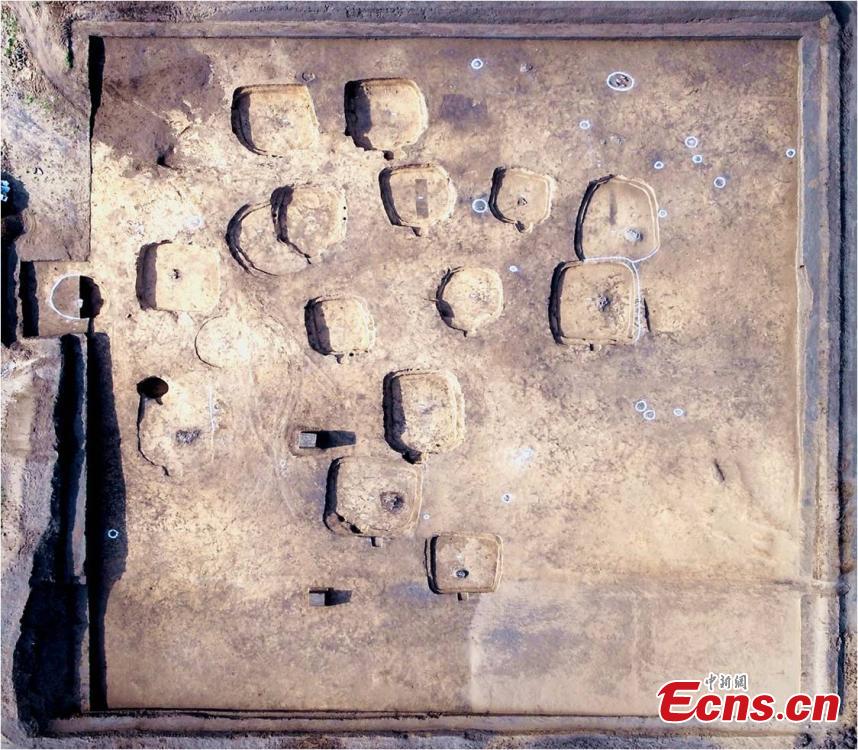
Aerial view of the Simagou site in Huade county, Northwest China's Inner Mongolia
autonomous region [Credit: China News Service]


The carbon-14 test conducted by a U.S. laboratory showed the Simagou ruins in Huade County could date back to 9,000 years ago in the Neolithic period, according to the regional institute of cultural relics and archaeology.

Archaeological site in Inner Mongolia formed 9,000 years ago
View of the excavations at the Simagou site in Huade county, Northwest China's Inner Mongolia
autonomous region 
[Credit: China National Daily]
Bao Qingchuan, a researcher with the institute, said the ruins were believed to be the earliest site of the Neolithic period ever found in vast steppes of northern China, and the discovery is of great significance to Chinese archaeology.

Archaeological site in Inner Mongolia formed 9,000 years ago
 Bao Qingchuan, a researcher with the Inner Mongolia Autonomous Region Institute of Archaeology, said the
remains have been radiocarbon dated to approximately 7000-9000 years ago [Credit: 
Weibo]


From 2017 to 2019, archaeologists discovered 19 houses and 19 outdoor cooking ranges covering an area of over 2,200 square meters on the Simagou site. The houses are of different shapes, including circle and rectangle.

Archaeological site in Inner Mongolia formed 9,000 years ago
Stone tools discovered at the Simagou site in Huade county, Northwest
China's Inner Mongolia autonomous region
 [Credit: China Times]
So far, over 4,000 items such as stone tools, bone artifacts and pottery shards have been unearthed from the Simagou ruins.

Archaeological site in Inner Mongolia formed 9,000 years ago
Stone pestles and querns discovered at the Simagou site in Huade county, Northwest China's
Inner Mongolia autonomous region
 [Credit: China National Daily]


Archaeologists said the ruins might be related to the Yumin ruins, another prehistoric settlement found in the same county. They are likely to have belonged to the same clan, which migrated to the Simagou settlement in spring and summer and moved to the Yumin ruins when temperatures dropped.

Archaeological site in Inner Mongolia formed 9,000 years ago
View of the Simagou site in Huade county, Northwest China's Inner Mongolia
autonomous region
 [Credit: China National Daily]
"The discovery can provide clues for archaeologists to probe into the origin of the culture of the Neolithic age and the advent of primitive agriculture and animal husbandry in northern China," Bao said.

Source: Xinhua News Agency [September 20, 2019]

Millennium-old royal tomb found in north China


Chinese archaeologists have uncovered a royal tomb dating back around 1,000 years in north China's Inner Mongolia Autonomous Region, according to the regional institute of cultural relics and archaeology.

Millennium-old royal tomb found in north China
Figure shows the crane pattern mural at the top of the main burial chamber
[Credit: China News Services]


Found in Kailu County in eastern Inner Mongolia, the ceiling of the single-chamber tomb is decorated with crane-patterned murals. Archaeologists also unearthed valuable burial objects such as glass and gold wares, as well as a coping stone made of two huge pieces of granite, which was likely sourced from outside the area, archaeologists said.

Millennium-old royal tomb found in north China
Glassware unearthed from the tomb in Kailu county, North China's Inner Mongolia autonomous region
[Credit: China News Services]


Based on its structure and design, the tomb was probably built in the early Liao Dynasty (916-1125) and belonged to the royal family, said Lian Jilin, a researcher at the institute, noting that the occupant has yet to be identified.

Millennium-old royal tomb found in north China
Gold pin unearthed from the tomb in Kailu county, North China's Inner Mongolia autonomous region
[Credit: China News Services]
A royal tomb cluster was discovered 1 km away three years ago, which provided important materials for further research on the specific position of Longhua State, an ancient city built in 902 by Yelu Abaoji (Emperor Taizu of Liao), khagan of the nomadic Khitans who once ruled the northern part of China.

Excavation and further research are underway.

Source: ECNS [September 16, 2019]

New study shows common carp aquaculture in Neolithic China dating back 8,000 years


In a recent study, an international team of researchers analyzed fish bones excavated from the Early Neolithic Jiahu site in Henan Province, China. By comparing the body-length distributions and species-composition ratios of the bones with findings from East Asian sites with present aquaculture, the researchers provide evidence of managed carp aquaculture at Jiahu dating back to 6200-5700 BC.

New study shows common carp aquaculture in Neolithic China dating back 8,000 years
Preparing to drain the field at Matsukawa village, Japan
[Credit: Mark Hudson]
Despite the growing importance of farmed fish for economies and diets around the world, the origins of aquaculture remain unknown. The Shijing, the oldest surviving collection of ancient Chinese poetry, mentions carp being reared in a pond circa 1140 BC, and historical records describe carp being raised in artificial ponds and paddy fields in East Asia by the first millennium BC.


But considering rice paddy fields in China date all the way back to the fifth millennium BC, researchers from Lake Biwa Museum in Kusatu, Japan, the Max Planck Institute for the Science of Human History in Jena, Germany, the Sainsbury Institute for the Study of Japanese Arts and Cultures in Norwich, U.K., and an international team of colleagues set out to discover whether carp aquaculture in China was practiced earlier than previously thought.

Carp farming goes way back in Early Neolithic Jiahu

Jiahu, located in Henan, China, is known for the early domestication of rice and pigs, as well the early development of fermented beverages, bone flutes, and possibly writing. This history of early development, combined with archaeological findings suggesting the presence of large expanses of water, made Jiahu an ideal location for the present study.

Researchers measured 588 pharyngeal carp teeth extracted from fish remains in Jiahu corresponding with three separate Neolithic periods, and compared the body-length distributions with findings from other sites and a modern sample of carp raised in Matsukawa Village, Japan.

New study shows common carp aquaculture in Neolithic China dating back 8,000 years
This is co-author Junzo Uchiyama preparing to measure common carp
removed from the paddy field [Credit: Mark Hudson]
While the remains from the first two periods revealed unimodal patterns of body-length distribution peaking at or near carp maturity, the remains of Period III (6200-5700 BC) displayed bimodal distribution, with one peak at 350-400 mm corresponding with sexual maturity, and another at 150-200 mm.

This bimodal distribution identified by researchers was similar to that documented at the Iron Age Asahi site in Japan (circa 400 BC - AD 100), and is indicative of a managed system of carp aquaculture that until now was unidentified in Neolithic China.


"In such fisheries," the study notes, "a large number of cyprinids were caught during the spawning season and processed as preserved food. At the same time, some carp were kept alive and released into confined, human regulated waters where they spawned naturally and their offspring grew by feeding on available resources. In autumn, water was drained from the ponds and the fish harvested, with body-length distributions showing two peaks due to the presence of both immature and mature individuals."

Species-composition ratios support findings, indicate cultural preferences

The size of the fish wasn't the only piece of evidence researchers found supporting carp management at Jiahu. In East Asian lakes and rivers, crucian carp are typically more abundant than common carp, but common carp comprised roughly 75% of cyprinid remains found at Jiahu. This high proportion of less-prevalent fish indicates a cultural preference for common carp and the presence of aquaculture sophisticated enough to provide it.

Based on the analysis of carp remains from Jiahu and data from previous studies, researchers hypothesize three stages of aquaculture development in prehistoric East Asia. In Stage 1, humans fished the marshy areas where carp gather during spawning season. In Stage 2, these marshy ecotones were managed by digging channels and controlling water levels and circulation so the carp could spawn and the juveniles later harvested. Stage 3 involved constant human management, including using spawning beds to control reproduction and fish ponds or paddy fields to manage adolescents.

Although rice paddy fields have not yet been identified at Jiahu, the evolution of carp aquaculture with wet rice agriculture seems to be connected, and the coevolution of the two is an important topic for future research.

The findings are published in Nature Ecology & Evolution.

Source: Max Planck Institute for the Science of Human History [September 16, 2019]

Early rice farmers unwittingly selected for weedy imposters


Early rice growers unwittingly gave barnyard grass a big hand, helping to give root to a rice imitator that is now considered one of the world's worst agricultural weeds.

Early rice farmers unwittingly selected for weedy imposters
New research provides genomic evidence that barnyard grass benefited from human cultivation practices,
 including continuous hand weeding, as it spread out of the Yangtze River region about 1,000 years ago
[Credit: Shutterstock]
New research from Zhejiang University, the Chinese Academy of Sciences and Washington University in St. Louis provides genomic evidence that barnyard grass (Echinochloa crus-galli) benefited from human cultivation practices, including continuous hand weeding, as it spread from the Yangtze River region about 1,000 years ago.

Barnyard grass is a globally common invasive weed of cultivated row crops and cereals. The new study was published in the journal Nature Ecology & Evolution.

"In Asia, rice farmers have traditionally planted and weeded their paddies by hand. Any weeds that stick out are easily detected and removed," said Kenneth Olsen, professor of biology in Arts & Sciences. "Over hundreds of generations, this has selected for some strains of barnyard grass that specialize on rice fields and very closely mimic rice plants. This allows them to escape detection."


Olsen collaborated on data analyses and interpretation for the new study. He is working with the study's corresponding author, Longjiang Fan of Zhejiang University, on other research related to rice evolutionary genomics and agricultural weed evolution.

This study sequenced the genomes of rice-mimic and non-mimic forms of the weed as a step towards understanding how this process has occurred.

This form of mimicry, called Vavilovian mimicry, is an adaptation of weeds to mimic domesticated plants. In the case of barnyard grass, the rice mimics grow upright like a rice plant instead of sprawling along the ground like most barnyard grass. They also have green stems like rice plants instead of the red stems more commonly found in the weed.

Early rice farmers unwittingly selected for weedy imposters
The common form of barnyard grass (top) has red stems,
while the mimic has green stems - more like rice
[Credit: Jordan R. Brock/Washington University]
"With the advent of agriculture about 10,000 years ago, humans all over the planet began creating a wonderful habitat for naturally weedy plant species to exploit," Olsen said. "The most successful and aggressive agricultural weeds were those that evolved traits allowing them to escape detection and proliferate in this fertile new environment."


The researchers estimate that the mimic version of E. crus-galli emerged at about the same time that Chinese historical records indicate that the regional economic center was shifting from the Yellow River basin to the Yangtze River basin. During this period of the Song Dynasty, human populations were growing rapidly, demand for rice as the staple grain was paramount. This is also the time when a quick-maturing, drought-resistant variety of rice called Champa rice was introduced to the Yangtze basin from Southeast Asia -- to allow two harvests in a year. Weed management in paddies might have been intensified in the context of these conditions.

Traditional farming preserves diversity of Thai purple rice

However, while common barnyard grass is a major agricultural weed in the U.S., the rice mimic form has never become widespread in the main rice growing region -- the southern Mississippi valley.

Olsen speculates that this is because U.S. rice farmers rely on mechanized farming instead of hand labor.

"Without farmers out in the fields planting and weeding by hand, there's not such strong selection for weeds to visually blend in with the rice crop," he said.

Author: Talia Ogliore | Source: Washington University in St. Louis [September 16, 2019]