Theme images by kelvinjay. Powered by Blogger.

USA

AFRICA

ASIA

Brazil

Portugal

United Kingdom

Switzerland

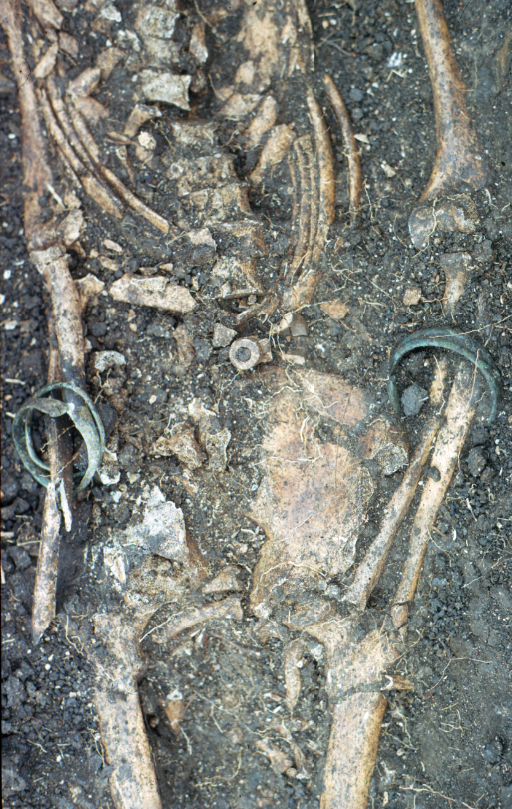
Ancient bone protein reveals which turtles were on the menu in Florida, Caribbean


Thousands of years ago, the inhabitants of modern-day Florida and the Caribbean feasted on sea turtles, leaving behind bones that tell tales of ancient diets and the ocean's past.
Ancient bone protein reveals which turtles were on the menu in Florida, Caribbean
Organic material can quickly decay in the hot, humid conditions of the tropics. But researchers found that many
ancient turtle bones still contained collagen. They used this protein to identify which sea turtle species
 ancient people in Florida and the Caribbean were fishing from the oceans
[Credit: Michelle LeFebvre/Florida Museum]
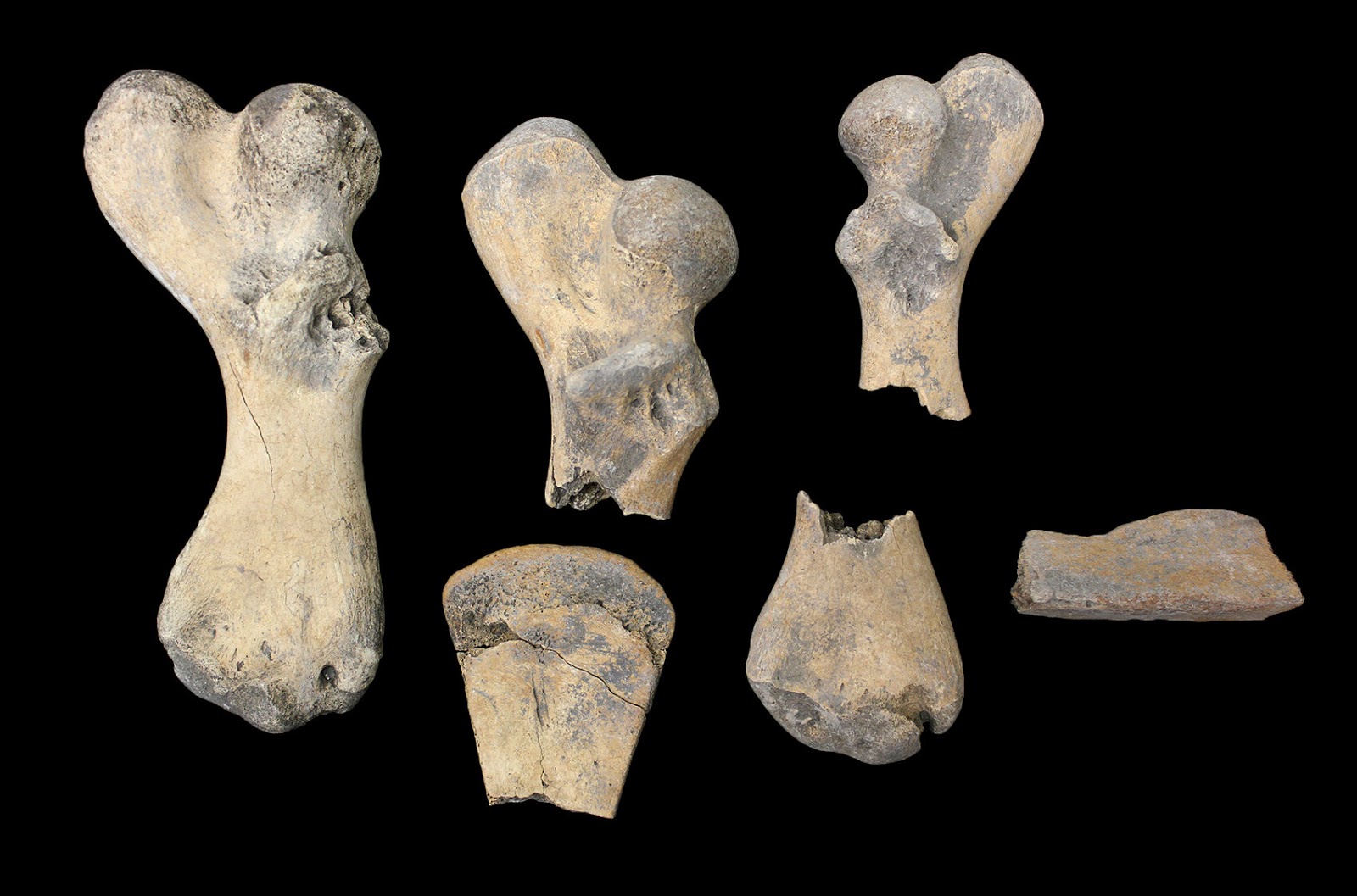
An international team of scientists used cutting-edge technology to analyze proteins from these bones to help identify which turtle species people fished from the ocean millennia ago. This can aid modern conservation efforts by helping construct historical baselines for turtle populations, many of which are now endangered, and illuminate long-term trends of human impacts.

The technique, known as collagen fingerprinting, allows scientists to visualize distinct chemical signatures in collagen, the main structural protein in bone, that are often species-specific. This provides a complementary alternative to comparing specimens' physical characteristics and analyzing ancient DNA, two methods that can be unsuccessful for species identification in fragmented archaeological bones found in the tropics.


Applying collagen fingerprinting to more than 100 turtle samples from archaeological sites up to 2,500 years old, the researchers found that 63% of the collagen-containing bones belonged to green turtles, Chelonia mydas, with smaller numbers of hawksbill turtles, Eretmochelys imbricata, and ridley turtles, Lepidochelys species. Some specimens previously identified as sea turtles from their skeletal features were in fact bones from snapping turtles, terrapins and tortoises.

"This is the first time anyone has obtained species-level information using proteins preserved in archaeological sea turtle bone," said Virginia Harvey, the study's lead author and a doctoral researcher in marine biology and zooarchaeology at the University of Manchester. "Our method has allowed us to unlock ancient data otherwise lost in time to see which species of turtle humans were targeting thousands of years ago in the Caribbean and Florida regions."

Ancient bone protein reveals which turtles were on the menu in Florida, Caribbean
Virginia Harvey of the University of Manchester and Casper Toftgaard of the University of Copenhagen select turtle bone
samples excavated from the U.S. Virgin Islands for collagen analysis at the National Museum of Denmark. In an
analysis of 130 archaeological turtle samples, the team was able to detect collagen in 88%
[Credit: National Museum of Denmark]
Globally, sea turtles have been exploited for millennia for their meat, eggs, shells and other products. Today, they face threats from habitat loss and disturbance, poaching, pollution, climate change and fisheries. Only seven species of sea turtle remain, six of which are classified as vulnerable, endangered or critically endangered. Gaining a historical perspective on how turtle populations have changed through time is a crucial component of conserving them, Harvey said.

One of the research team's initial goals was to discern whether any collagen still survived in ancient turtle bone remains. In an analysis of 130 archaeological turtle samples, the team was able to detect collagen in 88%.


"We were very impressed with the levels of protein preservation in the turtle bones, some of which are thought to be up to 2,500 years old," said study co-author Michelle LeFebvre, assistant curator of South Florida archaeology and ethnography at the Florida Museum of Natural History. "The fact we were then able to use the protein signatures for species identification to better understand these archaeological sites was very exciting."

The team uncovered an unusual chemical signature in a small number of bone samples that could suggest they belong to a different species than those present in oceans today. But when the researchers attempted ancient DNA analysis on them, they found the material was too degraded.

Ancient bone protein reveals which turtles were on the menu in Florida, Caribbean
Michelle LeFebvre scores a turtle bone for collagen extraction
[Credit: Nicole Cannarozzi/Florida Museum]
"Where DNA sequencing can often give more accurate information about species identity, this molecule is very fragile and does not always survive too well in ancient samples from hot, humid climates," said study co-author Konstantina Drosou, ancient DNA specialist at the University of Manchester.

In contrast, proteins are present in much higher concentrations and therefore more likely to survive in the archaeological record, Drosou said.


"Proteins are very sturdy molecules," Harvey added. "The absence of preserved DNA in these samples means we have not been able to verify whether they represent a new species of sea turtle or not, but it does show us that our work here is far from complete. There is so much that we can still learn from the turtle remains at these sites and beyond."

Using collagen fingerprinting to correct misidentifications based on physical characteristics was "a nice additional outcome of the study," said Michael Buckley, senior author of the study and senior research fellow at the University of Manchester.

Ancient bone protein reveals which turtles were on the menu in Florida, Caribbean
In this illustration, blue represents the percentage of bones identified as green turtles, Chelonia mydas, green
represents hawksbill turtles, Eretmochelys imbricata, and purple represents ridley turtles, species
in the genus Lepidochelys [Credit: Harvey et al. 2019]
Susan deFrance, study co-author and professor in the University of Florida department of anthropology, said juvenile sea turtles are often misidentified because they are small and may lack the characteristics used to distinguish adult sea turtle bones.

"This is the first time we have been able to look so specifically into the preferred food choices of the site occupants," she said. "At the Florida Gulf Coast site, they captured a lot of juvenile turtles. The positive species-level identifications of these samples could not have been accomplished without this collagen fingerprinting technology."


At the same site, researchers found green turtle remains in both refuse heaps and mounds, but ridley turtle specimens were only found in mounds, suggesting they may have been reserved for feasting rituals, LeFebvre said.

"We knew these ancient people were eating sea turtles, but now we can begin to hone in on which turtles they were eating at particular times," she said. "It's no different than today - we associate certain foods with certain events. It's how humans roll."

The researchers are also eager to continue to apply collagen fingerprinting to other archaeological museum specimens, many of which have yet to be positively identified to the species level.

Harvey said she hopes the study inspires further research on sea turtles and other vulnerable and endangered animals.

"Now that this method is available, we hope that biologists, archaeologists and conservationists globally will continue this important work."

The findings are published in Royal Society Open Science.

Source: Florida Museum of Natural History [November 04, 2019]

Skull dimensions of Dominicans and Haitians differ despite close physical proximity


Forensic anthropologists analyze skeletal remains to establish the biological profile (sex, age, ancestry and stature). While ancestry is an important component, most research has focused on identifying individuals of African-American and European-American descent.

Skull dimensions of Dominicans and Haitians differ despite close physical proximity
Linear Measurements used according to craniometric points
[Credit: Cordeiro et al. 2015]
Now for the first time, researchers from Boston University School of Medicine (BUSM) have conducted a craniometric study (measuring the main part of the skull) on understudied and marginalized groups and found that skull dimensions of Dominicans and Haitians, who occupy a relatively small island of Hispaniola, are different from each other.

According to the researchers, while skeletal and genetic studies show that Caribbean groups are incredibly diverse, they are often lumped together under the broad ancestral category of "Hispanic," along with many other Latin American groups.


Using standard anthropometric craniometric measurements (28 measurements) of both Dominicans and Haitians from computerized tomography (CT) scans from a major hospital in Santo Domingo, the researchers analyzed the measurements to determine similarities and differences.

"Our study demonstrates that, despite sharing a small island, Dominican and Haitian individuals can be differentiated with a fair amount of statistical certainty, which is possible due to complex population histories that have kept them separate despite their geographically close proximity," explained corresponding author Michelle Herrera, a graduate student in the MS Program in Forensic Anthropology at BUSM.

The authors believe it is important to conduct research on groups that are not represented in the typically researched skeletal collections. "Ultimately, this research can aid forensic specialists in identifying missing persons on the island of Hispaniola," added Herrera.

The findings are published in Forensic Science International.

Source: Boston University School of Medicine [October 31, 2019]

Isotope analysis finds source lead poisoning among slaves on Barbados


The dental remains of 25 enslaved Africans from the site of Newton's Plantation, on Barbados, were subjected to isotope analysis. Previous research had pointed out that the locally born individuals were subjected to high concentrations of lead poisoning. A new study, done by Dr. Jason Laffoon among others and published in the American Journal of Physical Anthropology, employed isotope analysis to find the source of the poisoning.

Isotope analysis finds source lead poisoning among slaves on Barbados
Skeletal remains from the Newton Plantation Slave Cemetery,
Barbados [Credit: Leiden University]
The enslaved African population of Newton's Plantation

Previous osteological research identified the site's cemetery population as containing the skeletal remains of enslaved Africans that worked on the plantation from the 17th and 18th centuries AD. Previous isotopic analyses of carbon, nitrogen, oxygen, and strontium was able to identify which of these individuals were born in Africa (and forcibly migrated to the Caribbean) and which of them were born and raised on the island of Barbados. Subsequent analysis of Pb concentrations in their teeth and bones indicated that the locally born Barbadians were subjected to high levels of lead (Pb) poisoning throughout their lives beginning as early as infancy.

New analyses

The aims of this current study were to use lead (Pb) isotope analyses of teeth samples from the same individuals to try to determine the source of the lead poisoning, and to investigate if the Pb isotope ratios of the first generation African (forced) migrants could help to identify where in Arica they originated from.


Main findings

The Pb isotope ratios of all of the local Barbadian enslaved people are consistent with British lead sources. This suggests that the Newton population was subjected to lead poisoning primarily via exposure to British material culture. Although the exact mechanism of exposure is unknown, it is most likely related to the use of lead in pipes, pipe fittings, containers and other equipment used in the processing and production of rum.

Future research

The results of this study show great promise for determining the source of anthropogenic lead exposure amongst past populations. Unfortunately, the Pb isotope results did not shed new light on the specific areas of origin of the African-born individuals but future research combining new isotope analyses and aDNA analyses will attempt to address this question.

Source: Leiden University [October 30, 2019]

Extinct Caribbean bird yields DNA after 2,500 years in watery grave


Scientists have recovered the first genetic data from an extinct bird in the Caribbean, thanks to the remarkably preserved bones of a Creighton's caracara from a flooded sinkhole on Great Abaco Island.

Extinct Caribbean bird yields DNA after 2,500 years in watery grave
Scientists recovered DNA from this 2,500-year-old extinct Caribbean bird, Caracara creightoni. The DNA-decaying
 heat and light of the tropics and birds' light, breakable bones have posed challenges to studies of ancient DNA.
This work "puts an exclamation point on what's possible," said study co-author Robert Guralnick
[Credit: Florida Museum, Kristen Grace]
Studies of ancient DNA from tropical birds have faced two formidable obstacles. Organic material quickly degrades when exposed to heat, light and oxygen. And birds' lightweight, hollow bones break easily, accelerating the decay of the DNA within.

But the dark, oxygen-free depths of a 100-foot blue hole known as Sawmill Sink provided ideal preservation conditions for the bones of Caracara creightoni, a species of large carrion-eating falcon that disappeared soon after humans arrived in the Bahamas about 1,000 years ago.

Florida Museum of Natural History postdoctoral researcher Jessica Oswald extracted and sequenced genetic material from a 2,500-year-old C. creightoni femur from the blue hole. Because ancient DNA is often fragmented or missing, Oswald had modest expectations for what she would find - maybe one or two genes. But instead, the bone yielded 98.7% of the bird's mitochondrial genome, the set of DNA that most living things inherit only from their mothers.


"I was super excited. I would have been happy to get that amount of coverage from a fresh specimen," said Oswald, lead author of a study describing the work and also a postdoctoral researcher at the University of Nevada, Reno. "Getting DNA from an extinct bird in the tropics is significant because it hasn't been successful in many cases or even tried."

The mitochondrial genome showed that C. creightoni is closely related to the two remaining caracara species alive today: the crested caracara, Caracara cheriway, and the southern caracara, Caracara plancus. The three species last shared a common ancestor between 1.2 and 0.4 million years ago.

At least six species of caracara once cleaned carcasses and picked off small prey in the Caribbean. But the retreat of glaciers 15,000 years ago and the resulting rise in sea levels triggered extinctions of many birds, said David Steadman, Florida Museum curator of ornithology.

Extinct Caribbean bird yields DNA after 2,500 years in watery grave
DNA analysis showed that Caracara creightoni, left, was a close relative of Caracara cheriway, or the crested
caracara, right. C. creightoni was about the size of modern caracaras but had a bigger bill
and a stronger bite [Credit: Florida Museum, Kristen Grace]
C. creightoni managed to survive the sweeping climatic changes, but the arrival of people on the islands ultimately heralded the species' demise, as the tortoises, crocodiles, iguanas and rodents that the caracara depended on for food swiftly disappeared.

"This species would still be flying around if it weren't for humans," Steadman said. "We're using ancient DNA to study what should be modern biodiversity."

Today, the islands host only a fraction of the wildlife that once flourished in the scrubland, forests and water. But blue holes like Sawmill Sink can offer a portal into the past. Researchers have collected more than 10,000 fossils from the sinkhole, representing nearly 100 species, including crocodiles, tortoises, iguanas, snakes, bats and more than 60 species of birds.


Sawmill Sink's rich store of fossils was discovered by cave diver Brian Kakuk in 2005 in his quest for horizontal passages in the limestone. The hole was not a popular diving spot: Thirty feet below the surface lay a 20-foot-thick layer of saturated hydrogen sulfide, an opaque mass that not only smells of rotten egg, but also reacts with the freshwater above it to form sulfuric acid, which causes severe chemical burns.

After multiple attempts, Kakuk, outfitted with a rebreather system and extra skin protection, punched through the hydrogen sulfide. His lamp lit up dozens of skulls and bones on the blue hole's floor.

Soon after, Kakuk and fellow cave diver Nancy Albury began an organized diving program in Sawmill Sink.

"This was found by someone who recognized what it was and never moved anything until it was all done right," Steadman said.

Extinct Caribbean bird yields DNA after 2,500 years in watery grave
Ornithologist David Steadman holds the Caracara creightoni femur used for
 radiocarbon dating and ancient DNA analysis. Previous studies of ancient
DNA relied on much bigger samples of bone, Steadman said
[Credit: Florida Museum, Kristen Grace]
Though the hydrogen sulfide layer presented a foul problem for divers, it provided excellent insulation for the fossils below, blocking UV light and oxygen from reaching the lower layer of water. Among the crocodile skulls and tortoise shells were the C. creightoni bones, including an intact skull.

"For birds, having an entire head of an extinct species from a fossil site is pretty mind-blowing," Oswald said. "Because all the material from the blue hole is beautifully preserved, we thought at least some DNA would probably be there."

Since 2017, Oswald has been revitalizing the museum's ancient DNA laboratory, testing methods and developing best practices for extracting and analyzing DNA from fossils and objects that are hundreds to millions of years old.


Ancient DNA is a challenging medium because it's in the process of degradation. Sometimes only a minute quantity of an animal's original DNA - or no DNA at all - remains after bacteria, fungi, light, oxygen, heat and other environmental factors have broken down an organism.

"With ancient DNA, you take what you can get and see what works," Oswald said. "Every bone has been subjected to slightly different conditions, even relative to other ones from the same site."

To maximize her chance of salvaging genetic material, Oswald cleans a bone, freezes it with liquid nitrogen and then pulverizes it into powder with a rubber mallet.

"It's pretty fun," she said.

Extinct Caribbean bird yields DNA after 2,500 years in watery grave
This photo shows an overhead view of the sinkhole where scientists and divers recovered fossils including
 crocodiles, tortoises, snakes, birds and bats [Credit: Curt Bowen, Advanced Diver Magazine]
While previous studies required large amounts of bone, Oswald's caracara work showed ancient DNA could be successfully recovered at a smaller scale.


"This puts an exclamation point on what's possible with ancient DNA," said Robert Guralnick, Florida Museum curator of bioinformatics. "We have new techniques for looking at the context of evolution and extinction. Beyond the caracara, it's cool that we have an ancient DNA lab that's going to deliver ways to look at questions not only from the paleontological perspective, but also at the beginnings of a human-dominated planet."

Steadman, who has spent decades researching modern and extinct biodiversity in the Caribbean, said some questions can only be answered with ancient DNA.

"By understanding species that weren't able to withstand human presence, it helps us better appreciate what we have left - and not just appreciate it, but understand that when these species evolved, there were a lot more things running and flying around than we have today."

The researchers published their findings in Molecular Phylogenetics and Evolution.

Author: Natalie Van Hoose | Source: Florida Museum of Natural History [August 15, 2019]

How to restore a coral reef


New guidelines drafted by a consortium of concerned experts could enable corals to adapt to changing environments and help restore declining coral populations in the Caribbean. The guidelines provide a definitive plan for collecting, raising, and replanting corals that maximizes their potential for adaptation.

How to restore a coral reef
Genetic differences among these bleached and healthy corals of the same species contributed to their fate.
New guidelines for coral restoration outline a concrete plan for collecting, raising, and replanting corals
that prioritizes genetic diversity, maximizing the potential for corals to adapt to their
changing environment [Credit: Ilsa Kuffner, US Geological Survey]
A new paper outlining the guidelines, authored by the restoration genetics working group of the Coral Restoration Consortium, a group of scientists, restoration practitioners, educators, and concerned members of the public, appears online in the journal Ecological Applications.

"The Caribbean has experienced tremendous coral loss over the last few decades, and coral restoration has become an urgent issue in the region," said Iliana Baums, professor of biology at Penn State and chair of the Coral Restoration Consortium restoration genetics working group. "But few of the traditional guidelines for conservation, which tend to focus on vertebrates or plants, apply to corals. In this paper, we provide concrete guidelines for restoring coral populations, using the best available data."


Corals serve as the foundation for reefs, which protect coastal communities, provide food and medicinal compounds, and lead to an estimated $9.9 trillion per year in goods and services around the globe. But reefs worldwide face a variety of threats--foremost among them rising ocean temperatures--and are declining, particularly in the Caribbean.

A recent National Oceanographic and Atmospheric Administration-commissioned report from the National Academies of Sciences, Engineering, and Medicine provides a broad overview of 23 coral restoration strategies, though most are largely untested and not ready for implementation.

"The guidelines in this new paper are among those that can be implemented immediately and are grounded in the idea that coral populations can naturally respond to change if they have enough genetic diversity," said Baums. "We are focusing on maintaining or increasing the genetic diversity of coral populations, which will provide more options for the corals to adapt to their changing environments."


Coral populations grow in a variety of environments, covering a range of temperatures, depths, and light conditions, and they tend to adapt to local conditions. Thus, individuals in different environments should have differences in their genetic code that allow them to thrive. The consortium recommends collecting corals from these different environments to capture as much genetic diversity as possible. Then corals should be raised in a nursery, where they can quickly grow, and replanted on reefs.

"Corals can reproduce both asexually and sexually," said Baums. "We can break off a small piece of a colony and replant it, essentially yielding a clone of the original coral. But sexual reproduction is key to naturally producing genetic diversity, and rates of sexual reproduction on reefs are dropping dramatically, especially for true reef-building corals. By replanting diverse corals in small groups, we enable the corals to sexually reproduce with each other."

Collected corals could be replanted in locations similar to their original environment, or in locations that may soon become similar to their original environment.


"By taking advantage of improved climate models, we can anticipate where these traits may be beneficial in the future," said Baums.

"We hope these guidelines for collecting, raising, and replanting corals will help to establish self-sustaining, sexually reproducing coral populations," said Baums. "The situation surrounding coral reef decline is certainly dire, but we have a tremendous community of people that is dedicated to solving the problem. We have made enormous progress in figuring out how to do coral restoration, and we can make a difference in coral populations today. But for every minute that passes, it gets harder. With every missed opportunity to curb carbon emissions, which contribute to rising ocean temperatures, it gets even harder. Coral reefs are the world's most diverse ecosystems and they provide incredibly important ecosystem services, so we really cannot afford to lose them."

Author: Gail Mccormick | Source: Pennsylvania State University [July 23, 2019]

True identity of imposter 'pigs' on 17th century map overturns early colonial history of Barbados


Which came first, the pigs or the pioneers? In Barbados, that has been a historical mystery ever since the first English colonists arrived on the island in 1627 to encounter what they thought was a herd of wild European pigs.

True identity of imposter 'pigs' on 17th century map overturns early colonial history of Barbados
Credit: Simon Fraser University
A recent discovery by an SFU archaeologist is shedding new light on the matter. Christina Giovas uncovered the jaw bone of a peccary, a South American mammal that resembles a wild pig, while researching a larger project on prehistoric animal introductions in the Caribbean.


"I didn't give it much notice at the time, but simply collected it along with other bones," says Giovas, the lead author of a study just published in PLOS ONE. "It was completely unexpected and I honestly thought I must have made a mistake with the species identification."

Giovas and collaborators George Kamenov and John Krigbaum of the University of Florida radiocarbon-dated the bone and conducted strontium isotope analysis to determine the age and whether the peccary was born on Barbados or had been imported from elsewhere.

True identity of imposter 'pigs' on 17th century map overturns early colonial history of Barbados
The jaw bone of a peccary, a South American mammal that resembles a wild European pig
[Credit: Simon Fraser University]
The results showed the peccary was local and dated to 1645-1670, when the English wrote their account of finding wild European pigs on the Caribbean island. The researchers were not only able to show there had been a previously undetected historic peccary introduction but that the region's earliest celebrated maps depicted peccaries that had been mistaken for pigs by the English.


Giovas says the findings upend Barbados' accepted colonial history and reflect how quickly Europeans began to alter New World environments by altering species distributions.

"Checking historical and archaeological records, we determined the most likely source of peccary introduction was from Spanish or Portuguese ships passing the island in the 16th century--and most likely left as a source of meat for future visiting sailors," she says.

Source: Simon Fraser University [May 15, 2019]

New data platform illuminates history of humans' environmental impact


The human environmental footprint is not only deep, but old. Ancient traces of this footprint can be found in animal bones, shells, scales and antlers at archaeological sites. Together, these specimens tell the millennia-long story of how humans have hunted, domesticated and transported animals, altered landscapes and responded to environmental changes such as shifting temperatures and sea levels.

New data platform illuminates history of humans' environmental impact
These deer antlers were found at an archaeological site known as Tick Island in Volusia County, Florida
[Credit: Florida Museum/Kristen Grace]
Now, that story is available digitally through a new open-access data platform known as ZooArchNet, which links records of animals across biological and archaeological databases.

Making these specimen records accessible digitally helps provide a long-term perspective on current biodiversity crises, such as animal extinction and habitat loss, and could lead to more informed conservation policies, said Michelle LeFebvre, postdoctoral associate at the Florida Museum of Natural History and lead author of a study introducing ZooArchNet.


"If we're interested in really understanding the long history of human-animal interactions and environmental change, these records are key," she said. "They fill a gap between paleontological and modern records and reconstruct biodiversity baselines from the earliest periods of human history."

Zooarchaeological specimens - which can range from a carved bone pin to a shell fragment from a heap of discarded oysters - provide both biologically and culturally important information, LeFebvre said.

New data platform illuminates history of humans' environmental impact
These jawbones come from animals collected at archaeological sites in the southeastern US.
The bottom of the black bear jaw in the center box has been cut, possibly for use in a mask
[Credit: Florida Museum/Kristen Grace]
ZooArchNet connects the biological data for these ancient animal specimens in VertNet and other biodiversity databases with their associated archaeological information in cultural databases such as Open Context.

Robert Guralnick, co-principal investigator of ZooArchNet and Florida Museum associate curator of bioinformatics, said the platform's goal is "not to be 'yet another data portal,' but a connector across disciplines. In that way, ZooArchNet is more of a bridge than anything else, but it does that bridging in a formal way to make data work."


This interdisciplinary connection will enable data-rich biodiversity research essential for understanding humans' widespread impact on the environment, said Kitty Emery, co-principal investigator of ZooArchNet and Florida Museum associate curator of environmental archaeology.

"We often think that our dramatic influence on the natural world is a modern phenomenon, but in reality, humans have shaped the environment for hundreds of thousands of years," she said. "Factoring that history into current studies of biodiversity can provide ancient lessons about how and why people make certain decisions about using their environment. Why do people hunt some animals to extinction and domesticate others? What motivates them to shift from sustainable environmental uses to ones that decimate landscapes? The human component provides that side of the equation - an essential piece of the puzzle when trying to solve modern environmental problems."

New data platform illuminates history of humans' environmental impact
These rodent remains from the Caribbean islands help illuminate the role humans played in transporting animals into
 areas where they had not previously lived. Historical specimens like these can inform modern conservation
policies by refining scientists' understanding of animals' past distributions
[Credit: Florida Museum/Kristen Grace]
As conservation groups prioritize species on the brink, zooarchaeological records can offer insights into where animals lived in the past, how their distribution has shifted, what roles people may have played in their movements and how close relationships between people and domesticated animals have evolved over time. Sometimes these records tell a surprising story, LeFebvre said.

Her work with historical records of hutia, Caribbean rodents that resemble small capybaras, shows that indigenous people transported some of these animals to new islands, expanding their range into areas where they had not lived previously. These records can lead to better-informed conservation of hutia, several species of which are currently vulnerable to extinction or in danger of disappearing from certain islands, LeFebvre said.


"When you see people saying, 'This critter is native to this island chain,' these records help us say, 'Actually, it was human-introduced and we should think about what that may mean for conservation efforts over time,'" she said. "Zooarchaeological specimens really contribute to what we conceptualize as natural distributions."

Zooarchaeological specimens can also provide insights into how, when and why humans domesticated animals in the distant past. Research by Emery and her colleague Erin Thornton of Washington State University on the earliest uses of the Mexican domesticated turkey, the ancestor of modern domestic turkeys, highlights how motivations for raising animals can change over time.

New data platform illuminates history of humans' environmental impact
Collected from Florida’s Marco Island, these remains belong to Caribbean monk seals, Monachus tropicalis,
 a species now extinct due to hunting and overfishing of its habitats
[Credit: Florida Museum/Kristen Grace]
"Our recent work suggests that these birds were first domesticated for their feathers and symbolic links to power and prestige, rather than as a source of food," she said.

Archaeology can also illuminate how people contended with challenges such as rising sea levels and fluctuating temperatures in the past.


Ongoing work by LeFebvre and Neill Wallis, Florida Museum associate curator of archaeology, shows that the diet of people on Florida's Gulf Coast transitioned from freshwater to marine food sources as the climate cooled 1,400 years ago.

"Humans have dealt with climate change in the past, though not at the same scale of devastation we're facing now," LeFebvre said. "Reconstructing their responses provides us with a critical perspective. Where did people go? What changes in animals and plants happened in the past that we can anticipate happening again? We have a long human record that we can look back to and model off of."

New data platform illuminates history of humans' environmental impact
This notched piece of river cooter shell, left, and pin carved from an unidentified mammal bone
were collected at Fort Center, an archaeological site west of Lake Okeechobee in Florida
[Credit: Florida Museum/Kristen Grace]
One of the steps in the creation of ZooArchNet was designing protocols to standardize and publish zooarchaeological data in ways that both biodiversity and archaeological researchers could use, Emery said.

"Zooarchaeologists have been getting data out there, but until now, the data have not been discoverable, searchable and usable in an open-access way by the larger biological research community," she said. "ZooArchNet allows zooarchaeological data to be part of the massive interdisciplinary movement toward biodiversity data sharing and accessibility while preserving the human component of how life on Earth has changed."


LeFebvre said that making zooarchaeological data discoverable via ZooArchNet means "the sky's the limit" for new types of interdisciplinary collaborations and research questions.

"If we want to conduct studies that will help inform policy, the data need to be open to all kinds of minds and disciplines. That's the contribution I'm most excited to be a part of. That's bigger than any one discipline or research community - that's huge."

Researchers who are interested in contributing data to ZooArchNet should contact Emery or Guralnick or complete the contact form on the ZooArchNet website.

The team published its study in PLOS ONE.

Author: Natalie Van Hoose | Source: Florida Museum of Natural History [May 13, 2019]

Island lizards are expert sunbathers, and researchers find it's slowing their evolution


If you've ever spent some time in the Caribbean, you might have noticed that humans are not the only organisms soaking up the sun. Anoles - diminutive little tree lizards - spend much of their day shuttling in and out of shade. But, according to a new study in Evolution led by assistant professor Martha Muñoz at Virginia Tech and Jhan Salazar at Universidad Icesi, this behavioural "thermoregulation" isn't just affecting their body temperature. Surprisingly, it's also slowing their evolution.

Island lizards are expert sunbathers, and researchers find it's slowing their evolution
Anolis chloris soaks up the sun while displaying [Credit: J. Salazar/Virginia Tech]
The idea that evolution can be slow on islands is actually somewhat strange. Ever since Darwin's journey to the Galapagos, islands have been recognized as hotspots of rapid evolution, resulting in many ecologically diverse species. The reason why evolution often goes into overdrive on islands has to do with the ecological opportunity presented by simplified environments. When organisms wash up on remote islands, they find themselves freed of their usual competitors and predators, which frees them to rapidly diversify to fill new niches. This phenomenon of faster evolution is often referred to as the "island effect."

Yet, the researchers discovered that physiological evolution in Anolis lizards is actually much slower on islands than on the mainland. What is causing evolution to stall?


The same ecological opportunity that frees island organisms from predators also facilitates behavioural thermoregulation. "Whereas mainland lizards spend most of their time hiding from predators, island lizards move around more, and are able to spend much of their day precisely shuttling between sun and shade," said Muñoz, assistant professor in the Department of Biological Sciences in the College of Science.

If it gets too hot, island lizards simply go find a shady spot. If it gets too cold, they can dash onto a sunny perch. By thermoregulating, island lizards are not just buffering themselves from thermal variation. They are effectively shielding themselves from natural selection. If lizards aren't exposed to extreme temperatures, then selection on physiology is weakened. The result? Slower rates of physiological evolution. Effectively, island lizards use behavioral thermoregulation like SPF against natural selection!


Jhan Salazar said, "Our results show that faster evolution on islands is not a general rule." This slower physiological evolution on islands stands in stark contrast to morphology, which has been shown to evolve faster in island anoles. When it comes to morphology and physiology on islands, it seems we are looking at different sides of the same coin. The same ecological release from predators and competition that allowed for the truly impressive amount of morphological diversification that has appeared quickly among island anoles, seems to additionally allow for more behavioral thermoregulation which slows physiological evolution.

"We are discovering that organisms are the architects of their own selective environments meaning that behaviour and evolution are locked together in a delicate dance. This pas de deux tells us something important about how diversity arises in nature," said Muñoz, who is an affiliated faculty member of the Global Change Center, housed within the Fralin Life Science Institute.

Source: Virginia Tech [April 22, 2019]

Daily grind: The biography of a stone axe


Tom Breukel analysed some 250 stone axes from the Caribbean and reconstructed their biographies, thus increasing our knowledge of production and trade in the period around the arrival of Columbus. His Ph.D. defence is on 18 April.

Daily grind: The biography of a stone axe
Credit: Tom Breukel
Breukel researched how the stone axes – a collective term in archaeology that also includes adzes and chisels – were produced, traded, and used in the Dominican Republic and the Windward Islands between 1200 and 1600. Previous research had already shown that there was intensive barter between the islands in that region: some axes 'travelled' as far as 1000 km to their final destination.


Breukel studied the axes and discovered that many were only partly finished before they were transported. He found unusual semi-finished products among the traded goods. "The buyers probably wanted to finish the stone axes themselves," he says. "This may have helped them develop a close relationship with the object. Even today, the users in some indigenous communities in the Amazon have a personal relationship with an object, and that's not as easy if you order a ready-made axe."

Daily grind: The biography of a stone axe
Credit: Tom Breukel
In addition, Breukel concluded that the majority of the axes were actually used for the purpose for which they were made. He only found one that had never been used and thus may have primarily served ceremonial purposes. "Sometimes you find beautiful jade stones that have been polished until you can see your reflection in them. Then it's tempting to think that the stone was only used as a talisman or pendant, but if you look closely, you nearly always find traces of wear."


Breukel made his discoveries under a microscope. He studied the 250 stone axes by looking, one millimetre at a time, for wear traces and information about the type of stone and production method. This resulted in a biography for each individual object. "Each time the object is usedm traces are left behind that archaeologists can find later, even on a cup as you stir your tea," he says as he holds a greenish axe. "You can read from the grooves in the stone or the residue left behind whether the tool has been used to grind, polish or hack."

Daily grind: The biography of a stone axe
Credit: Tom Breukel
Another aspect of Breukel's research was an experiment that involved reproducing how axes were used. He worked with fellow archaeologists and the local community to build a stone age house on Saint Vincent, using only stone tools. This allowed him to compare the traces on the experimental axe with traces on real stone age axes. "I spent two whole weeks hacking at posts with my stone axe – in the sun at least."

Author: Merijn Van Nuland | Source: Leiden University [April 18, 2019]

Ancient Caribbean children helped with grocery shopping in AD 400


Researchers have long thought that snail and clam shells found at Caribbean archaeological sites were evidence of "starvation food" eaten in times when other resources were lacking. Now, a University of Florida study suggests these shells may be evidence of children helping with the grocery shopping - A.D. 400 style.

 Ancient Caribbean children helped with grocery shopping in AD 400
Archaeologists concluded that thousands of discarded shells at a site in downtown St. Thomas in the U.S. Virgin Islands
 are evidence of ancient Saladoid children foraging for shellfish. West Indian top snails, like the modern specimen
pictured here, were the most common mollusks at the site [Credit: Florida Museum of Natural History]
Researchers found thousands of discarded shells at a site in downtown St. Thomas in the U.S. Virgin Islands, likely evidence of ancient Saladoid children foraging for shellfish. Adult foragers typically would discard shells immediately after extracting the meat, meaning few shells made it back to archaeological sites, said William Keegan, curator of Caribbean archaeology at the Florida Museum of Natural History. This site, however, was littered with them.

"It's not that people were starving. It's that children were contributing to their own subsistence in a meaningful and very efficient way," Keegan said. "We need to think of children as active members that influence site materials and their distribution. It changes the whole attitude about the collection in the archaeological site."


For the most part, children have remained invisible to archaeologists until now, Keegan said. This study, the first to document child labor in an archaeological context, provides an important model for identifying children in the past and their contributions to their communities.

"Children are really the last group to receive any attention because to archaeology, they sort of look like little adults," he said. "Efforts to identify children so far have emphasized badly made objects, miniatures and things that look like toys - it isn't a complete perspective."

 Ancient Caribbean children helped with grocery shopping in AD 400
Researchers found a variety of modified shells at the St. Thomas site, including three beads cut from shell
and polished, top row, two beads made from Oliva shells, bottom left, and two Cyphoma shells
[Credit: William Keegan et al. 2019]
Children may have had a role in foraging, which for the Saladoid people meant collecting mollusks for food.

"If your parent needs to go to the grocery store, you have to go with them," Keegan said. "If you can do more than pull candy off the shelf, then you're that much more helpful."

Shells deposited in middens -- mounds of shells and sediment that were once ancient garbage dumps - led Keegan's research team to believe that shellfish had been intentionally brought to the site, eaten and the shells then thrown away. The team also developed seven criteria to help determine if shellfish at archaeological sites were collected by children.


Shellfish collected by children are most easily identified by variety and size, Keegan said. Child foragers tend to be generalists, meaning that they're more likely to collect small shells indiscriminately. This research suggests that small, easy to transport and low-yield mollusks found in high amounts on a site indicate the presence of child foragers, he said.

"It looked like someone had sent a biology student with a one meter square and told them, 'Collect everything,'" Keegan said. "You can certainly collect a whole bucket of these things and you've got a good meal, but it's a waste of time for an adult to focus on those really small resources when they could be out collecting specific snails and clams that they know they can get a certain nutritional return on."

 Ancient Caribbean children helped with grocery shopping in AD 400
One of the most notable shells found at the St. Thomas site is a frog pendant
carved from a queen conch shell [Credit: Keegan et al. 2019]
Recent construction has disturbed much of the site, and researchers were only able to excavate a snapshot of what was once there, Keegan said.

Because the Caribbean is a largely understudied area in archaeology, Keegan and his team had few ethnographic descriptions of the Saladoid's lifestyles to draw from. They chose to compare their findings with current research in the Pacific Islands, where foraging habits and available resources have remained virtually unchanged for millennia.


"It's not a direct application," Keegan said. "It's an analogy that shows what we're seeing in the living population is consistent with what we see in an archaeological population."

Evidence suggests that foraging together was a way Saladoid people built kinship, a practice still seen today in the Pacific Islands. The Saladoid people were a matrilocal society, meaning familial lineage was traced through women and men were frequently absent from day-to-day life.

"The women would often go on trips with children to collect things farther away," Keegan said. "The community functions holistically. By about age 15, children are involved in fully adult activities."

 Ancient Caribbean children helped with grocery shopping in AD 400
Discovered in 1986, the St. Thomas site was identified as an archaeological area because of
 the presence of thousands of large whelks. Construction exposed the site again in 2013,
and excavations began in 2014 [Credit: Keegan et al. 2019]
Keegan's work suggests that in some respects, children could actually outperform adults at certain tasks. Whereas adults focused on collecting larger shellfish from deeper waters, children were able to scour shallow areas for smaller shellfish that would be difficult for adult fingers to grasp.

"Children like being included. The same sorts of things children need in traditional societies are basically what we still need today to grow up to be healthy, useful adults," Keegan said. "In fact, it wasn't uncommon for children to collect small animals as pets."


Because the site is located on St. Thomas' main street, Keegan and his team were able to engage bystanders in their discoveries.

"What I think is unusual is that the road caps the site. Below the pipes, everything was completely intact," Keegan said. "The archaeologists were fenced in -- all day long people were coming up to the fence, and we were showing them what we had, but that's all part of it. We want people to get excited about what we're doing."

 Ancient Caribbean children helped with grocery shopping in AD 400
Researchers found dense pockets of intact midden in downtown St. Thomas – narrowly missed
by builders’ trenches during construction
 [Credit: Keegan et al. 2019]
Excavation was a collaborative effort that included several experts from different disciplines, lending a broader perspective to the team's findings, Keegan said. The team was assembled by David Hayes, a founding member of the St. Croix Archaeological Society and project collaborator.

"For us, it's always a new puzzle, trying to get the pieces to fit together. One of the real joys of this project was that even though there were specialists for each area, we were all together in the field," Keegan said. "We were all working on the issues together, talking about things and getting a broad picture of what was going on rather than just a narrow focus of one archaeological material."

The study is published in the Journal of Anthropological Archaeology.

Source: Florida Museum of Natural History [March 26, 2019]

Spanish academics study 'treasure map' for hundreds of sunken ships


Some people are already calling a Spanish study that inventories hundreds of sunken galleons "the largest treasure map" that ever existed.

Spanish academics study 'treasure map' for hundreds of sunken ships
Map showing Francis Drake's attack on Saint Augustine, a Hispanic town
on the peninsula of Florida [Credit: El Pais]
The study is an accurate reconstruction of the places and causes of the sinking of nearly 700 Spanish ships in the Americas between 1492 and 1898.


A group of Spanish academics working with the country's culture ministry to produce the study also found that in many cases the ships were carrying pearls, emeralds, and gold.

Spanish academics study 'treasure map' for hundreds of sunken ships
An expert during the work of tracking documents in the Archivo General de Indias
[Credit: Carlos León/El Pais]
The study, titled "Inventory of Spanish Shipwrecks in America" was reported by Spanish daily El Pais and precisely reconstructs 681 sinkings.

It starts with the sinking one of Christopher Columbus's three ships from 1492, the Santa Maria, off the island of Bohio, later renamed Hispaniola; and documents through to five Cuban destroyers that the US fleet sunk in the Spanish-American War of 1898.

Spanish academics study 'treasure map' for hundreds of sunken ships
Carlos León reviews artefacts from a shipwreck in the Museum of the Royal Shipyards of Santo Domingo
[Credit: Carlos León/El Pais]
The majority of the shipwrecks, a total of 249, were identified off the coast of Cuba; 153 on the bottom of the Atlantic Ocean along the US coast; 66 near Panama; and another 63 around Hispaniola, currently divided between Haiti and the Dominican Republic.


The others were found mainly under the waters of the Bahamas and Bermuda. Nearly 80% of the hulls remain to be explored.

Spanish academics study 'treasure map' for hundreds of sunken ships
681 Shipwrecks dating from between 1492 and 1989 have been located and documented
in the Caribbean [Credit: El Pais]
The Spanish culture ministry said that rather than recovering valuables that may be in the shipwrecks, which would be a time-consuming and costly operation, the current aim of the research is to protect the shipwrecks from sackings or possible incidental damage, with the cooperation of the relevant countries.

The study was curated by underwater archaeologists Carlos Leon and Beatriz Domingo and by historian Genoveva Enriquez and took five years to complete.

Spanish academics study 'treasure map' for hundreds of sunken ships
Canon of the frigate Nuestra Señora de las Mercedes, found during the excavation work
[Credit: El Pais]
Each entry has a list of the ship type, the name of its captain, its armament, the number of crew members and passengers, as well as the cargo.


In addition to gold and precious stones, which conjure up images of the most famous pirate legends, many of the ships were also laden with Ming ceramics, tobacco, sugar, vanilla and cocoa, as well as slaves, artillery, books, and alleged relics from Jerusalem.

Spanish academics study 'treasure map' for hundreds of sunken ships
Cutlery found during the investigation of the frigate 'Nuestra Señora de las Mercedes' work
[Credit: El Pais]
Although some of the Spanish shipwrecks were caused by naval battles with rival powers - first England, then the Netherlands, and then the US - the majority, over 90%, were caused by storms.

Hundreds of people could die in just one shipwreck; there were 1,250 victims in the sinking of five ships in Bermuda in 1563.


Sometimes the shipwrecks weren't caused by a disaster in and of itself but rather by other factors, such as greed.

In 1605, 36 people survived the sinking of the Santisima Trinidad near Cuba, but eventually died after their rescue boat sunk because they had loaded it down with too much gold and silver.

Source: ANSA [February 27, 2019]