Theme images by kelvinjay. Powered by Blogger.

USA

AFRICA

ASIA

Brazil

Portugal

United Kingdom

Switzerland

Amazon deforestation and number of fires show summer of 2019 not a ‘normal’ year


The fires that raged across the Brazilian Amazon this summer were not 'normal' and large increases in deforestation could explain why, scientists show.

Amazon deforestation and number of fires show summer of 2019 not a ‘normal’ year
Recently deforested land in the Amazon [Credit: Marizilda Cruppe/
Rede Amazonia Sustentavel]
The perceived scale of the Amazon blazes received global attention this summer. However, international concerns raised at the time were countered by the Brazilian Government, which claimed the fire situation in August was 'normal' and 'below the historical average'.

An international team of scientists writing in the journal Global Change Biology say the number of active fires in August was actually three times higher than in 2018 and the highest number since 2010.

Although fires in the Amazon can occur in a number of ways, the scientists show that there is strong evidence to link this year's increases to deforestation.


They have used evidence collected from the Brazilian Government's DETER-b deforestation detection system -- which calculates deforestation by interpreting images taken by NASA satellites.

This shows that deforestation in July this year was almost four times the average from the same period in the previous three years. This is important as deforestation is almost always followed by fire -- the cut vegetation is left to dry before being burned.

Professor Jos Barlow, lead author of the paper said: "The marked upturn in both active fire counts and deforestation in 2019 therefore refutes suggestions by the Brazilian Government that August 2019 was a normal fire month in the Amazon."

Oldest carnivorous dinosaur unearthed in southern Brazil


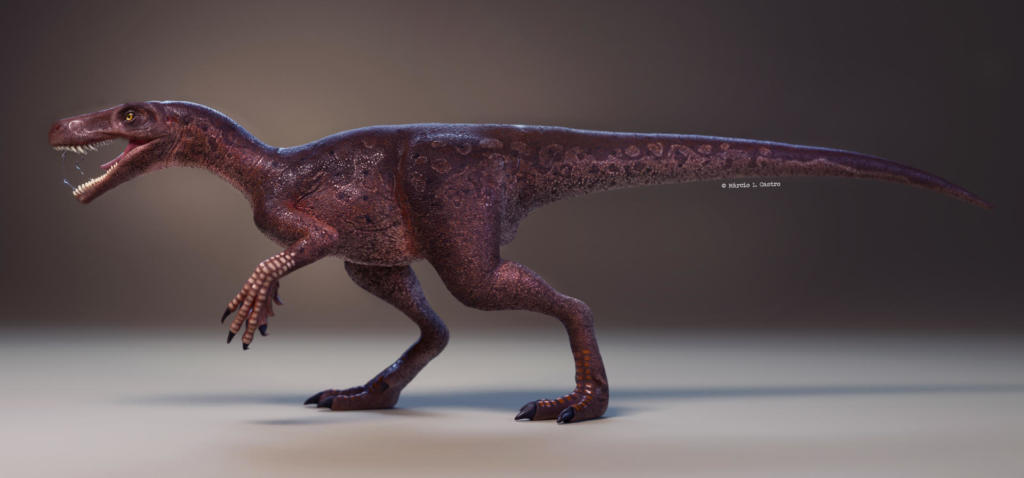
An amazingly well-preserved skeleton of the world's oldest-known meat-eating dinosaur has been unearthed in the south of Brazil.

Oldest carnivorous dinosaur unearthed in southern Brazil
Illustration of Gnathovorax cabreirai
[Credit: Marcio L. Castro]
The predator named 'Gnathovorax cabreirai' lived 230 million years ago when South America was still part of the supercontinent called Pangaea.

The skeleton is virtually intact — and includes razor-sharp teeth and claws that would have made it a ferocious killer. Its genus name means 'ravenous jaws'.

Experts were even able to reconstruct the dinosaur's brain — showing that it would have had good eyesight and co-ordination.


This would have made it an 'apex predator' which sat at the top of the food chain, said biologist Rodrigo Muller of Brazil's Federal University of Santa Maria.

The remarkable discovery may even help researchers better understand the evolution of T Rex, one of Gnathovorax's distant ancestors.

In life, Gnathovorax would have stood at around 10 feet (3 metres) in length and likely weighed as much as half a ton.

Oldest carnivorous dinosaur unearthed in southern Brazil
The rock block with the fossil was discovered in 2014 in Sao Joao do Polesine by paleontologist Sergio 
Furtado Cabreira [Credit: Universidade Federal de Santa Maria, Rodrigo Temp Muller]
According to the researchers, it is the oldest-known carnivorous dinosaur by about 30 million years.

Dinosaurs ruled the Earth for most of the so-called Mesozoic Era — between around 250–65 million years ago.

However, most of the 'super predators' like Tyrannosaurus rex and Allosaurus lived over tens of millions of years later than Gnathovorax, during the Jurassic and Cretaceous Periods.


'The oldest predatory dinosaurs — that lived during the Triassic around 230 million years before the present — are, however, still rare findings,' said Dr Muller.

'Gnathovorax cabreirai is represented by an almost complete skeleton excavated in southern Brazil.'

'The beast measured about three meters in length and is one of the oldest dinosaurs in the world.'

Oldest carnivorous dinosaur unearthed in southern Brazil
Illustration of Gnathovorax cabreirai in life, along with fantosaurs, in a graphic recreation by paleoartist 
Marcio Castro [Credit: Universidade Federal de Santa Maria]
'Moreover, it was one of the largest carnivores of its area 230 million years ago — much before its larger cousins from [the] Jurassic and Cretaceous.'

The only other known dinosaurs to date back to this time period were less than twice the size of Gnathovorax — barely reaching five feet (1.5 metres) in length.


These include a plant-eating sauropod — dubbed Buriolestes schultz — which was unearthed from a nearby fossil site three years ago.

Gnathovorax was one of the original beast-footed (theropod) dinosaurs that would eventually give rise to T Rex.

'The outstanding skeleton possesses sharp teeth and claws, which may have been used by Gnathovorax to capture its prey,' said Dr Muller.

Oldest carnivorous dinosaur unearthed in southern Brazil
(A) Right lateral view. (B) Three-dimensional rendering of the skull in right lateral view. (C) Three-dimensional rendering 
of the skull in left/dorsal lateral view. (D) Schematic drawing in right lateral view. an, angular; anf, antorbital fenestra; 
d, dentary; emf, external mandibular fenestra; en, external naris; j, jugal; l, lacrimal; m, maxilla; n, nasal; of, oval
 fenestra; p, parietal; pm, premaxilla; prf, prefrontal; pt, pterygoid; q, quadrate; qj, quadratojugal; sa, surangular;
 snf, subnarial foramen; sq, squamosal; stf, supratemporal fenestra [Credit: Cristian Pacheco et al. 2019]
'Additionally, the exquisitely preserved skeleton allowed us to reconstruct the shape of the brain of the animal.'

Using a CT scanner — like those found in hospitals — researchers were able to examine the skull's interior, shedding light on Gnathovorax's faculties.

'The effort revealed features shared with other predators, including well-developed areas related to visual coordination and balance,' Dr Muller added.


'This combination of assets indicate that the new dinosaur was an active predator of its time.'

The researchers have referenced this in their naming of the new species, with 'Gnathovorax' meaning 'ravenous jaws'.

Meanwhile, the species name — 'cabreirai' — 'honours palaeontologist Dr Sergio Furtado Cabreira who made the discovery while excavating near the city of Santa Maria in the state of Rio Grande do Sul,' explained Dr Muller.

Oldest carnivorous dinosaur unearthed in southern Brazil
(A) Strict consensus tree depicting the phylogenetic position of Gnathovorax cabreirai (numbers represent Bremer 
support values higher than 1). (B) Bivariate plot showing the result of the morphological disparity analysis. Green
 convex hull corresponds to morphospace of sauropodomorphs, blue convex hull corresponds to morphospace 
of ornithischians, yellow convex hull corresponds to morphospace of theropods, purple convex hull corresponds
 to morphospace of herrerasaurids, and ‘X’, are other archosaurs. (C) Geochronological distribution of 
herrerasaurids, sauropodomorphs, and theropods. Note: silhouettes are composites
 from different sources [Credit: Cristian Pacheco et al. 2019]
'[Our] analysis places the new dinosaur closely related to Herrerasauridae, a group of predatory dinosaurs known from Argentina and Brazil,' said Dr Muller.

These early hunting dinosaurs first roamed the Earth around 233 million years ago — and died out around 30 million years later.

'The new skeleton is, however, the most complete single individual ever discovered for the group.'


The only other herrerasaur known from Brazil — dubbed 'Staurikosaurus pricei' — is represented only by an incomplete skeleton recovered back in 1936, more than eight decades ago.

'Much information has been already gathered about the largest predatory dinosaurs from the Jurassic and Cretaceous Periods,' added paper author and palaeontologist Cristian Pereira Pacheco, also of the Federal University of Santa Maria.


However, he added, 'their early evolutionary history is still poorly understood, given the scarcity of fossils.'

'Here, we describe Gnathovorax cabreirai, a new herrerasaurid based on an exquisite specimen found in southern Brazil.'

'Given its superb state of preservation and completeness, the new specimen sheds light into poorly understood aspects of the herrerasaurid anatomy - including soft tissues.'

The full findings of the study were published in the journal PeerJ.

Author: Ian Randall | Source: Daily Mail Online [November 12, 2019]

Human activities drying out the Amazon: NASA study


A new NASA study shows that over the last 20 years, the atmosphere above the Amazon rainforest has been drying out, increasing the demand for water and leaving ecosystems vulnerable to fires and drought. It also shows that this increase in dryness is primarily the result of human activities.

Human activities drying out the Amazon: NASA study
The Amazon rainforest [Credit: Marcio Isensee e Sa/Adobe Stock]
Scientists at NASA's Jet Propulsion Laboratory in Pasadena, California, analyzed decades of ground and satellite data over the Amazon rainforest to track both how much moisture was in the atmosphere and how much moisture was needed to maintain the rainforest system.

"We observed that in the last two decades, there has been a significant increase in dryness in the atmosphere as well as in the atmospheric demand for water above the rainforest," said JPL's Armineh Barkhordarian, lead author of the study. "In comparing this trend to data from models that estimate climate variability over thousands of years, we determined that the change in atmospheric aridity is well beyond what would be expected from natural climate variability."

So if it's not natural, what's causing it?

Barkhordarian said that elevated greenhouse gas levels are responsible for approximately half of the increased aridity. The rest is the result of ongoing human activity, most significantly, the burning of forests to clear land for agriculture and grazing. The combination of these activities is causing the Amazon's climate to warm.


When a forest burns, it releases particles called aerosols into the atmosphere—among them, black carbon, commonly referred to as soot. While bright-colored or translucent aerosols reflect radiation, darker aerosols absorb it. When the black carbon absorbs heat from the sun, it causes the atmosphere to warm; it can also interfere with cloud formation and, consequently, rainfall.

Why It Matters

The Amazon is the largest rainforest on Earth. When healthy, it absorbs billions of tons of carbon dioxide (CO2) a year through photosynthesis—the process plants use to convert CO2, energy and water into food. By removing CO2 from the atmosphere, the Amazon helps to keep temperatures down and regulate climate. But it's a delicate system that's highly sensitive to drying and warming trends.

Human activities drying out the Amazon: NASA study
The image shows the decline of moisture in the air over the Amazon rainforest, particularly across the south
 and southeastern Amazon, during the dry season months - August through October - from 1987 to 2016.
The measurements are shown in millibars [Credit: NASA/JPL-Caltech, NASA Earth Observatory]
Trees and plants need water for photosynthesis and to cool themselves down when they get too warm. They pull in water from the soil through their roots and release water vapor through pores on their leaves into the atmosphere, where it cools the air and eventually rises to form clouds. The clouds produce rain that replenishes the water in the soil, allowing the cycle to continue. Rainforests generate as much as 80% of their own rain, especially during the dry season.

But when this cycle is disrupted by an increase in dry air, for instance, a new cycle is set into motion—one with significant implications, particularly in the southeastern Amazon, where trees can experience more than four to five months of dry season.


"It's a matter of supply and demand. With the increase in temperature and drying of the air above the trees, the trees need to transpire to cool themselves and to add more water vapor into the atmosphere. But the soil doesn't have extra water for the trees to pull in," said JPL's Sassan Saatchi, co-author of the study. "Our study shows that the demand is increasing, the supply is decreasing and if this continues, the forest may no longer be able to sustain itself."

Scientists observed that the most significant and systematic drying of the atmosphere is in the southeast region, where the bulk of deforestation and agricultural expansion is happening. But they also found episodic drying in the northwest Amazon, an area that typically has no dry season. Normally always wet, the northwest has suffered severe droughts over the past two decades, a further indication of the entire forest's vulnerability to increasing temperatures and dry air.

If this trend continues over the long term and the rainforest reaches the point where it can no longer function properly, many of the trees and the species that live within the rainforest ecosystem may not be able to survive. As the trees die, particularly the larger and older ones, they release CO2 into the atmosphere; and the fewer trees there are, the less CO2 the Amazon region would be able to absorb—meaning we'd essentially lose an important element of climate regulation.

The study was published in Scientific Reports.

Author: Esprit Smith | Source: NASA [November 06, 2019]

Satellite study of Amazon rainforest land cover gives insight into 2019 fires


Throughout August and early September 2019, media around the world have reported on the extensive forest fires ravaging Brazil's Amazon rainforest. Much of the concern stems from the Amazon's significance to regulating the world's climate. According to the Associated Press, the Amazon absorbs 2 billion tons of carbon dioxide every year -- about 5% of global emissions. Thus, fires in the region eat away at this carbon-absorbing capacity while at the same time adding carbon to the air through burning.

Satellite study of Amazon rainforest land cover gives insight into 2019 fires
A look at original forest in the Amazon [Credit: Gabriel de Oliveira]
A recent study in the peer-reviewed journal Ecohydrology headed by University of Kansas researcher Gabriel de Oliveira gives important context to the fires burning big swaths of the Amazon today, most of which were set intentionally by farmers and ranchers to convert forest into land suitable for grazing animals or growing crops. The researchers sought to discover how these changes to land cover affect the exchange of water and heat between the surface of the Amazon and the atmosphere overhead.

"This is the first study to examine the biosphere-atmosphere interactions in the Amazon with such high spatial resolution satellite imagery," said de Oliveira, a postdoctoral researcher in the Department of Geography & Atmospheric Science at KU. "We tried to understand the impacts of land-cover changes and deforestation in general. When you clear-cut the forests, and you convert it either to pasture or agriculture -- or cut the forest, but for some reason don't plant anything and then have a type of vegetation called 'secondary succession' -- our idea was to try to understand how that impacts energy, like the radiative fluxes and water fluxes, or evaporation in general."


In the paper, de Oliveira and his colleagues analyzed information from both satellites in space and weather stations on the ground in the Amazon. With data from the Advanced Spaceborne Thermal Emission and Reflection Radiometer (ASTER) and Large-Scale Biosphere-Atmosphere Experiment in Amazonia (LBA), they examined surface energy and water changes over different land-cover types in one wet year and one drought year in eastern Rondonia state, Brazil. The team also found statistically significant differences in several important measures prior to and after one year of deforestation.

"Using NASA satellite images with high spatial resolution (15m) obtained by the ASTER sensor in Rondonia state, in the south-western Brazilian Amazon, we found that deforestation and consequent transition to pasture or agriculture to grow soybean tend to increase in two to four times the soil and air temperatures in the region," de Oliveira said. "We also observed an approximately three times higher evapotranspiration over forested areas in comparison with nonforested areas."

Satellite study of Amazon rainforest land cover gives insight into 2019 fires
This map shows the study area and location of the flux tower used in this study
[Credit: de Oliveira et al. 2019]
The researchers discovered significant variances between areas on opposite sides of the Ji-Parana River, one side of which had suffered more deforestation than the other side, located within the Jaru Biological Reserve protected area. They measured spatial variation of albedo (or the fraction of the incident sunlight that the surface reflects), net radiation (or the total energy, derived from sunlight, that's available at the surface), soil and sensible heat fluxes (or how much heat is transferred from the surface to the atmosphere), and evapotranspiration (the process by which water is transferred from the land to the atmosphere by evaporation from the soil and by transpiration from plants).


De Oliveira, who was raised in Brazil, said the rest of the world depends on the Amazon region to help moderate global climate.

"It's important because it's the largest rainforest in the world," he said. "Precipitation in the tropics, all the water fluxes that go on in the tropics, affect the whole world. The Amazon has a very important role in that. There's no other area in the world like the Amazon's unique ecosystem. It's pretty fascinating. I'm from South Brazil, a totally different environment than the Amazon. You could compare it with Kansas. But when I started studying for my master's degree, my adviser told me, 'You're going to work in the Amazon rainforest.' And I told her I'd never been there. But I spent two months in the rainforest doing research. And of course, you know, I fell in love. I'm very passionate about the Amazon and have been there so many times since then, so I have a lot of experience and stories of things that have happened there."

The KU researcher cautioned that although forest fires in the Amazon have received attention in the media this year, the fires happen to a greater or lesser degree every year.

"Fires in the Amazon happen every year during the dry season," de Oliveira said. "We have agricultural areas, areas that were deforested in the past -- but in order to clear the area for the next year, or to make the soil a little bit better for the next year, they set a fire. They claim they're only setting fire to burn agricultural lands. But sometimes the fire gets out of control, and it plays a part in more deforestation. Fires get out of control in agricultural land and reach the forest and burn the forest. But these fires happen in the Amazon every year, so it's pretty straightforward. The worst years were in 2005, 2010 and 2015 because of severe drought events. Everything was really dry, and the fires would get out of control. There are no natural fires in the Amazon. They're all set by human beings."

Author: Brendan M. Lynch | Source: University of Kansas [September 12, 2019]

Inferno in the rainforest


Fires in the Brazilian Amazon have reached the level of an international crisis. Since the start of the year, NASA satellites have detected more than 100,000 points of fire there. Though widespread slash-and-burn agriculture in the region means that some land is scorched every year, the scale of this year's fires is unusual, owing to a combination of drought and human activity, and it has attracted attention from around the world.

Inferno in the rainforest
Sensors on NASA satellites Terra and Aqua captured a record of thousands of points of fire in Brazil in late August.
The fires pose a threat to the Amazon rainforest and to people living in and around it
[Credit: NASA Earth Observatory]
Most people are familiar with the Amazon as home to myriad plant and animal species. Twice the size of India, the rainforest is home to an estimated 10% of the world's biodiversity. The fires may trigger a host of other far-reaching effects, including impacts on human health and the climate.

To gain insight into some of these less understood possibilities, and to dig into the science of how fire can transform environments, Penn Today spoke with scientists Reto Giere and Alain Plante in Penn's Department of Earth and Environmental Science, who offered expertise on air pollution, carbon cycling, soil properties, agriculture, and ecology.

The Amazon isn't the world's only ecological hotspot on fire

The Brazilian Amazon fires have attracted global attention, including a pledge to help fight them from the G7 countries, but devastating fires are also affecting swaths of Africa and Southeast Asia, Giere notes.

"NASA has impressive satellite imagery that shows these fire belts across the African continent," he says. "You can see them from space every year."


Similar images reveal large areas of Indonesia and Malaysia on fire. As in the Amazon, that burning is driven by a desire to deforest land for agriculture practices, particularly for palm oil plantations that are widespread in Southeast Asia.

Fire is a natural feature of the African savannah, as it is in areas with a Mediterranean climate including parts of California and in boreal forest systems like Alaska and parts of northern Canada. Those ecosystems may bounce back relatively quickly from a burn. But Giere underscores that many of the fires there stem from or are exacerbated by human activity, amplifying the range and impact.

Toxic fumes from the fires pose a threat to human health

All uncontrolled fires produce smoke and can release fumes that are harmful to breathe. But those occurring in the Amazon may be of particular concern because of what is fueling the flames. According to Giere, out-of-control burns that engulf trees with a relatively high moisture content, as is typical of rainforest vegetation, can lead to what's known as incomplete combustion.

Inferno in the rainforest
Smokes rises from the edges of a swath of rainforest in the state of Para in northern Brazil. Fires
occur annually in the Amazon, but not since 2010 have satellites detected so many
[Credit: NASA Earth Observatory]
"Examples of compounds produced when plants are burned include toxic volatile organic species, carbon monoxide, and polycyclic aromatic hydrocarbons, or PAHs," says Giere. "In particular, the higher the moisture content of the wood, the more PAHs will end up in the atmosphere, and many of these are carcinogens. So higher moisture can lead to more toxic emissions."

A vast geographic area will feel the effects

"Very often the toxins attach themselves to solid particles like soot or mineral particles," Giere says. "Depending on the meteorological conditions, these particles can be blown thousands of miles." Photos from Sao Paolo, Brazil—hundreds of miles from the fires—have shown how smoke rendered the daytime sky like night.


In addition, by creating a smoky haze, fires reduce the amount of solar radiation that can penetrate to the ground. As the sun's rays bounce off the smoke, they increase heat in the atmosphere and hamper productivity of natural lands as well as agricultural lands.

"This has long-term effects and long-range effects," says Giere.

Forest destruction in the Amazon has consequences for climate change

The Amazon rainforest is a huge "sink" for carbon. Its towering trees hold on to a vast reserve that might otherwise accelerate climate change. Below ground, however, the Amazon is a much less fertile place than equivalent soils in temperate or boreal forests. Decomposition happens so fast in the tropics that few nutrients and little carbon wind up in the ground.

That's why farmers cut down and then burn patches of forest; the fires introduce the nutrients that had been held by the trees into the soil. But that influx of fertility is temporary.

"Because of this lack of natural fertility in the soil, a few years after burning the land the fertility is exhausted, so farmers move on and burn the next spot," says Plante. "That's one of the factors contributing to deforestation in the Amazon."


This also means that a fire in the rainforest can cause the ecosystem to release most of its carbon in one fell swoop.

"What you're doing is essentially burping out a lot of carbon dioxide," Plante says. "And you're now missing the forest that used to suck more carbon dioxide out of the atmosphere in its normal process of photosynthesis. Over the long term, if the forest recovers, the carbon dioxide will get recaptured by trees. But that can take generations, especially with fires at this scale."

Soil erosion may be one of the next big concerns

Once the fire has come through, the soils are vulnerable. "You're essentially taking a blanket off the ground," says Plante. When the trees are gone, the blanket is effectively removed, exposing the rainforest's soils to the elements. A strong rainstorm can cause massive erosion.

"Sediments can enter the streams and rivers, changing the turbidity of the water," says Giere. "This change affects the ecosystem of the rivers and all animals and plants that live there, probably with long-term effects."

Author: Katherine Unger Baillie | Source: University of Pennsylvania [September 09, 2019]

Forest loss in Brazil contributing to rising temperatures


A global team of scientists including researchers from The University of Western Australia and the United States has found deforestation in the Brazilian Amazon-Cerrado region is causing temperatures to rise in areas as far as 50km away from deforestation sites.

Forest loss in Brazil contributing to rising temperatures
Virgin jungle stands next to an area that was burnt recently near Porto Velho, Brazil, Friday, Aug. 23, 2019.
Brazilian state experts have reported a record of nearly 77,000 wildfires across the country so far this year,
up 85% over the same period in 2018. Brazil contains about 60% of the Amazon rainforest,
whose degradation could have severe consequences for global climate and rainfall
[Credit: Victor R. Caivano, AFP]
Associate Professor Sally Thompson, from UWA's School of Civil, Environmental and Mining Engineering and UWA Institute of Agriculture, said deforestation in Brazil mostly happened because farmers wanted to increase the land area they could farm.

"However, our research highlights the long-ranging impact on temperatures from deforestation and how farmers will benefit from forest conservation, which will help protect crops and stock from the worst of temperature extremes," Professor Thompson said.


The researchers analyzed satellite observations in the Amazon-Cerrado region to observe changes to forest cover and temperatures at more than 2000 sites between 2000 and 2015. They looked at how much the daily maximum temperature at a forested site would increase as the size of forest around it decreased. They also examined how far away from the area of deforestation temperatures would be affected.

Professor Thompson said although people thought of climate change as happening because of greenhouse gas emissions, changes in land cover, such as forest loss, also had dramatic effects.


"Tree cover stabilizes temperatures, because trees use water when they photosynthesize, and their evaporation cools the land," Professor Thompson said. "If you replace forests with crops, which use much less water, temperatures can increase by as much as two degrees Celsius."

Professor Thompson said the findings offered relevance to the importance of the conservation and restoration of forests and woodlands in Australia.

"Our own track record on deforestation is not great," she said. "Queensland has been clearing forests as rapidly as Brazil, mostly for cattle pasture. We know this is a problem for soil and water health, and a big problem for biodiversity. This research suggests it's likely to worsen the effects of climate warming."


Professor Thompson said the study, published in Environmental Research Letters, differed from other studies because it separated the effects of warming from forest loss at the site where forests were cleared, from warming that occurred due to neighboring forest losses.

"The fact that temperatures are sensitive to the loss of forest cover from up to 50km away is a surprise—it's much further than we anticipated," she said.

"Overall, we also found deforestation in the Amazon has caused temperatures to rise by about 0.5 degrees Celsius, with those temperature increases evenly split between the warming occurring where forest was lost and warming around that area."

Source: University of Western Australia [September 02, 2019]

High diversity of harvestmen in Atlantic Rainforest and ancient geological events


In the southern Atlantic Rainforest remnants between Rio de Janeiro State in Southeast Brazil and Santa Catarina State in South Brazil, there are some 600 species of harvestmen (Opiliones), arachnids that live in caves and humid forests. The number of species is considered high even for this well-known biodiversity hotspot, and most of these species are endemic.

High diversity of harvestmen in Atlantic Rainforest and ancient geological events
Left to right: different species of harvestmen of subfamily Sodreaninae - S. glaucoi, S. leprevosti,
S. inscripta and S. Sodreana [Credit: Glauco Machado & Ricardo Pinto-da-Rocha]
A reconstitution of the evolutionary history of the subfamily Sodreaninae has brought to light an explanation for this peculiar distribution pattern and emergence of new species. Contrary to expectations, the high species diversity is more likely related to ancient geological events, such as mountain range uplift and river formation, than to relatively recent climate fluctuations (i.e., those in the last 20,000 years).

The discovery is based on correlations found between evolutionary data for seven lineages of harvestmen and the influence of geological events that occurred in the region in the last 30 million years. The study was conducted in Brazil by a group of researchers at the University of São Paulo's Bioscience Institute (IB-USP) in partnership with colleagues at the Federal University of Lavras (UFLA) and the Geology Institute (IG) in São Paulo. Its results are published in the journal Molecular Phylogenetics and Evolution.

The research was supported by São Paulo Research Foundation - FAPESP under the aegis of a cooperative agreement between the US National Science Foundation (NSF) and the FAPESP Research Program on Biodiversity Characterization, Conservation, Restoration and Sustainable Use (BIOTA-FAPESP).


"Curiously, the lineages are far older than the Last Glacial Maximum 20,000 years ago, when ice sheets covered the north of the planet, changing the climate worldwide. From the evidence gleaned in our study, based on genetic analysis of harvestmen alive now, this group began diversifying well before that, about 30 million years ago. This discovery is consistent with the geological evolution of the Ribeira de Iguape and Paraíba do Sul river basins, for example," said Elen Peres, a researcher at IB-USP and first author of the article.

Given the sensitivity of harvestmen and their preference for humid habitats, Peres and her group already surmised that they must have been affected by environmental changes due to climate oscillations in the last 2 million years of the Pleistocene, but the study proved that the speciation of Opiliones occurred much earlier and was caused by even more ancient geological events.

Just as the evolutionary theory developed by Charles Darwin (1809-1882) grew out of his observations of a type of speciation found in the Galapagos, where different islands were home to distinct but related species of finches, in this case, the Brazilian researchers found that the formation of the Ribeira do Iguape Valley separated entire populations, causing different species to emerge over time.

Genetic analysis

"We knew the Atlantic Rainforest remnants in the South and Southeast contained a large and highly peculiar distribution of species belonging to this family of harvestmen, but what's new from this project is that we were able to date their emergence using molecular markers," said Ricardo Pinto-da-Rocha, a professor in IB-USP's Zoology Department and a co-author of the article.

According to the study, the diversification of harvestmen species began with the geological evolution of the Atlantic Rainforest in South and Southeast Brazil, including complex transformations derived from the separation of the African and South American continents during the Upper Cretaceous, which began over 100 million years ago. This event had consequences millions of years later, including mountain range uplift and erosion as well as intense magmatism.

Approximately 60 million years ago, the process culminated in the formation of the Continental Rift of Southeast Brazil, which runs parallel with the coast for 900 km between Curitiba, Southern Brazil, and Niterói, Rio de Janeiro, and is associated with the formation of important rivers, such as the Ribeira do Iguape and Paraíba do Sul.

The article notes that the Paraíba do Sul Valley is 550-400 m above sea level and surrounded by the Serra do Mar and Serra da Mantiqueira ranges, with elevations higher than 2,000 m, constituting geographical barriers.


"The harvestman species appeared at different times between 35 million and 10 million years ago," Pinto-da-Rocha said.

The point of looking for correlations between molecular data, climate and geology was to answer a key question about the Atlantic Rainforest biome, which is how its extraordinary biodiversity came about. "It would be great to know if any specific event or series of events caused the biome's outstandingly rich biodiversity with so many endemic species," said Thadeu Sobral-Souza, a researcher at UFLA and also a co-author of the article.

Most previous research concluded that the biome's biodiversity derived from recent climate events, he added. "Studies have shown that when the climate becomes cooler or warmer, species may become either locally extinct or more widely distributed," he told. "Our study demonstrates that geology was more decisive for species diversity than recent climate oscillations, at least for this group of Opiliones."

Peres agreed. "Higher levels of biodiversity normally correlate with a stable climate, but the climate fluctuations of the Pleistocene occurred between about 2 million and 10,000 years ago, long after the speciation of Opiliones," he said.

New classifications

The genetic analysis also resulted in a new configuration of species in the subfamily Sodreaninae, hitherto analyzed only on the basis of morphology. Molecular analysis showed, for example, that S. sodreana and S. granulata constituted the same species, henceforth called S. sodreana, while S. barbiellinii and S. curupira were found to be closer to the subfamily Progonyleptoidellinae than to Sodreaninae.

"Molecular data for S. barbiellinii and S. curupira showed that the convergence was merely morphological," Pinto-da-Rocha said. "Both species have a kind of appendix that they use to capture food, and were put in the same group when this was discovered 100 years ago. However, we discovered from the genetic analysis that this trait has appeared more than once in different families, and genetically speaking these species are closer to Progonyleptoidellinae."

Source: Fundação de Amparo à Pesquisa do Estado de São Paulo [August 23, 2019]

New sphenodontian from Brazil is the oldest record of the group in Gondwana


Research published in Scientific Reports describes Clevosaurus hadroprodon, a new reptile species from Rio Grande do Sul state in southern Brazil. Its fossils remains--jaws and associated skull bones--were collected from Triassic rocks (c. 237-228 million-years old) making it the oldest known fossil of its kind in Gondwana, the southern supercontinent that would eventually become Africa, Antarctica, Australia, India, and South America.

New sphenodontian from Brazil is the oldest record of the group in Gondwana
Holotype specimen of Clevosaurus hadroprodon. Photograph (a) and schematic drawing (b) of MMACR PV-027-T.
Photograph (c) and schematic drawing (d) of additional jaw material (MMACR PV-028-T)
[Credit: Randall L. Nydam, Ph.D., Midwestern University]
Clevosaurus hadroprodon was a small animal, similar in size with common house geckos. It belongs to the Sphenodontia, a group of lepidosaurs (which also includes snakes, lizards and amphisbaenians), that was very diverse and widespread during the Mesozoic era (the "Age of Dinosaurs"), but today has only one remaining living species in New Zealand. Clevosaurus hadroprodon is the oldest member of the Clevosauridae, a group of small sphenodonts that were the first globally distributed lepidosaurs with fossils from the Late Triassic and Early Jurassic of North America, Europe, Asia, Africa and South America.


The dentition of Clevosaurus hadroprodon is an unexpected mix of primitive and derived teeth. It is the oldest occurrence of the typical fully acrodont dentition (teeth fused to the top of the jaw bones) of sphenodontians, but most of its teeth are relatively simple and blade-like, which differs from other, only slightly younger Clevosaurus species that possess well-developed medial-posteromedial (side-to-side) expansions of the teeth for complex grinding.

"However, Clevosaurus hadroprodon also possess a large, blunt, tusk-like tooth in the first tooth position of the both premaxilla (upper jaw) and of dentary (lower jaw). This feature is typically observed only in later sphenodontian lineages" says Annie Schmaltz Hsiou, Associate Professor at the University of Sao Paulo and head of the study. The name "hadroprodon" is Greek for "larger first tooth" in reference to these tusk-like teeth.


"Clevosaurus hadroprodon is an important discovery because it combines a relatively primitive sphenodontian-type tooth row with the presence of massive tusk-like teeth that were possibly not for feeding, but rather used for mate competition or defense. If correct, this means that non-feeding dental specializations predated changes in the sphenodontian dentition related to feeding strategies. This is a very exciting discovery." says co-author Randall Nydam, Professor at Midwestern University (US).

In addition to its unique dentition, the authors stress that Clevosaurus hadroprodon also adds to the growing evidence that the early diversification of sphenodontians occurred in the widely separated regions of Gondwana destined to become South American and India. This illustrates the importance of the role of the Gondwanan lepidosaur fauna in our growing understanding of the earliest stages of sphenodontian evolution and the global biogeographic distribution of lepidosaurs.

Source: Midwestern University [August 14, 2019]

Protecting a forgotten treasure trove of biodiversity


The Cerrado is the largest savanna region in South America, but compared to the Amazon Forest to the North, it does not attract much attention. It is home to an incredible diversity of large mammal species including jaguar, the endangered maned wolf, the giant anteater, giant armadillo, and marsh deer, as well as more than 10,000 species of plants, almost half of which are found nowhere else on Earth. Despite its importance as a global biodiversity hotspot, it is one of the most threatened and over-exploited regions in Brazil. In fact, today, less than 20% of the Cerrado's original area remains undisturbed and this habitat is at risk of conversion to agriculture, especially for soybean cultivation.

Protecting a forgotten treasure trove of biodiversity
Credit: © Augusto Miranda Martins/Dreamstime
The region has been at the center of the country's recent agricultural boom, with 48% of Brazil's soybean production harvested in the Cerrado in 2015. Unlike the Amazon, where almost half of the area is under some sort of conservation protection, only 13% of the Cerrado is protected. Under Brazil's Forest Code - an environmental law designed to protect the country's native vegetation and regulate land use - 80% of the native vegetation on private lands in the Amazon biome has to be protected, but only 20% is required in the majority of the Cerrado. Between 2000 and 2014, almost 30% of the soy expansion in the Cerrado occurred at the expense of native vegetation. A similar proportion of soy expansion in the Amazon between 2004 and 2005 led to the implementation of the Amazon Soy Moratorium, which constitutes a zero-deforestation agreement between civil society, industry, and government that forbids the buying of soy grown on recently deforested land.


In their study, the team led by IIASA researcher Aline Soterroni and Fernando Ramos from Brazil's National Institute for Space Research (INPE), endeavored to quantify the direct and indirect impacts of expanding the Amazon Soy Moratorium to the Cerrado biome in terms of avoided native vegetation conversion and consequent soybean production loss. Their findings indicate that expanding the moratorium to the Cerrado would prevent the direct conversion of 3.6 million hectares of native vegetation to soybeans between 2020 and 2050.

Accounting for leakage effects - in other words, the increase of native vegetation loss to other agricultural activities due to the expansion of soybeans over already cleared areas - the expanded moratorium would save 2.3 million hectares of the Cerrado. Nationally, this would require a reduction in soybean cultivation area of only around 2% (or 1 million hectares), as there are at least 25.4 million hectares of land that has already been cleared in the region (mainly for pasture areas with low productivity cattle ranching) that would be suitable for agricultural expansion. This suggests that both agricultural expansion and conservation of the remaining habitat may therefore be possible.


"According to our model, expanding the Amazon Soy Moratorium to the Cerrado can avoid the loss of a significant amount of native vegetation while simultaneously achieving soybean production goals. We also show that the Forest Code is not enough to protect the area given its low level of legal reserve requirements and its historical lack of enforcement," explains Soterroni. "Our study presents the first quantitative analysis of expanding the soy moratorium from the Amazon to the Cerrado and could be used by traders and consumer markets to adjust their supply chains".

According to the researchers, a growing number of private sector actors are already voluntarily pledging to eliminate deforestation from their supply chains. Furthermore, consumer awareness of deforestation is increasing, providing companies with incentives to adhere to the responsible sourcing of commodities. Soterroni also points out that the close relative risks of future native vegetation conversion to soy estimated for China and the EU (37.52 and 37.06 hectares per 1,000 tons annually, respectively), shows that both of these entities can play an important role regarding the responsible sourcing of soy.


To preserve the biodiversity and ecosystem services provided by the remaining parts of the Cerrado, urgent action is needed. Soterroni says that to this end, a public-private policy mix would be essential to preserve the last remnants of the region and in light of the recent absence of strong environmental governance in Brazil, the expansion of the Soy Moratorium beyond the Amazon to the Cerrado might be more urgent than previously thought. The researchers urge the EU and stakeholders from other regions to encourage the expansion of conservation measures to the Cerrado and to support the call for making soy trade with Brazil more sustainable.

The study is published in Science Advances.

Source: International Institute for Applied Systems Analysis [July 17, 2019]

Oldest completely preserved lily discovered


Botanist Dr. Clement Coiffard of the Museum für Naturkunde Berlin discovered the oldest, completely preserved lily in the research collection: Cratolirion bognerianum was found in calcareous sediments of a former freshwater lake in Crato in northeastern Brazil. With an age of about 115 million years, Cratolirion is one of the oldest known monocotyledonous plants. These include orchids, sweet grasses, lilies and lilies of the valley.

Oldest completely preserved lily discovered
The fossil lily [Credit: Museum für Naturkunde Berlin]
Cratolirion is extraordinarily well preserved, with all roots, the flower and even the individual cells are fossilised. With a length of almost 40 centimetres, the specimen is not only extremely huge, but also shows almost all the typical characteristics of monocotyledonous plants, including parallel-veined, narrow leaves with a leaf sheath, a fibrous root system and triple flowers.


However, it was not trivial to examine the fossilised object, as it consisted of iron oxides associated with the stone. In order to see details here, Coiffard collaborated with the HZB physicist Dr. Nikolay Kardjilov, who is an expert in 3D analysis with X-rays and neutrons. At the HZB he also built up a 3D computed x-ray tomography and refined the data analysis in such a way that hardly any disturbing artefacts arise during the investigation of large, flat objects. This made it possible to analyse the details of the inflorescence hidden in the stone. A colour coding in the CT scan makes these details visible: the main axis is marked in turquoise, the supporting leaves in dark green, the pistils in light green and the remains of the actual petals can still be seen in orange.

Oldest completely preserved lily discovered
A colour code of the CT scan shows details of the plant: main axis (turquoise),
leaves (dark green), pistils (light green), petals (orange)
[Credit: Museum für Naturkunde Berlin]
Many early dicotyledonous flowering plants have already been described from the same sediments of the former freshwater lake in Crato. These include water lilies, aron rods, drought-resistant magnolias and relatives of pepper and laurel. In contrast to other flowering plants of the same age from the USA, Portugal, China and Argentina, the flowering plants of the Crato-Flora are unusually diverse. This could be due to the fact that Lake Crato was in the lower latitudes, but all other fossils of early flowering plants come from the middle latitudes.


From this newly described plant Cratolirion bognerianum and the species of Crato flora mentioned above, it can be deduced that the tropical flowering plants were already very diverse. "It is probable that flowering plants originated in the tropics, but only very few fossils have been described to date," explains Coiffard. This study thus provides new insights into the role of the tropics in the development of early flowering plants and their rise to global supremacy.

Source: Helmholtz-Zentrum Berlin für Materialien und Energie [July 11, 2019]

'Gentle recovery' of Brazil's leatherback turtles


Brazil's leatherback turtles are making a "gentle recovery" after 30 years of conservation efforts, new research shows.

'Gentle recovery' of Brazil's leatherback turtles
Leatherback turtle in Brazil [Credit: Banco de Imagens Projeto TAMAR]
Scientists studied nesting sites in the state of Espírito Santo in eastern Brazil - the only place in the south-west Atlantic where leatherbacks regularly nest. Data on this small population from 1988-2017 showed the average number of nests rose from 25.6 in the first five years of the period to 89.8 in the final five years.

The researchers, from the University of Exeter and Brazilian sea turtle conservation programme TAMAR-ICMBio, believe local conservation efforts have contributed to this increase. But they say conservation of this population is still a concern due to climate change, pollution, coastal development and "bycatch" (accidental catch by humans fishing).


"The numbers vary year by year, but overall we have seen an increase in the number of leatherback nests in Espírito Santo," said Dr Liliana Poggio Colman, of the Centre for Ecology and Conservation on the Exeter's Penryn Campus in Cornwall.

"This gentle recovery is probably due, at least in part, to local conservation efforts started by Projeto TAMAR in the 1980s. Our study revealed a significant decrease in the size of the turtles breeding on these beaches, suggesting that new females are joining the breeding population."

'Gentle recovery' of Brazil's leatherback turtles
Liliana Poggio Colman with a leatherback turtle in Brazil
[Credit: University of Exeter]
Dr Poggio Colman, who had a scholarship from the programme Science Without Borders, funded by the Brazilian government, added: "We are encouraged by what we have found, but this is a small population - fewer than 20 nesting females per year, each laying several clutches - so their conservation will remain a concern."

Throughout the study period, nests were concentrated in the southern part of the 100-mile (160km) study area, with the protection of core nesting areas being key for the effective conservation of this population.


Professor Brendan Godley, who was one of Dr Poggio Colman's PhD supervisors, added: "It was a great pleasure to help facilitate this collaborative work in Brazil.

"By chance, the team was in the field when a major spill of waste mining material impacted in the area in 2015. Average hatching success has, however, remained fairly steady at about 66%."

The paper is published in the journal Endangered Species Research.

Source: University of Exeter [July 01, 2019]

Desert-dwelling carnivorous dinosaur found in Brazil


A desert-based carnivorous dinosaur that used claws to capture small prey 90 million years ago has been unearthed in southern Brazil, scientists said Wednesday.

Desert-dwelling carnivorous dinosaur found in Brazil
State University of Maringa paleontologists work at the site where fossilised bones of a dinosaur
were found in Maringa, Parana state, Brazil [Credit: Heitor Marcon/AFP]
Just over a meter and a half in length (five feet), the fossil remains of the Vespersaurus paranaensis were found in Cruzeiro do Oeste municipality of Parana state, a team of paleontologists from Brazil and Argentina said in a statement.


The Vespersaurus was a theropod, a group of two-footed, meat-eating dinosaurs that included the better known tyrannosaurus and velociraptor.

Desert-dwelling carnivorous dinosaur found in Brazil
Factfile on the carnivorous theropod dinosaur, adapted to the prehistoric desert conditions
of southern Brazil 90 million years ago ([Credit: Gal Roma/AFP]
Footprints now believed to belong to this new species of dinosaur were discovered in Cruzeiro do Oeste in the 1970s.


"It's incredible that, nearly 50 years later, it seems that we have discovered what type of dinosaur would have produced those enigmatic footprints," said Paulo Manzig of the Paleontology Museum of Cruzeiro do Oeste.

Desert-dwelling carnivorous dinosaur found in Brazil
A hitherto unknown type of carnivorous dinosaur measuring just over a meter and a half long that lived
90 million years ago has been identified in the Cruzeiro do Oeste municipality of southern Brazil
[Credit: Heitor Marcon/AFP]
The northeastern region of Parana was once a desert and the dinosaur's remains suggest that the Vespersaurus was well adapted to that type of climate.

Other dinosaur species have been found there and, according to the scientists, the latest discovery must "catapult" paleontological investigations in the region.

"It is a rich but little explored area that would surely bring great news to the world of paleontology," said Neurides Martins of the Paleontology Museum of Cruzeiro do Oeste.

Source: AFP [June 27, 2019]

Capuchin monkeys have been using stone tools for around 3,000 years


A group of wild monkeys, bearded capuchins, have been employing stone tools for around 3,000 years, and their use of the technology has changed over this period, according to a new UCL study.

Capuchin monkeys have been using stone tools for around 3,000 years
Credit: Eric Kilby/Flickr
The study, published in Nature Ecology & Evolution, finds that wild capuchins at Serra da Capivara National Park in Brazil have been using stone tools for processing a variety of food types over at least the past 3,000 years.

Dr Tomos Proffitt (UCL Archaeology) commented: “The Serra da Capivara National Park in Brazil is home to numerous capuchin groups, all of whom display a wide range of stone tool using behaviours.


“From the excavations at one of these behavioural locations, Caju BPF 2, there is evidence of about 450 generations of repeated, but not necessarily continuous, capuchin tool use.”

Stone tool activities include nut cracking, seed processing, digging, stone-on-stone percussion, sexual displays and fruit processing.

For percussive tasks, such as nut cracking, the wild capuchins use rounded quartzite cobbles as hammer stones, which are readily available in the immediate landscape. For anvils, they use tree roots and limbs as well as loose cobbles and blocks of rock.

Capuchin monkeys have been using stone tools for around 3,000 years
a, Examples of cashew-residue-covered hammerstones from Phase I. b, Hammerstone from Phase II with clear
 incipient cones of percussion. c, Example of an anvil from Phase II. d–f, Examples of hammerstones with typical
capuchin percussive damage from Phase IV. g, Weights of all hammerstones and hammerstones with flake
 detachments from all phases. h, Relative frequency of impact points on all hammerstones and hammerstones
with flake detachments from all phases [Credit: Tiago Falótico et al. 2019]
The study suggests that stone hammers were being used to crack open and process small or soft food like seeds during the earliest phase of occupation, around 3,000 years ago.  Over time, stone tools were used to process other types of harder food, such as cashew nuts.

The study focused on an open-air site within Serra da Capivara National Park, located in the Baixao da Pedra Furada valley, where wild capuchins bring stones to process cashew nuts. Here there is evidence of cashew-residue-covered hammer stones and broken cashew shells, along with heavy percussive damage on local cashew trees.


The scientists recovered 122 identifiable capuchin stone artefacts. Using radiocarbon dating and stone tool analysis, the authors identified that capuchins have used this location during four separate chronological phases.

Dates from the lowest excavation levels pinpoint the earliest known capuchin occupation to approximately 3,000 - 2,400 years ago.

Dr Proffitt concluded: “It has long been known that humans possess a long archaeological record. However, this study contributes to a growing understanding that other animals also possess an identifiable archaeological record and an ancient material culture. The identification of the world’s oldest monkey stone tools contributes to the growing field of primate archaeology and goes to show that humans might not be as unique as we once thought.”

Source: University College London [June 25, 2019]

Big brands breaking pledge to not destroy forests: report


A rainforest area the size of Spain will be destroyed by firms growing consumer staples like palm oil in the decade to 2020, industry's self-imposed deadline to end deforestation, Greenpeace said Tuesday.

Big brands breaking pledge to not destroy forests: report
Cutting rainforests down provides a double threat to the environment: it removes a vital sink for planet-warming
gases in our atmosphere and produces more carbon dioxide, methane and nitrous oxide used and expelled
by industrial-scale agriculture [Credit: AFP]
Some of the world's largest consumer brands—including Nestle and Unilever—had pledged in 2010 to reach net zero deforestation within a decade through "responsible sourcing" of cattle, palm oil, soya and other commodities.

But since that pledge was signed, the pace of deforestation linked to commodities has increased "dramatically" and helped destroy at least 50 million hectares of forest, according to a new analysis carried out by Greenpeace.

"These companies are destroying our children's future by driving us towards climate and ecological collapse," said Anna Jones, global project lead for forests at Greenpeace UK.

"They've wasted a decade on half-measures and in that time, vast areas of the natural world have been destroyed."


Since 2010, the area of Brazilian rainforest planted with soya—which is used to feed animals sold for meat—has increased by 45 percent.

In Indonesia, palm oil production is up three quarters since the start of the decade and the footprint of cocoa production in the Ivory Coast has surged 80 percent, said the charity.

Bob Watson, chair of the UN's IPBES biodiversity panel that warned in April that one million species are threatened with extinction, said in a foreword to Tuesday's report that the world's agricultural system is "broken".

"If we keep producing food using current unsustainable agricultural practices, we will undermine future food production," he said.

A double threat

The 2015 Paris agreement on climate aims to limit global temperature rises to "well below" two degrees Celsius (3.6 Farenheit) and to 1.5C if possible.

Big brands breaking pledge to not destroy forests: report
Since 2010, the area of Brazilian rainforest planted with soya—which is used to feed animals sold
for meat—increased 45 percent [Credit: AFP]
To do so, nations must drastically reduce their greenhouse gas emissions, yet those emissions continue to rise year-on-year.

Rainforests currently absorb up to 30 percent of all manmade greenhouse gas emissions and are vital hotspots of biodiversity, containing plants from which around a quarter of all medical drugs are made.

Cutting them down provides a double threat to the environment: it removes a vital sink for planet-warming gases in our atmosphere and produces more carbon dioxide, methane and nitrous oxide used and expelled by industrial-scale agriculture.

The global meat industry alone is estimated to account for as much as 18 percent of all manmade emissions. Meat consumption is forecast to soar 76 percent by mid-century and emissions from livestock expected to rise in lockstep.


In addition, labyrinthine global supply chains, including processing and shipping, pump ever more greenhouse gases into the air with very little oversight from governments or monitors.

The most recent assessment by Global Forest Watch said the world lost tree cover of 24.8 million hectares in 2018—an area around the size of Britain.

Greenpeace accused firms of failing to follow through on their pledges to reduce the ruinous environmental impact their business plans were having.

"They should be in crisis talks right now, but they're still trying to grow demand for products that will drive forest destruction even further," said Jones.

The Consumer Goods Forum, which meets this week in Vancouver, told AFP that its members stood by their promises to work towards net zero deforestation.

"But over the last nine years we have also learned that the forces driving deforestation are more complex than almost any stakeholder realised in 2010," it said.

Author: Patrick Galey | Source: AFP [June 11, 2019]